

 Loading...
Sermon September 25, 2016
The Rev. Rebecca S. Myers, LSW
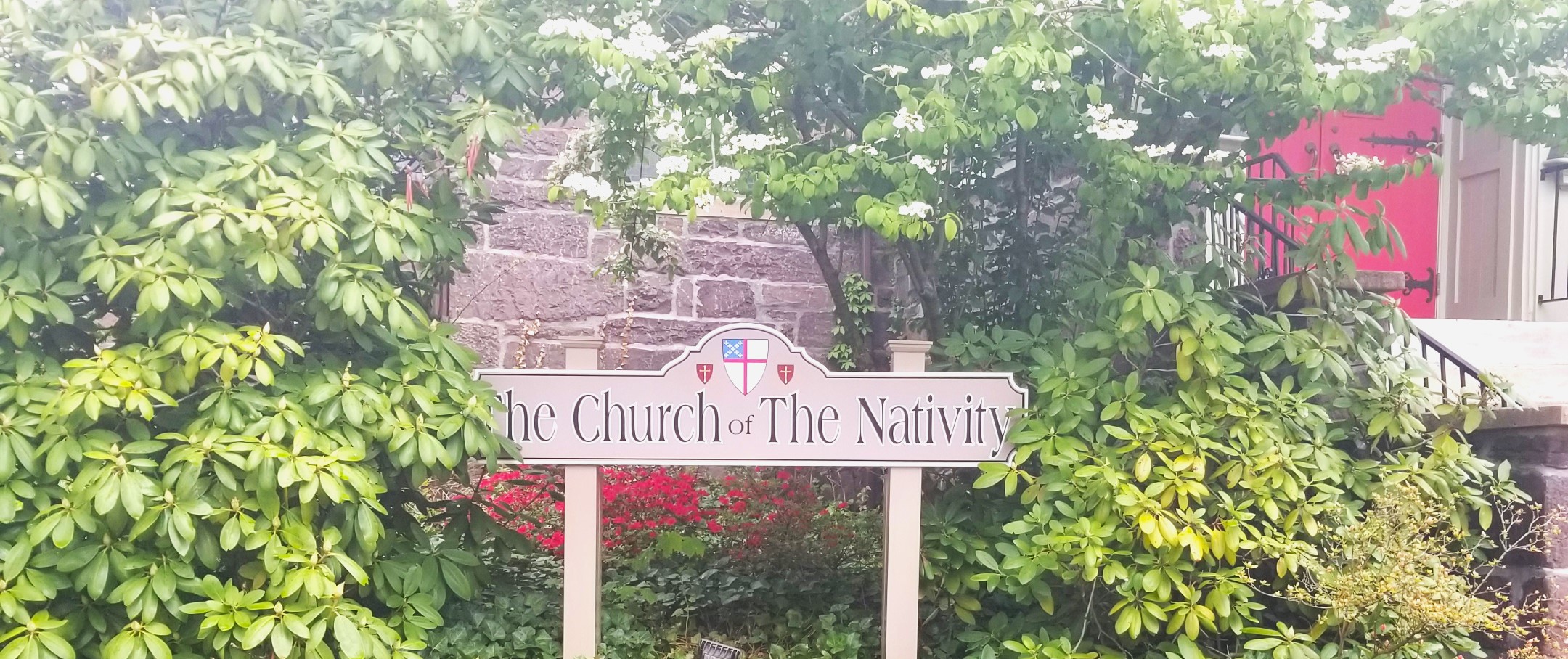
The Church of the Nativity and St. Stephen, Newport, PA
Nineteenth Sunday after Pentecost Track 2 Proper 21
Abraham replied, "They have Moses and the prophets; they should listen to them.' Luke 16:29
Please be seated.
In 1984, a drunk driver didn’t see the sign blocking a piece of Second Street in Harrisburg where a hole had formed. She drove her car into the dip in the road, probably at a high rate of speed, and her car bounced right into the back of our Honda Civic Hatchback, which pushed it into our nearly new Honda Civic Wagon. At 3 in the morning, there was loud banging on our front door, with a police officer announcing to bleary-eyed me that our car was creamed!
At the time, we were told it was a hit and run. The Hatchback was totaled and because of its age, we had no collision insurance on it. We learned to make do with just one car.
Many months later, we somehow learned that the drunk driver had been caught that very night of the accident! We were never notified. And to my surprise, the driver had insurance! We received a couple of thousand dollars. Because we’d learned how to live with just one car, we decided not to buy another car, but rather to use that money for a 2-week trip to Colorado in the summer of 1985.
We flew to Denver and rented a Dodge Caravan once there. We decided to camp. That meant packing all of our camping gear to take along. We bought four fairly large boxes from U-haul and packed our tent, cooking utensils and plates, sleeping bags, camp stove, lantern, and even two lawn chairs into them. Each of us – my then-husband and two children ages 9 and 10 - had a large box and a suitcase to check. We were quite a sight at the Harrisburg airport.
During those two weeks, we traveled throughout much of Western Colorado and even into the bordering states. Camping was fabulous because we stayed in places very few people see.
One of the places we visited was the Black Canyon of the Gunnison. It’s about 70 miles southeast of Grand Junction. The canyon is known for its chasms, because they are deep, and in most places narrow, rather than like the Grand Canyon, which is deep and wide.
Standing on one side of the canyon, you can see to the other side and yet not get to the other side easily. I thought of this chasm as I read the Gospel for this week.
A rich man feasts every day. A poor man with sores all over his body, Lazarus, just wants to eat the scraps from the rich man’s table and lays by the gate of the rich man’s home each day. Only the neighborhood dogs come near the poor man and at that time dogs were considered awful animals. The rich man never sees Lazarus or at least never provides any comfort to Lazarus.
Both men die and Lazarus rests in the bosom of Father Abraham, soothed and comforted. The rich man goes to Hades and is in terrible torment. Now the rich man can see Father Abraham and Lazarus across a chasm. They can speak to each other and have a conversation, and they cannot get to one another. They cannot cross the chasm.
First the rich man has the audacity to ask that Lazarus come serve him some water! Even in death, the rich man believes he is entitled to be served and entitled to be comforted. He is haughty in the way our 1 Timothy reading commands us not to be.
When the rich man’s request cannot be granted because there is no way to cross the chasm, the rich man asks that Lazarus return from the dead to warn the rich man’s brothers about the torment that awaits them once they die, if they do not change their way of living.
Father Abraham explains that the rich man and his brothers have had the necessary teachings all of their lives on earth, Moses and the prophets provided teachings about being just and caring for the poor. The brothers just need to listen to the teachings available to them already.
It seems to me that the chasm between the rich man and Lazarus existed in life and was now continuing in death. So the question for us today is: Are we listening to Jesus, Moses and the prophets?
The parable we heard in our Gospel today is one of many we’ve heard from Jesus the past few weeks that focuses on our wealth and possessions. We’ve heard:
So therefore, none of you can become my disciple if you do not give up all your possessions Luke 14:33
and
You cannot serve God and wealth. Luke 16:13
Today we hear how our wealth and riches can prevent us from seeing and responding to the suffering in our very midst…how our wealth and possessions can create a chasm between us and other people. In essence our wealth and riches can make us lose our humanity. We become focused on ourselves and those closest to us. We don’t see what’s happening with others around us. We have no vision for anyone right in front of us who is not in “our circle” of people who are acceptable to us.
In our Epistle for today we hear how “the love of money is a root of all kinds of evil” and can pull us away from our relationship with God. 1 Timothy 6:10
Now, we may not feel all that rich, although by much of the world’s standards we are very wealthy. The global poverty rate was updated in 2015 to be $1.90 per day or just under $694 per year. The Federal poverty rate for 2016 is $11, 880 for one person and $16,020 for two people.
How can we close the chasms in our lives…the chasms created when we lose our discipleship of Jesus and become disciples of our wealth and riches? How can our humanity be restored?
We find some answers in 1 Timothy who says we should be content if we have food and clothing. We also hear:
As for those who in the present age are rich, command them not to be haughty, or to set their hopes on the uncertainty of riches, but rather on God who richly provides us with everything for our enjoyment. They are to do good, to be rich in good works, generous, and ready to share, thus storing up for themselves the treasure of a good foundation for the future, so that they may take hold of the life that really is life. 1 Timothy 6:17-19
Also, as followers of Jesus, we must remember who Jesus walked with when he was on earth and what he said was his earthly ministry. We get a clue in Jesus’ early ministry. After being in the wilderness for 40 days, Jesus goes to minister in Galilee. When he comes to the synagogue in Nazareth, he is handed the scroll of the book of Isaiah. He reads the verses from Isaiah 61:1-2:
‘The Spirit of the Lord is upon me,
because he has anointed me
to bring good news to the poor.
He has sent me to proclaim release to the captives
and recovery of sight to the blind,
to let the oppressed go free,
to proclaim the year of the Lord’s favor.’ Luke 4:18-19
Then he says words that are understood to mean that he is fulfilling this scripture. As followers of Jesus, we are called to listen to those who are poor, to those who are captives, to those who are blind and to those who are oppressed.
This listening means having a conversation with people living in these circumstances. We can do so through books and documentaries, as well as face-to-face meetings. We must assume that others have something to offer us, rather than nothing to offer us. This is because they live in the situation of poverty, oppression, captivity or blindness, and have the knowledge to teach us about how life really is and how it needs to change.
People who live in situations that are oppressive, know more about their situation and how to fix it than we can ever know. That is because they not only know what it feels like to live in that situation, but they also know a lot about the oppressor or system that allows their situation to exist. They have to know about the oppressor or system in order to try to live within it.
Often, because we’re educated and have resources, we think we know what is best and we want to get right in there and plan what to do and how to fix it. We have to understand that we don’t know and we need to be quiet and listen. Sometimes listening feels frustrating and aggravating and we won’t like what we hear. Yet, we listen nonetheless. We speak when asked and we provide resources when and how we are asked to do so.
Our listening in this way is what provides the bridge to cross the chasm and maybe even close the chasm created. Our listening is what opens our eyes to the suffering right in front of us. Our listening in this way allows us to see Lazarus rather than our wealth and property. Our listening in this way allows us to use our riches to alleviate the suffering of the Lazarus’ at our gates.
And we listen to take action…action that is guided by and helpful to those like Lazarus.
We do listen already as The Church of the Nativity and St. Stephen and in our personal lives. Just this week, we heard the cries of a mother-to-be about having a place for her baby to lay its head and we provided a crib, pack n play, and high chair. We heard the cries of parents who couldn’t buy shoes for their children. We reached out to the schools, provided the money and Darlene and Sue went shopping for 27 pairs of new shoes. We heard the cries for fresh food for people living at Linda House and invited them down to our garden to pick what was ripe and adults and children came to do so.
We have Moses, the prophets and the teachings of Jesus Christ. Let us be generous and ready to share. Let us put our hope in God. Let us listen. Let us relieve suffering. Let us close the chasms in our world.
Amen