

 Loading...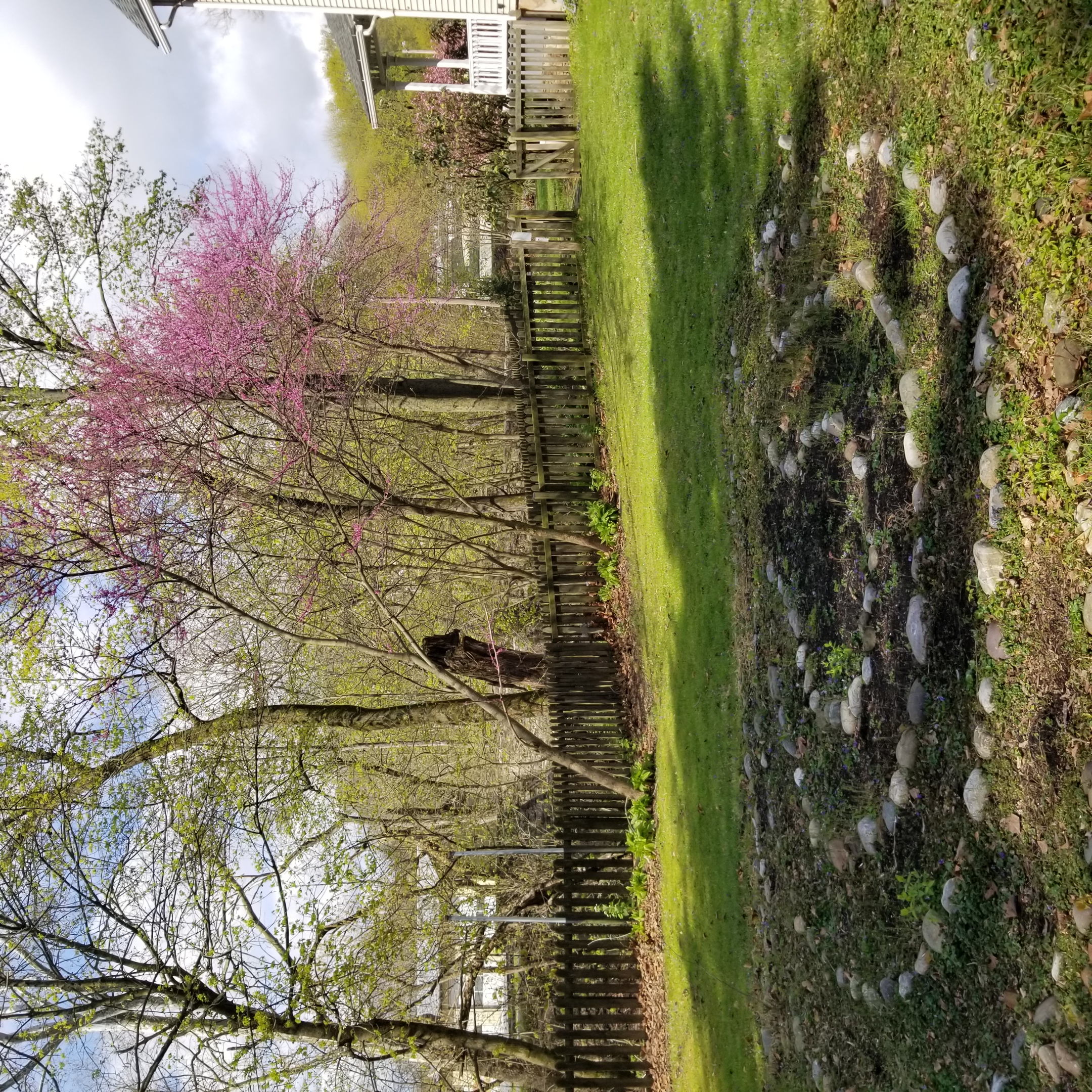
Sermon April 26, 2020
The Rev. Rebecca S. Myers,
The Church of the Nativity and St. Stephen’s
Third Sunday of Easter, Year A, Observance of Earth Day
http://lectionarypage.net/YearA_RCL/Easter/AEaster3_RCL.html
Now when they heard this, they were cut to the heart and said to Peter and to the other apostles, ‘Brothers, what should we do?’ Peter said to them, ‘Repent, and be baptized every one of you in the name of Jesus Christ so that your sins may be forgiven…. Acts 2:37-38
As most of you know, on Wednesday was the 50th anniversary of the first Earth Day. There were lots of virtual activities all week. We held a properly precautioned and physically distanced tree planting event.
The goal is to plant more native trees and plants and to also create some natural fences or hedges. On Wednesday Kay Cramer, Jane Hoover, Tiffany Ellsworth-Hailey, Susan Rice, Joanne Pinaire, Kevin Hortens, Marion Fluchere and Bill Roman planted 11 trees - serviceberries, sweet gum, red Buckeyes, silky dogwoods, winterberry and Sargent crab. They’re at the back of the church yard, along the fence. This is just the beginning.
An op-ed in The New York Times by former United Nations official Hugh Roberts, declared that this Earth Day, we should all repent. Mr. Roberts, citing some recent information he’s received, basically says we are foolish in thinking there is a technical solution to reducing our carbon footprint. We’ve tried for 30 years, and carbon emissions have actually increased during that time.
Roberts cites climate scientist Kevin Anderson, who recently said, “We need to recognize our failure, bow our heads in shame and take a short time for reflection before starting anew.”
Roberts says what Kevin Anderson describes is what philosopher Max Sheler called repentance. Roberts explains how Sheler defined the importance of repentance:
“Not utopianism but Repentance is the most revolutionary force in the moral world.” It faces the past, but rejuvenates the future. Its anguish is keen, even burning, but it removes guilt, and “there arises from the whole process a simultaneous peace and contentment which may rise to the height of bliss.” It opens our horizon and “broadens the once ever narrowing future into a broad, bright plain of possibilities.”
Roberts says we must accept what we have done to the environment. Our intention was to create paradise and we have achieved the opposite.
But what is repentance?
We learn a little about repentance today in the discourse from Peter to a large crowd assembled for the Jewish spring harvest feast of Shavuot. This was one of the times faithful Jews were to come to Jerusalem to worship, so there were many people from different places and countries in Jerusalem at the time.
Peter is speaking to a large crowd about Jesus; how people would not listen to Jesus’ teachings and how Jesus was crucified. The people who heard Peter speak about Jesus were devastated or “cut to the heart.” They asked what they could do. Peter tells them they need to repent and be baptized.
In other words, all is not lost. They can repent of what they did, be baptized and still follow Jesus. They can be forgiven. How amazing is that? There isn’t revenge to be had. They don’t have to go around beating themselves up. All they have to do is repent.
But what does that really mean?
Repentance is ultimately, for we as Christians, about returning to God. We have moved away from God and now seek to return.
First of all, we need to accept what we did. Ah, there’s the rub, isn’t it? Peter’s audience must accept that they did not heed Jesus. They must accept the part they played, either directly or indirectly, in crucifying Jesus. Acceptance is the key.
We must accept what we have done to our world. We must accept the reality of the situation of what is happening to this earth that supports our very existence. With the challenges of the Novel Corona Virus and Covid-19, we have seen in dramatic terms the reality of our impact on our world. Have you seen the photos of the world when we humans have been at rest? The side-by-side photos showing the tremendous pollution or the lack of nature in particular places, which has totally changed now that we humans are more confined.
Can we first of all accept responsibility for the reality we face today? Many times in my life, I’ve discovered, because I just didn’t learn it the first time, that when I accept reality, then I can make changes and what action to take next becomes clearer.
That’s the second part of repentance – action or change. We don’t just say we’re sorry and keep doing what we’ve been doing. Remember, we are turning around and returning to God. That returning to God means real change…means action.
Honestly, I don’t totally know what the exact answers are. As I said, maybe our slowing down of human activity and the different way we are needing to live right now, gives us some answers. Maybe we can do more than we thought to lower our carbon footprint. Does the world agree, for instance, to shut down human activity on a regular basis for a few weeks at a time? Could that help and work??
And I do believe that we can repent – as our confession says – of the evil we have done and the evil done on our behalf. Let’s be honest and name it. Let’s know we are forgiven and then let’s see where we are led in actions to restore our earth and return us to God.
Amen
Editorial: This Earth Day, We Should Repent https://www.nytimes.com/2020/04/20/opinion/climate-change-earth-day.html?utm_campaign=wp_todays_worldview