

 Loading...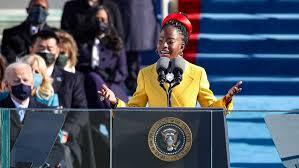
Sermon March 7, 2021
The Rev. Rebecca S. Myers,
The Church of the Nativity and St. Stephen’s
Third Sunday in Lent, Year B
http://lectionarypage.net/YearB_RCL/Lent/BLent3_RCL.html
Service Audio: /documents/Audio_Eucharist_service
Service Video: https://youtu.be/dR_-cFZqJZA
Making a whip of cords, he drove all of them out of the temple, both the sheep and the cattle. He also poured out the coins of the money-changers and overturned their tables. John 2:15
Were you as captivated as I was by Amanda Gorman, the national poet laureate as she performed her poem, The Hill We Climb at the inauguration?
In her poem, the 22-year old, describes herself as a skinny Black girl raised by a single mother and a descendant of slaves. Raised in Los Angeles with a twin sister and a brother, she graduated from Harvard College in 2020 with a major in sociology. She was the first National Youth Poet Laureate from 2017 -2018. She describes herself as a poet activist, and she boldly states she will run for President of the United States in 2036.
She is quite accomplished for her 22 years.
On Friday, an article in the New York Times reported that Ms. Gorman was followed by a security guard as she walked home. Ms. Gorman reported the situation like this:
“A security guard tailed me on my walk home tonight. He demanded if I lived there because ‘you look suspicious.’ I showed my keys & buzzed myself into my building. He left, no apology. This is the reality of black girls: One day you’re called an icon, the next day, a threat.”
“One day you’re called an icon, the next day, a threat.” Ms. Gorman went on to explain:
“In a sense, he was right. I AM A THREAT: a threat to injustice, to inequality, to ignorance. Anyone who speaks the truth and walks with hope is an obvious and fatal danger to the powers that be.”
Did you hear what she wrote? Let me say it again.
“I AM A THREAT: a threat to injustice, to inequality, to ignorance. Anyone who speaks the truth and walks with hope is an obvious and fatal danger to the powers that be.”
In our Gospel today, we certainly see Jesus as a threat to the “powers that be.” It is interesting that this story about Jesus is in all of the Gospels, although not exactly told the same way. In other words, what happened in the temple in Jerusalem that day was deeply significant.
Throughout the book of Leviticus, we read of the type of system of worship that had been developed. There were burnt offerings and sin offerings. There were tithes and offerings of the first fruits of the harvest or thanksgivings. There were ways to atone for your sins.
Passover was a time when every person who was Jewish was supposed to travel to Jerusalem for worship. It was a busy time with people in the city from all over the region. In the court of the Gentiles, the only place where observant Gentiles could go, a marketplace had sprung up. How could you go on a long journey with an animal for sacrifice in the Temple? Better to buy the animal in Jerusalem. Furthermore, if you had a Roman coin, the face of the Emperor was on it and that wouldn’t do for your Temple offering, so you needed to change the coin for one that was faceless.
The system was one that most people thought was the best way to worship God and to improve a person’s relationship with God. Yet, as we know from looking at our own history, we human beings have a great capacity for getting things wrong. Over time, this temple sacrifice and money changing and all of the rules had corrupted people’s relationship with God.
There is some hint in the Gospel of Mark that there was overcharging going on. Also, the offerings could be construed as a way to bargain with God. “If I give this, then God will give me something I want.”
Some of us would say that Jesus becomes pretty violent, right? I mean, the people selling the animals and changing the money were only following the system that had been set up for them, right? Couldn’t Jesus have talked to them first? Couldn’t he have been gentler? Making a whip to drive out the animals into the city and overturning the tables was pretty destructive, wasn’t it? He was destroying property that really wasn’t his, right?
Isn’t that what we struggle with when we hear this? We want Jesus to address the injustice of the Temple culture in a different way. Clearly Jesus is a threat to the Temple Culture and he does something dramatic and provocative to make his point that this culture is unjust and not at all how God wants us to relate to God.
Just in the past year, we have been reminded again and again of the injustices in our country. Many of these injustices have been going on our entire lives and long before we were born. Things have changed, and the injustice continues. What will it take for us to understand and to take action?
How can we like Jesus, be a threat as Amanda Gorman describes it: “a threat to injustice, to inequality, to ignorance?” How will we speak the truth and walk I hope and be an “obvious and fatal danger to the powers that be?”
Amen
Amanda Gorman “The Hill We Climb” at the inauguration: https://www.youtube.com/watch?v=Wz4YuEvJ3y4
Amanda Gorman security guard: https://www.nytimes.com/2021/03/05/us/amanda-gorman-security-guard.html?searchResultPosition=1
The Hill We Climb by Amanda Gorman
When day comes, we ask ourselves, where can we find light in this never-ending shade?
The loss we carry. A sea we must wade.
We braved the belly of the beast.
We’ve learned that quiet isn’t always peace, and the norms and notions of what “just” is isn’t always justice.
And yet the dawn is ours before we knew it.
Somehow we do it.
Somehow we weathered and witnessed a nation that isn’t broken, but simply unfinished.
We, the successors of a country and a time where a skinny Black girl descended from slaves and raised by a single mother can dream of becoming president, only to find herself reciting for one.
And, yes, we are far from polished, far from pristine, but that doesn’t mean we are striving to form a union that is perfect.
We are striving to forge our union with purpose.
To compose a country committed to all cultures, colors, characters and conditions of man.
And so we lift our gaze, not to what stands between us, but what stands before us.
We close the divide because we know to put our future first, we must first put our differences aside.
We lay down our arms so we can reach out our arms to one another.
We seek harm to none and harmony for all.
Let the globe, if nothing else, say this is true.
That even as we grieved, we grew.
That even as we hurt, we hoped.
That even as we tired, we tried.
That we’ll forever be tied together, victorious.
Not because we will never again know defeat, but because we will never again sow division.
Scripture tells us to envision that everyone shall sit under their own vine and fig tree, and no one shall make them afraid.
If we’re to live up to our own time, then victory won’t lie in the blade, but in all the bridges we’ve made.
That is the promise to glade, the hill we climb, if only we dare.
It’s because being American is more than a pride we inherit.
It’s the past we step into and how we repair it.
We’ve seen a force that would shatter our nation, rather than share it.
Would destroy our country if it meant delaying democracy.
And this effort very nearly succeeded.
But while democracy can be periodically delayed, it can never be permanently defeated.
In this truth, in this faith we trust, for while we have our eyes on the future, history has its eyes on us.
This is the era of just redemption.
We feared at its inception.
We did not feel prepared to be the heirs of such a terrifying hour.
But within it we found the power to author a new chapter, to offer hope and laughter to ourselves.
So, while once we asked, how could we possibly prevail over catastrophe, now we assert, how could catastrophe possibly prevail over us?
We will not march back to what was, but move to what shall be: a country that is bruised but whole, benevolent but bold, fierce and free.
We will not be turned around or interrupted by intimidation because we know our inaction and inertia will be the inheritance of the next generation, become the future.
Our blunders become their burdens.
But one thing is certain.
If we merge mercy with might, and might with right, then love becomes our legacy and change our children’s birthright.
So let us leave behind a country better than the one we were left.
Every breath from my bronze-pounded chest, we will raise this wounded world into a wondrous one.
We will rise from the golden hills of the West.
We will rise from the windswept Northeast where our forefathers first realized revolution.
We will rise from the lake-rimmed cities of the Midwestern states.
We will rise from the sun-baked South.
We will rebuild, reconcile, and recover.
And every known nook of our nation and every corner called our country, our people diverse and beautiful, will emerge battered and beautiful.
When day comes, we step out of the shade of flame and unafraid.
The new dawn balloons as we free it.
For there is always light, if only we’re brave enough to see it.
If only we’re brave enough to be it.