

 Loading...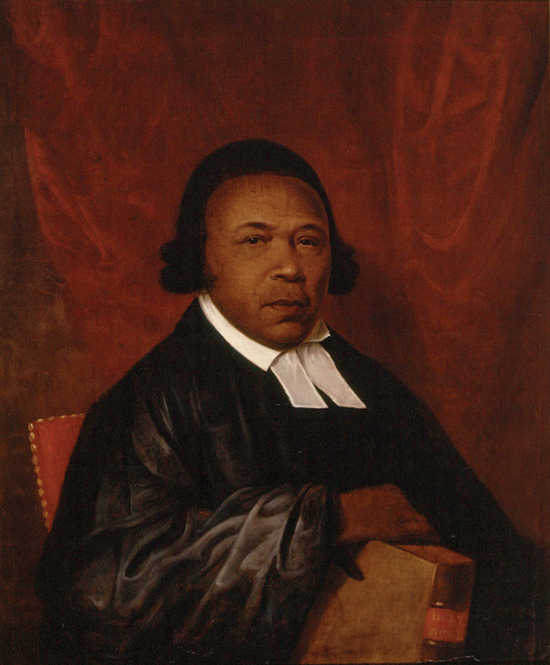
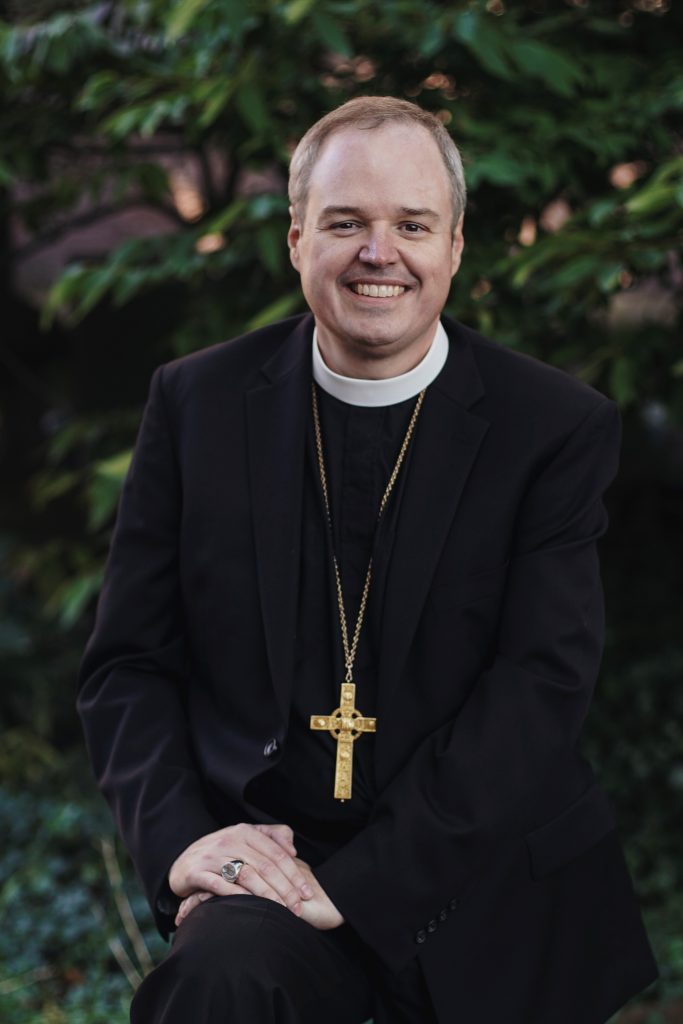
The Rt. Rev. Audrey C. Scanlan
Nativity, Newport
Feb 13, 2022
http://lectionarypage.net/YearC_RCL/Epiphany/CEpi6_RCL.html
Audio: /documents/Eucharist__February_13__2022
Video: https://youtu.be/UqtRUn7ETxc
I am married to someone who will not watch many movies all the way through in one sitting because he can’t tolerate the parts where the characters come into conflict. You know, those parts in movies where the plot begins to thicken, or betrayals come evident, difficult choices are presented, or the tension in the story slowly builds and builds. This is the stuff of good storytelling- tension and conflict in a plot- it keeps the movie going, it gives us better insight into the souls of the characters, and it deepens our experience of the whole enterprise. Our visceral reaction to this tension- we shift in our seats, hold our breath, feel funny in our tummies- it’s a discomfort that most of us can tolerate- as we wait for the resolution, usually not too far ahead. But not my husband. The remote in hand, he clicks on to something else, seeking relief.
If our gospel lesson this morning were a movie, I think that my husband would have clicked away, after verse 23.
This morning we hear a section of Jesus’ teaching from Luke called “the Sermon on the Plain.”
Now, most of us are familiar with Jesus’ “Sermon on the Mount”- that’s part of Matthew’s gospel- it’s a compendium of Jesus’ teaching that goes on for almost three chapters and includes the Beatitudes, the Lord’s Prayer, a few short parables and a lot of catechetical instruction…. But Luke’s “Sermon on the Plain” that we hear this morning is shorter and more direct. Jesus is not surrounded by masses of people, teaching lesson after lesson from the top of a mountain. No, here in Luke he’s addressing the innermost circle of his newly gathered disciples, he’s concise, and he’s right down there with them, eye to eye, giving new meaning to the phrase “let me level with you.” He shares four stunning beatitudes, or blessings- embracing those who are poor, hungry, weeping and reviled, in a gesture of grace- teaching that when we are at our lowest- poor, hungry, mourning or the object of derision- that that is precisely the moment when God favors us and offers deep comfort and love… but… then comes the tension, the shift, the part that would make my husband reach for the remote: Jesus adds 4 stinging woes. Woe to you… who live with abundance- of money, food, mirth and acclaim. Woe to you.
Now, what’s a woe? It is a biblical literary convention- a word of judgment that is sharp and that, in its Greek form, also indicates a measure of grief… not just the grief that will befall the person at whom the woe is directed, but that comes from the heart of one who offers it as well. Luke’s gospel offers more “woes” than any other book in the New Testament. And, as we think about Luke- the one who lifts up the oppressed, fights against injustice, and focuses on stories of healing… this inclusion of woes is important because, friends, sometimes not clicking the remote away from the pain, is the way that we grow. Receiving the woes. Sitting with them. Letting them sink in.
Today we observe the Feast Day of Absalom Jones. We also celebrate African American Heritage Month in our Country. We have an opportunity today to lift up the remarkable and faith filled ministry of our first black priest in the Episcopal Church and to celebrate his historic accomplishments - but his is a story filled with woe and discomfort. Our legacy of oppression and mistreatment of people of color throughout the early centuries of our country’s development and, sadly, right up to the present moment, also is a story filled with woe and discomfort, and I would urge you not to click away, this morning, from the tension, but to sit with it- as Jesus’ disciples received the woes that were offered to them.
Absalom Jones was born a slave in Delaware in 1746. When a teenager, he wasseparated from his mother and siblings. He was taken to Philadelphia with his master, and his family was sold into slavery with another family. Absalom remained in slavery for 38 years until he was freed in 1784 by his master. In the time that he was enslaved, he taught himself how to read and write and, from a side job that he acquired, was able to save enough money to buy his bride’s freedom from slavery- years before achieving his own freedom.
Absalom was a man of faith. He joined the Methodist church of St George’s in Philadelphia. Absalom was a leader and became a licensed lay preacher at his church in the then fledgling denomination of Methodism, but as the church grew, tensions developed. One Sunday morning, in November 1787, during the prayers, a trustee of the church came over to where Absalom sat in his pew and demanded that he move his seat to a newly constructed gallery in the church, a gallery built by the black membership with their own hands. They had thought, as the gallery was being built, that it was for the use of the whole, growing congregation, but Absalom and his friends learned in this moment that it was to be a slave gallery-– seating only for blacks. Absalom Jones was physically lifted and removed from his pew.
Don’t click away from this moment. It is a woe. Absalom Jones was carried out of his pew.
As a result of this painful act, all the people of color walked out of St. George’s, vowing never to return. Along with his friend Richard Allen, Absalom Jones established the first benevolent society for African Americans- The Free African Society of Philadelphia; It was organized to provide assistance for the economic, educational, social, and spiritual needs of the African community. It was from this society that St. Thomas African Episcopal church was born. Absalom Jones became the spiritual leader at St. Thomas (Richard Allen went on to found the African Methodist Episcopal Church) and Jones was ordained to the sacred order of priests by William White in 1802 at the age of 58... But, woe: hear this: "Bishop White agreed to ordain Jones and receive St. Thomas into the diocese only if the church did not send any clergy or deputies to diocesan convention, thus depriving blacks of voice or vote in church governance..." (ENS 2.13.2014) (This situation persisted for another 58 years.)
Absalom Jones was a cleric who had social justice, freedom, liberty, and community service at the core of his ministry. He worked to care for the poor, for the abolition of slavery (presenting on several occasions petitions to Congress and one, personally, to the President of the United States) and in 1793 when yellow fever struck the city of Philadelphia, Jones stayed behind while others fled, to minister to the sick and dying. He started two schools, was the leader of the first African Masonic Lodge in Philadelphia and worked tirelessly with faithful persistence and clear vision of God’s inclusive and abiding love for all people.
Imagine working nights to save up to buy your wife’s freedom. Woe.
Imagine being physically removed from a pew. Woe.
Imagine agreeing to receive ordination on the condition that you would not participate in the collegial life of the church. Woe.
Imagine, being a slave. Owned by another human being. Woe upon woe upon woe.
Last week, a bill was introduced in the Florida legislature that would prohibit public schools from inflicting “discomfort” on white people during lessons or training about discrimination. The bill was approved by the state’s Senate Education Committee, its first hurdle before becoming a law. The bill reads, in part, “An individual, by virtue of his or her race or sex, does not bear responsibility for actions committed in the past by other members of the same race or sex. An individual should not be made to feel discomfort, guilt, anguish, or any other form of psychological distress on account of his or her race.”
I wonder, if this bill passes, how children in Florida will learn about our country’s history of racism.
We need to see the injustice, oppression and degradation that has been part of our history and that is, still, around us. We cannot look away, and we must not just sit with our discomfort, but use it as a force for change.
Today- in a few moments- Tiffany and Nicole will stand and ask to be confirmed in their faith. Phillip will be received into this Episcopal Church. We will all have an opportunity to renew our own baptismal covenants and ascribe, again, to the core tenets of our tradition, vowing that, with God’s help, we will live as people committed to justice, peace, redemption and love. The world needs people of faith to reach into the places of pain and hurt and to be healers. The world needs people like you, and Tiff and Nic and Philip to face its woes and persist, in the name of Jesus and his Way of love.
This is the hard Good News of the gospel. Not the rainbow and sunny days and cotton candy version of faith, but the real, gritty, “on the level” truth. God so loved the world that he gave his only begotten Son… and we, who believe in him, carry on his truth, pressing through all the woes and bringing healing balm to the world.
Be like Absalom.
Don’t click the remote.
Because the joy of justice and redemptive love is in the next frame.
Amen.
1594