


 Loading...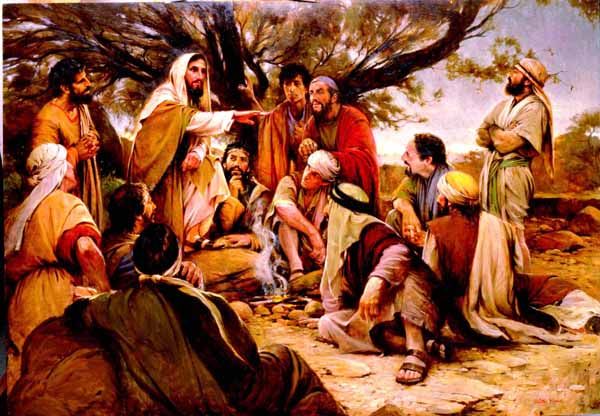
Sermon June 18, 2023
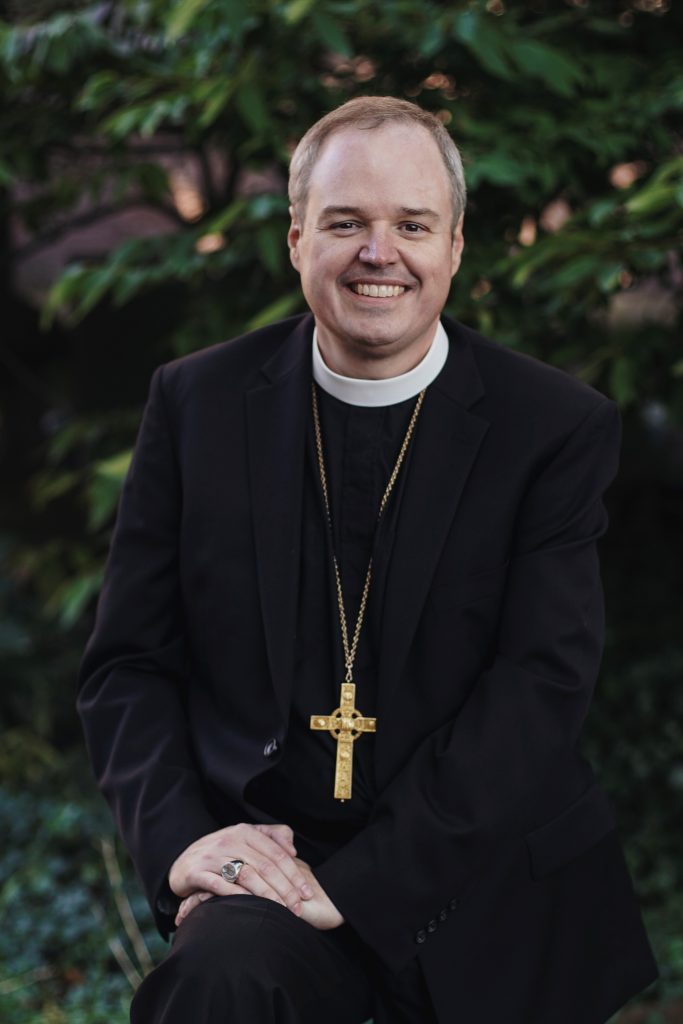
The Rev. Joseph Seville
The Church of the Nativity and St. Stephen’s
Third Sunday after Pentecost, Year A, Track 1
http://www.lectionarypage.net/YearA_RCL/Pentecost/AProp6_RCL.html
Audio: /documents/Eucharist__June_18__2023
Video: https://youtu.be/mULoAd8Ja6I
Jesus went about all the cities and villages, teaching in their synagogues, and proclaiming the good news of the kingdom, and curing every disease and every sickness. When he saw the crowds, he had compassion for them, because they were harassed and helpless, like sheep without a shepherd. (Matthew 9:35,36)
When you see a crowd, or find yourself in one, how does it affect you? It may arouse a vague excitement. Or, it can feed our pride as in watching a parade. It can also make you combative, based on the nature of a crowd. No matter how it may affect us, does it ever fill us with compassion? We see from our Gospel reading this morning, that is how it effected Jesus. The word translated here as "compassion" actually is a much stronger word in Greek. For it implies pain or love. Jesus saw the people of his land as shepherdless people. They were as if wolves had harried them and left them bleeding, because they had none to protect them.
The noted theologian Karl Barth in reflecting on this passage mentioning Jesus' compassion for the people he encountered saw in this the nature of the church. He wrote, "The fact that (Jesus) was moved with compassion means originally that He could not and would not close his mind to the existence and situation of the multitude, nor hold himself aloof from it, but that it affected him, that it went right to his heart, that he made it his own, that he could not but identify himself with them. Only He could do this with the breadth with which he did so. But his community could not follow any other line. Solidarity with the world means that those who are genuinely pious approach the children of the world as such, that those who are genuinely righteous are not ashamed to sit down with unrighteous friends, that those who are genuinely wise do not hesitate to seem to be fools among fools, and that those who are genuinely holy are not too good or irreproachable to go down 'into hell' in a very secular fashion." (The Doctrine of Reconciliation, IV.3.2)
Jesus said to his disciples, "As you go, proclaim the good news, 'The kingdom of heaven has come near.' Cure the sick, raise the dead, cleanse the lepers, cast out demons. See, I am sending you out like sheep into the midst of wolves; so be wise as serpents and innocent as doves." (Matthew 10:7, 8, 16)
For several years The New Yorker magazine I am told, ran a column called "Block that Metaphor", a summary of things said or written which caught politicians, reporters, and the like in the act of wildly mixing metaphors and creating outlandish and often amusing combinations of images. "Block that metaphor" tells us of county officials who are described in the newspaper as 'burying their heads in the sand, jumping to conclusions, and milking it for everything they can get.' And somehow doing all this at the same time! It also reports of football coaches who say things like, "We're just gonna have to bite the bullet, take our medicine, and cross that bridge when we get to it. For now, though, we're gonna dance with the one who got us here."
At first reading our Gospel story this morning, in which Jesus sends out the twelve disciples to do their ministry, it might seem as if it were a candidate for a "Block that metaphor" column. It can seem to be candidate for this because there appear to be some seemingly incompatible images mixed here. On the one hand, Jesus' sending the twelve out appears to be motivated by his compassion for the 'harassed and helpless crowds" who were "like sheep without a shepherd." But this image of the harassed and helpless crowds then shifts as Jesus then tells them "Behold, I send you out as sheep in the midst of wolves, so be wise as serpents and innocent as doves." Harassed and leaderless sheep, but also wolves. Which is it anyway? Were they being sent out as shepherds to guide confused and wayward sheep, or were they being sent out on an assignment that entailed risk and danger, an assignment that might actually cost them their lives?
In this tenth chapter of Matthew's gospel, the focus is completely upon discipleship. Here, Jesus gathers his chosen followers and gives them authority over diseases of mind, body, and spirit. Undoubtedly, the group felt honored, humbled, and excited as Jesus spoke with them. They were, after all, to be representatives of their Lord. But we see as well, from Jesus' comments to them, there was to be an underside to this honor as well. The reality which they would face was a little of both metaphors, working among wayward sheep as well as among wolves who wished them harm. Thus, they were to expect both a positive reception as well as rejection, refusal, and even active persecution.
"You received without payment, give without payment" (10:8b) Jesus told them. What's interesting here is that in the culture of his day, there was no such thing as a "free gift." Every gift had strings attached to it. And gift giving was done with a view of expecting repayment. In fact, there is a Middle Eastern proverb that goes, "Don't thank me; you will repay me!"
Jesus advises his disciples to take no gold or silver or copper, or other things of value as they go about their telling others the good news. They were to travel light and rely on Middle Eastern hospitality, the kind that was extended to strangers. Its interesting, I think, to see the distinction Jesus was making here. In the world of his day, there was a distinction between hospitality shown toward the stranger and the kindness that was extended toward one's relatives. Toward one's relatives one was to extend steadfast loving kindness and not simply hospitality. If the disciples received hospitality, they were to share the good news that they had come to proclaim. If they did not receive hospitality, they were to move on to the next town. So, the charge to them that they were to "give without payment" was a prohibition from expecting or demanding anything over and above normal Mediterranean hospitality.
The picture that Jesus paints then was not a pleasant one of a day in the park. In fact, he was painting for them a picture that could and at times would be painful and even frightening. To preach "the kingdom of heaven is at hand" brought judgment upon all rival kingdoms. To be an ambassador for peace shook the very foundations of a society built upon enmity. To heal the sick and cleanse the lepers, was to call into question the comfortable arrangement of a world divided into the well and the sick, the haves and the have-nots. The ministry of the kingdom stirred up opposition as well as gladness. Those who fed the hungry, clothed the naked, and housed the homeless were more likely to become targets than society's heroes. In all that they would encounter, though, and in face of every challenge and even persecution, the disciples were to find their strength and their identity in being like Jesus, their teacher.
Just before our passage read for this morning, Matthew records that Jesus himself had been slandered by some Pharisees who had suggested that his healing abilities came not from God, but from the prince of the devils. Clearly, if the disciples faithfully carried out their mission, they too, should expect nothing less in the way of misunderstanding and ridicule. It went with the territory. They should not be surprised. Nor should any of these reactions cause fear. They were not to be fearful because the strength that would be provided them through their faith in Christ would be all that they would need.
In our own daily lives, there are many things that we fear, but perhaps we would not at first think of fear of witnessing to our faith as being on that a list. Our list of things we fear probably would be quite different.
Perhaps our list of fears might include a fear surrounding our economic situation. The very nature and uncertainty of our economy at this point in time is troubling for everyone coming out of the pandemic. And to top off such uncertain economic news, it can seem as if not a week goes by that yet another natural disaster comes upon some place. These are indeed uncertain times that can all too easily cause fear.
But perhaps our fears may center on circumstances we face personally. Our fears may be due to some illness or cancer or some dreaded disease for which there is no known cure. Or perhaps we have fears of the imminent death of a loved one. Our lists of real and imagined fears may be long.
At the root of all such fear, though, is simply the fear of loss. For really, every fear we have is grounded in the knowledge that we have something or someone to lose. We can lose our job, our home, our records in a computer crash, our freedom, and our health.
Though there may be good reason to fear rejection and loss, in the end, today's gospel reading is telling us, though, that from the perspective of Christ, we should all realize that being faithful to Christ wherever we meet him in this life is much more important than the fear of rejection and loss. Those fears which keep us from saying what must be said; - or keep us from going where we must go; - or keep us from doing what needs to be done; or keep us from being who we need to be- all subside in the light of our faith in Christ.
The noted popular author Barbara Brown Taylor once observed, "Next to the calling of the disciples, I expect that Matthew's story about their sending forth (of the disciples) is one of the most confrontational stories in all the Bible. Can you imagine? (she writes) There you are, perfectly content to be a follower, when Jesus comes home all worn out one day with his hair hanging in his face and his clothes ringed with sweat and dirt. He looks around at those of you who have been with him all along and says, 'The harvest is plentiful but the laborers are few. I need some help, and I'm nominating you."'
Jesus purposely used the astonishingly mixed metaphor in our Gospel reading this morning to make his point as to what was in store. They (and we) are to be "wise as serpents and innocent as doves." Snakes and birds could hardly be more dissimilar, but the implication is that those who respond as Jesus invites us all to do need not be naive but also not cynical; both thinned skin enough to be empathetic and thick skinned enough to withstand criticism; both angry enough at injustice and gentle in the overcoming of it; just as our Shepherd is both fully human and fully divine.
In this world filled with the demons of sickness and violence and loneliness, oppression, injustice and despair, we are understandably afraid of many things, just as the disciples to whom Jesus spoke in today's gospel would have been fools not to fear the events which Jesus foretold.
The good news, though, is the promise that God refuses to leave the world to its own devises; the promise of Christ's victory over death, and that our fears need not have a hold on us. However serious our worst fears may seem to be, if we remain faithful to Christ they will fade, into insignificance in the joy of living out our faith in witness to the good news of Jesus Christ each and every day of our lives. We can go forth, sharing our faith in the name of the shepherd, who came for us, saw us in our fears and helplessness, had compassion and saves us all. Amen.