


 Loading...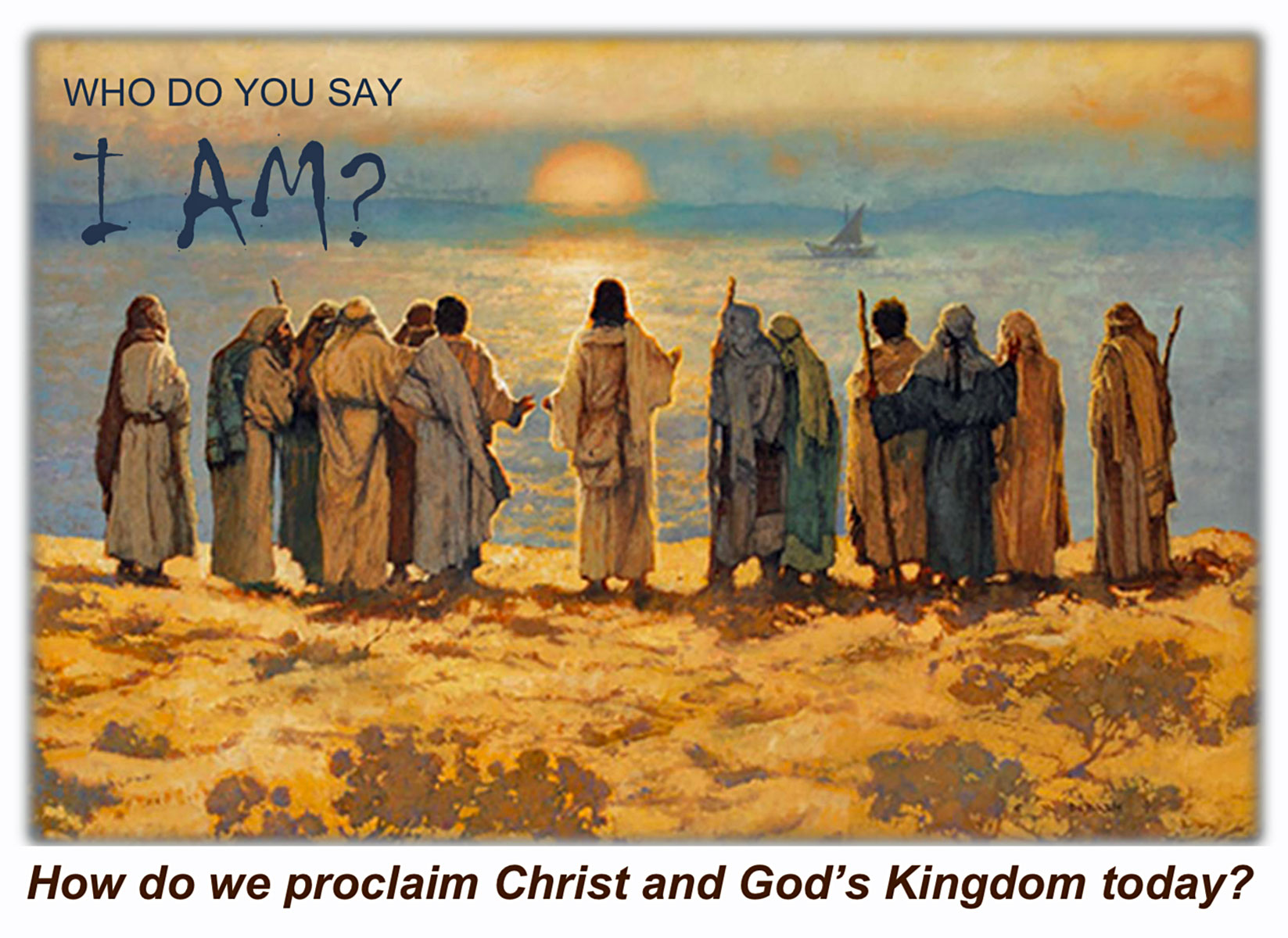
Sermon August 27, 2023
Canon Robert Schiesler
The Church of the Nativity and St. Stephen’s
Thirteenth Sunday after Pentecost, Year A, Track 1, Proper 16
http://www.lectionarypage.net/YearA_RCL/Pentecost/AProp16_RCL.html
Audio: /documents/Eucharist__August_27__2023
Video: https://youtu.be/PC5y9TIZS0U
The modern writer, Theophane the Monk (Tales of a Magic Monastery) relates a tale of a novice monk asking the master, "what do I need to know?" The master kept silence for a long time and then tears crept down his face as he remembered the same question of his master some 40 years earlier. The master told the young man to take that question and put it to every monk in the house. He received a myriad of answers, all erudite and meaningful but none complete and fulfilling. The master then had him sit in solitude for a year, reflecting on all he had heard. Next, the master had him board a ship and sail far out upon the endless ocean, putting his question to all whom he met. Four years later, he returned only to have the master have him sit in solitude once more. Again, he asked, "Master, what do I need to know?" A long silence ensued and then in a clear, gentle voice, the Master responded: "I will give you — Christ - and that will be enough."
In Matthew's Gospel, we hear the question put differently but still rooted in the same inquiry: "Who do you say I am?" At first, the disciples reacted with the usual stuff that probably was to flatter the Christ: some say you are really your cousin, John the Baptizer, the desert mystic; others say you are Jeremiah returned, the prophet of judgment or maybe Elijah, the great prophet lifted up into the heavens whose return we await each Seder meal that God's final judgment might occur. Then, Peter has a sudden flash of faith: "You are the Christ, the Son of the Living God." This title that Peter applies to Jesus, "Christ" means "anointed". It might refer to a Hebrew King, a prophet or even a foreigner like Cyrus, the great king of Persia. It conveys the idea as Peter uses it of Jesus being directly linked to the Divine and Peter acknowledged this with his enthusiastic statement.
The Holy Scriptures use all types of descriptors for Jesus the Christ...suffering servant, Lamb of God, the Word. In John's Gospel we hear bread of life; light of the world, the gate, the good shepherd, the vine. All of these are wonderful descriptors and not to be put aside. However, when we use any one of them, we realize that one is not enough and many are not enough to contain the essence of Jesus the Anointed One. The young monk found that out in his travels as he accumulated descriptors and stories but none being able to capture the fullness of his question: "What do I need to know?" Everyone wants to "know", especially being so influenced by social media. Who am I? Who are you? Are basic questions of human curiosity and inquiry. For many, social media answers the personal question but only slightly as we know how easy it is to embellish or change who we are; how easy it is to hide our vulnerability or enhance our sense of superiority. As Christ's disciples, we seek truth in Jesus' question but are often afraid to simply say from our heart, where secrets and fears truly reside, "Master, you are the Christ, the Anointed One, the Son of God." To simply let God be and let the Divine take us over in our ordinary lives, can be disorienting and frightening.
During my ministry, I served as a Chaplain at a state mental hospital where I worked in the locked wards. Jane was a middle aged woman who had been admitted due to anxiety and clinical depression. I would simply sit with her and invite her to talk about her past, her family, her children. I didn't bring up her faith in our discussion....l wanted to let that question of God peculate as we developed a more trusting relationship. Each month, I led the ward in a simple Communion Service with songs and prayers. Jane always came but she sat at the rear of the day room; then, as I moved to lift up the Bread and Wine in consecration and invitation, Jane would get up and begin to pace back and forth, with her hands in a slight wringing motion. She would not come forward for Communion but would sit down as the service concluded. Her experience of the Divine...her answer to "who do you say I am?" was obviously not a good nor fruitful one. As Jane and I continued our time together, I discovered why she was so anxious. Her feelings of sadness and low esteem along with her fear of God tumbled out as she remembered her earlier life of beatings, being derided and emotionally abused by so many and every action telling her she was unworthy of attention, consideration, kindness. And that included her God. Her extreme agitation was not in her rejecting the Holy Gifts but in her belief that Jesus Christ had to reject her due to her deserved wretchedness. She knew all the right words from her classes as a young girl; but that meant nothing without feeling the rightness, the love, God's desirability, that feeling emanating not from the head but from the heart where secrets and fears can be locked away. Ultimately but slowly, Jane was able to answer that question What do I need to know? With an answer...l need to know only the love of God; I need to feel only the embracing presence of God in the smallest of things, in the greatest of experiences. The Pulitzer Prize winning poet Mary Oliver wrote: "In the household of God, I have stumbled in recitation, and in my mind I have wandered. I have interrupted worship with discussion. Once I extinguished the Gospel candle after all the others. But never held the cup to my mouth lagging in gratitude."
To simply proclaim "Jesus as the Christ, the Son of God" is to walk down the road of calling and committment. We consecrate ourselves to worship the God of our salvation, the God of judgment grounded in love, the God of acceptance in a world of self -illusion.
It is to join with Jesus and prophets of old to use every key we have to free prisoners of injustice and fling open the doors to access of the resources of creation for every daughter and son of the living God.
It is to be prepared and willing to endure the discomfort of Jesus' question "who do you say I am?" so that we might be just as prepared and willingly be able to answer the question: "Who do you say YOU are?"