


 Loading...
Sermon February 10, 2019
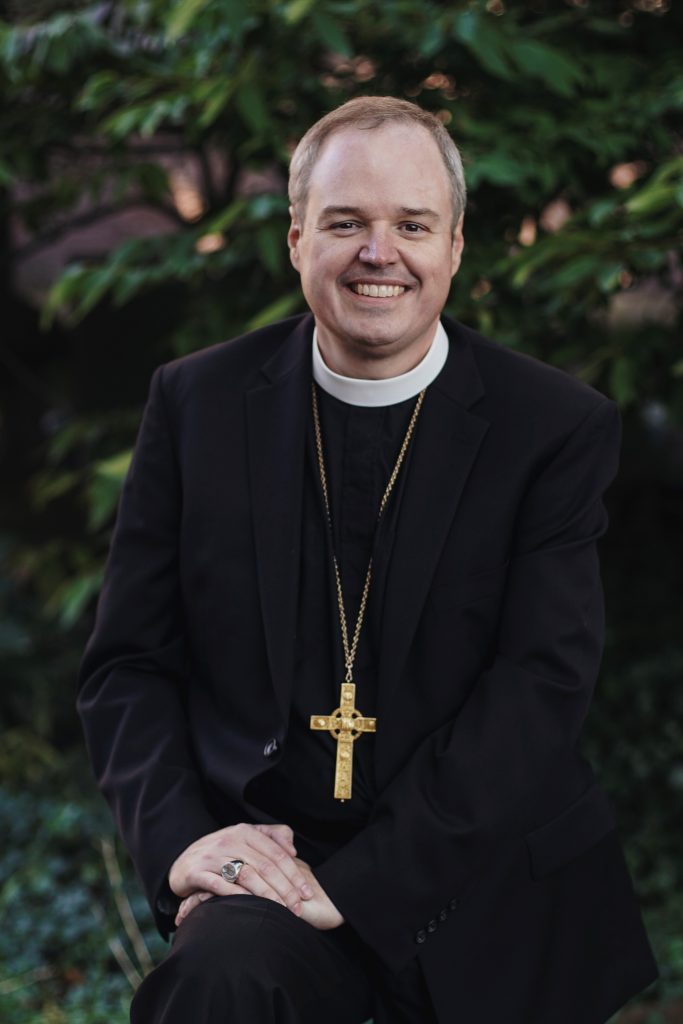
The Rev. Rebecca S. Myers,
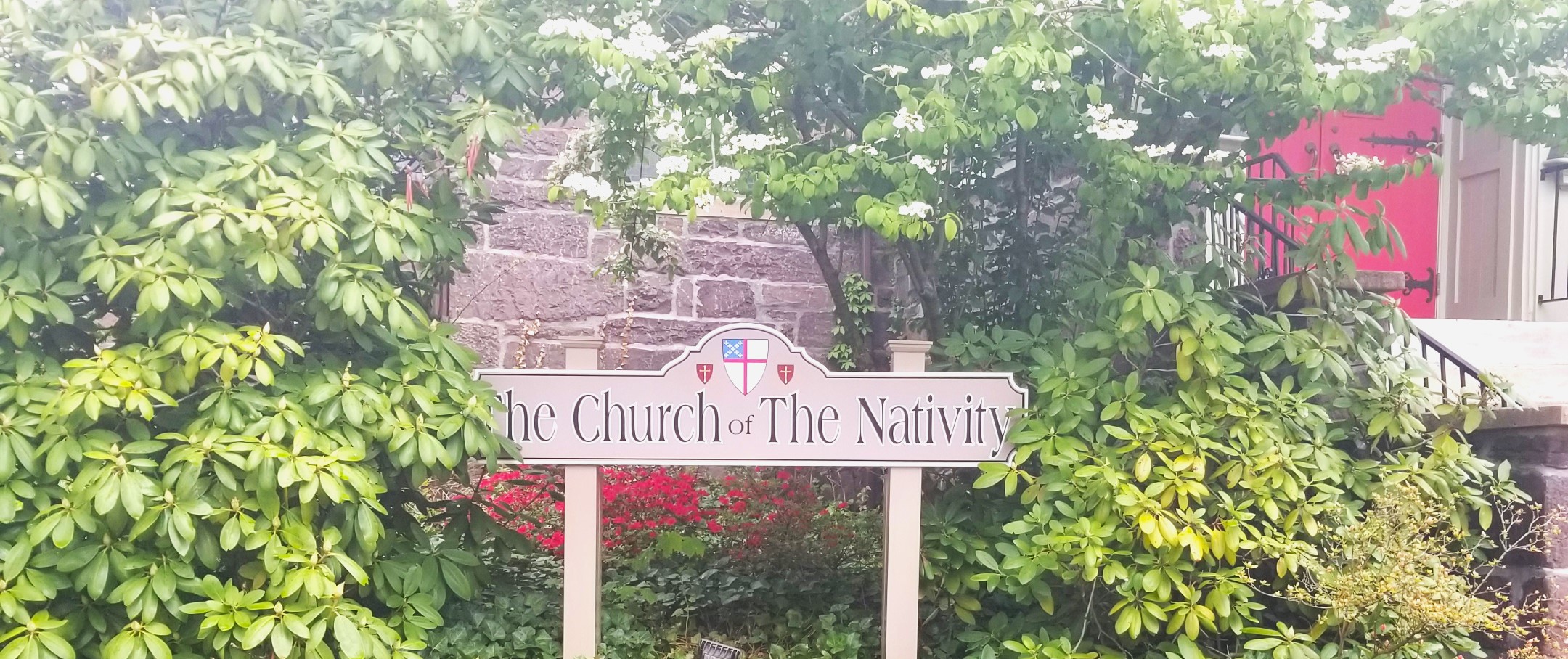
The Church of the Nativity and St. Stephen’s
Fifth Sunday after the Epiphany, Year C
http://lectionarypage.net/YearC_RCL/Epiphany/CEpi5_RCL.html
Audio
Then Jesus said to Simon, ‘Do not be afraid; from now on you will be catching people.’ When they had brought their boats to shore, they left everything and followed him. Luke 5:10-11
Please be seated.
Have you seen the PBS show, Finding Your Roots, with Henry Louis Gates? Each week, the show includes 2-3 celebrities who have come to Dr. Gates to find out more about their ancestry. Researchers review all kinds of records like newspapers and census records. They also do DNA matching. Each person on the show is profiled with information about their current lives, as well as the historical family information uncovered. In most cases, their sense of their identity changes a little.
This past week, one of the guests was the S. Epatha Merkerson. Ms. Merkerson is a stage, tv and film star. For many years, she portrayed Lt. Anita Van Buren on the show Law and Order. Ms. Merkerson knew she was from Louisiana, but how her family reached Louisiana, she did not know and the story was quite amazing.
Ms. Merkerson is African-American and tracing the family history and tree of people who are African-American can be very difficult. Genealogists have to rely on records kept during slavery and discovering where the family came from prior to being enslaved is nearly impossible.
Dr. Gates and his researchers were able to use DNA analysis to discover a family connection amongst a number of people who all related back to one person, Isaac Hawkins. Isaac Hawkins was a slave on the Jesuit plantations of Maryland. Yes, tobacco plantations owned by the Society of Jesus.
The Jesuits came to Maryland in 1634 with 300 Catholic settlers. They were given 12,000 acres of land and created tobacco plantations. By 1700, they started buying Africans and enslaving them on these plantations.
In the 1830s, tobacco could no longer easily support the Jesuits. By then, they had begun to build Georgetown College. In addition, by 1808, the international slave trade had supposedly been abolished in the United States. Yet, the south still wanted enslaved labor for their cotton and sugar plantations. Maryland and Virginia were the states where plantation owners forced their enslaved labor to bear more slaves to then send them to the south.
The Jesuits of Maryland started selling some of those enslaved to planters in Louisiana and also to help build a college in St. Louis. In 1838, they sold 272 people who were enslaved to Louisiana planters for what is the equivalent of $3 million today. A large part of that money went to Georgetown.
There were conditions to this sale of human beings, directed by the Society’s leadership in Rome. These terms included that there be no familial separation, that the proceeds not be used to pay debt or the operating expenses of Georgetown, and that the religious practice of the enslaved people be supported. (Wikipedia entry) None of these conditions were met.
In 2016, this story started emerging and was written about in the New York Times and The Washington Post. Georgetown and the Jesuits are still working on what is owed to the thousands of descendants of the people they enslaved. They did rename two buildings on campus. One they named after Isaac Hawkins, Ms. Merkerson’s ancestor. Isaac was the first person on the list of the 272 who were sold in 1838. And lest you think that these enslavers would have respected the dignity and worth of every human being, they were no kinder or compassionate than others, with reports of beatings, even beating women who were pregnant.
As you can surely imagine, watching many of these stories on the show is difficult when it comes to families whose ancestors were enslaved. However, I found this one particularly difficult. Ms. Merkerson was incredulous that a religious organization would have treated her ancestors so poorly. We look at Georgetown University on the banks of the Potomac in Washington, DC today and until the past three years, there was no acknowledgement that the reason the institution exists today is because it was built on the labor of enslaved people and built on the sale of those people…built on families being separated, uprooted, and ill-cared-for.
In other words, the true identity of this Society of Jesus and of Georgetown University is different from the one that is being projected.
At the same time, the DNA analysis and family tree background for Ms. Merkerson, provided her with a new identity. The end of the episode shows her at a gathering in Louisiana for the descendants of the Georgetown 272, meeting distant relatives she never knew. She has a new community and her identity is deepened knowing this history. Her identity is strengthened as she says, because she knows what her ancestors lived through, so she could be here today.
In our Gospel today, Jesus continues his teaching. People are flocking to hear him, so he asks Simon, one of the fishermen owning a nearby boat, to row him a little ways out from the shore, so he can teach all of the people gathered.
Isn’t it amazing to hear these stories of how people learned about Jesus and were drawn to hear him teach? I mean, there wasn’t social media or newspapers or other media like there is today. Yet, the word spread far and wide.
When Jesus was done, he asks Simon to go out into the deep water. Simion is skeptical. He is a seasoned fisherman and truly doubts there are any fish to catch, especially given the time of day and the poor catch earlier. Yet, Jesus surprises Simon with a catch so big, the nets are beginning to break.
Simon apologizes to Jesus and admits his doubting of Jesus. He feels so badly about it, that he asks Jesus to go away from him, for he is a sinful man.
Yet, what does Jesus do? What does this Jesus who has already given Simon a large take of fish for the day do? Jesus, instead, gives Simon a new identity! Jesus asks Simon to follow him. Jesus asks Simon to give up his current livelihood of fishing and accompany Jesus. We don’t know what else Jesus might have said or if Simon asked any questions. We just hear that Simon, based upon his experience that day, was willing to accept his new identity as one of fishing for people.
And that’s the thing, Jesus changes our identity. When we learn more and more about our identity as Christians, we are strengthened. When we live into our identity as Christians, we are changed and live lives much differently than without that identity.
And we don’t even need to take a DNA test to discover that new identity. It’s in the Gospels and all around us in our community of the Church of the Nativity and St. Stephen.
Let us, like Simon, embrace our Christian identity….
Amen.
S. Epatha Merkerson Bio: https://en.wikipedia.org/wiki/S._Epatha_Merkerson
Georgetown Slave Sale: https://en.wikipedia.org/wiki/1838_Georgetown_slave_sale
Georgetown Slave sale: http://features.thehoya.com/beyond-the-272-sold-in-1838-plotting-the-national-diaspora-of-jesuit-owned-slaves