

 Loading...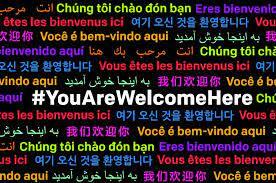
Sermon May 30, 2021
Miguel Gonzales
The Church of the Nativity and St. Stephen’s
Pentecost/Trinity Sunday
Acts 2:1-21 http://bible.oremus.org/?ql=489324179
Audio: /documents/Eucharist__May_30__2021
Video: https://www.youtube.com/playlist?list=PL7gRy9t2xnKBmP-BP3PjeReSkDWxOovVa
“And all of them were filled with the Holy Spirit and began to speak in other languages.” Please be seated. Acts 2:4
In today’s lesson from Acts 2, we hear about the Holy Spirit coming down from heaven and filling this group of people from different lands with the ability to speak in foreign tongues. It goes on to list from where these people came. They did not come from different parts of the same town, they traveled from outside Jerusalem because it was biblically mandated as one of the three pilgrimages Jews have to observe. This one being Shavout, which honors the wheat harvest.
The lesson goes on to list the different groups of people that had gathered: Parthians, Medes, Elamites, and residents of Mesopotamia, Judea, Cappadocia, Pontus and Asia, Phrygia and Pamphylia, Egypt and the parts of Libya belonging to Cyrene and visitors from Rome. For a little context, today, these are places in Iran, Iraq, Kuwait, Israel, Egypt, Turkey, and of course, Rome; all with different languages and dialects. And they were all filled with the Holy Spirit who blessed them with the ability to not feel alienated in a foreign place, and they were heard. So, I would like to ask you: Do you feel heard and understood here in our small parish in Central Pennsylvania? Do feel alienated by the way we worship?
Our current version of the Book of Common Prayer is from 1979 and aptly reflected who Episcopalians were at the time: white, English speaking Americans. Over the course of 41 years, we have witnessed the melting pot of American cultures grow, and we have welcomed people from new countries with different customs and languages into our congregations. And yet, the way in which we worship reflects the America of 1979: white and English speaking.
We like to think of ourselves as a welcoming church, and yet, how have we adapted? Have we felt the need to adapt? Are we truly a reflection of our local Perry County Community? In 2018, the General Convention challenged the Church, by way of a resolution, to experiment and create liturgies which reflect the people. While we are not a culturally diverse church here at Nativity, we should not allow our lack of diversity to stop us from thinking about the way in which we worship.
I thought about this resolution and I was reminded of my time working for Starbucks. Their mission statement reads: To inspire and nurture the human spirit – one person, one cup, one neighborhood at a time. The core of who the company is remains intact, however the individual stores themselves reflect the people they serve. Last September, Adam and I visited California. As a result of the wildfires, we changed plans, and found ourselves driving to San Diego. Before arriving at our hotel, we stopped at a small beach town just north of San Diego and walked around this quaint, queer friendly town. We needed our caffeine fix and walked to the closest Starbucks. As we waited for our order, I looked at their community board which had many flyers for homeless LGBTQ people, flyers for Trans Groups and flyers for Recovery Groups for people suffering from addiction. That store was in touch with their community and yet, they delivered the same cup of coffee we could get here in Pennsylvania; they were able to enculturate the neighborhood and the corporate Starbucks values into one store. It is this same concept that we should strive for: uphold the integrity of the who we are as Episcopalians while creating an identity that makes us stand out in the crowd.
While researching the way in which different diocese adapt, I thought about those states which are the first to receive immigrants, places like Texas, New Mexico, Arizona, and California. I found the Diocese of the Rio Grande, which serves both New Mexico and Western Texas. They beautifully integrate the Latino culture and traditions into their service while still maintaining the identity of the Sunday Eucharist. The challenge for a community like ours is that we do not have the same cultural diversity that places like Texas or even places like California or New York, so how do we experiment and create new liturgies? At the beginning of our service, our celebrant prays that our hearts be open: Do you know who you are allowing to enter?
The people mentioned in Acts had no clue that the Holy Spirit was working through them, so that all could be heard. Today as we seek to welcome people with different customs and traditions, allow the Holy Spirit to use you to do the work we are all called to do, so that all have the chance to feel heard and welcomed through our liturgies and hospitality. When we allow ourselves to broaden the scope of how we worship with different cultural aspects, we are investing in the longevity of our parishes. This is an investment in our church’s future; when we baptize a new person into the church, we, the congregation commit to supporting these people in their life in Christ. And just as we make that commitment with newly baptized people, we make the commitment to support new members into our congregations.
Places like the Diocese of the Rio Grande support its parishioners by integrating their Hispanic/Latino cultures into the daily fabric of the liturgies, while keeping the integrity of the Episcopal service. How can you and I learn to be more supporting of cultures which are not present in our communities? One option for us is to learn more every month by honoring special liturgies of different cultures. We can open our hearts and minds to Latinx, African, Indigenous, Asian, LGBTQ liturgies so that when the day comes, we are ready to welcome them and show them that love and support comes in all shapes and colors.
The sign on our front lawn says All Are Welcome Here in various languages. It is more than a symbol of hope for reconciliation, it is an invitation to those who feel alone, isolated, and alienated. Let us be the light in their darkness. Let the Holy Spirit flood our hearts so that when we reach out, they feel heard. Let us continue to learn how to embrace other cultures and traditions and expand the way in which we worship, so that when we say “All are welcome here”, those people who need us most can hear: Todos son bienvenidos aqui, Tous sont les bienvenus ici, alkulu murhab bih huna, alle sind hier willkommen, and tutti sono i benvenuit qui.
Amen.