


 Loading...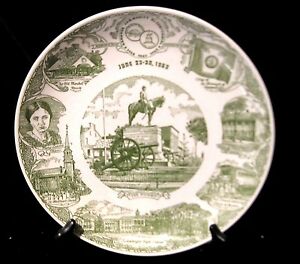
Sermon May 19, 2019
The Rev. Rebecca S. Myers,
The Church of the Nativity and St. Stephen’s
The Fifth Sunday of Easter, Year C
http://www.lectionarypage.net/YearC_RCL/Easter/CEaster5_RCL.html
And the one who was seated on the throne said, ‘See, I am making all things new.’ Also he said, ‘Write this, for these words are trustworthy and true.’ Rev. 21:5
Please be seated
This year my grandson, who is finishing 8th grade, loved social studies. He said the teacher was wonderful and that’s what made it interesting. Although as I look back to the places we’ve visited in the past couple of years, he’s always seemed interested in the historical sites. His interest warms my heart, because my father LOVED history. I’m glad to see the “history” gene carried on to the next generation.
One of the areas of history my grandson studied this year was the Civil War. His 8th grade field trip this past week was to Gettysburg. A couple of months ago, I remembered I had some books about the war and gathered them to take to my grandson. I kept forgetting to take them. One of the items was a book my father wrote that was never published.
My father first wrote this book in the 1960s. It was rejected by publishers. I remember he wrote it because I knew he named the little girl in the book after me. Then, he revised it in the 1980s. I was finishing my bachelor’s degree and occasionally I would fill in when his secretary was out. One of the things he had me do was type the latest version of the book.
As I looked at the pile of books I’d gathered for my grandson, I thought I should probably read this book my father wrote. I realized this was a 1994 version…he’d revised the story yet again.
The book is about the Civil War battle of Hanover that took place just before Gettysburg. My father was born and grew up in Hanover, so this little-known battle ignited his imagination, probably for most of his life.
I vaguely remember going to the re-enactment of this battle in 1963, where a man on a horse came flying through the town, announcing that the Rebs were coming! We also had a commemorative plate of this battle for many years.
In this book, really a short historical fiction novel, my father tells the story of the battle of Hanover through the eyes of five of the townspeople. One of the people is the Lutheran pastor, named David Bieber.
Two days before the battle was a Sunday, but the day before, a Confederate cavalry group had raided the town. In my father’s book, he has a sermon Pastor Bieber preaches to the small group of his members who have not fled the town.
As I read this sermon, I realized it contained a truth my father taught me and which guided his life and also guides mine:
Here is part of Pastor Bieber’s sermon:
You are here – I am here—all of us are here because of our human capacity to believe, despite death and destruction threatening on all sides, that we will somehow survive. Even those in the last extremity seem to cling to that belief. Why? Where could such a belief come from? Only in the understanding that evil is not the only force in the world—the understanding that the forces of good can and do intervene in our lives in ways that overmatch the evil. That understanding comes at an early age from what we are taught and from what we experience.
To acknowledge that there is both good and evil and to have confidence that the good will triumph is faith in God’s promises whether we recognize it or not. The clearest proof of that faith is your continued presence in this place of danger. That faith will not necessarily make you strong or brave. It will not dumb your senses to blows inflicted on you. It will not stanch the flow of blood from a wound. But it will carry you through to the very last. Thanks be to God. That is our hope. That is our constant prayer.
(A Gathering of Armies, Robert D. Myers, 1994, unpublished manuscript)
The writer of Revelation gives us a vision of a new world. A new heaven and a new earth. All of the former things have passed away. Jerusalem was no longer an embattled, sieged city. It was brand new. Death is no more. There are no more tears of sorrow. There is no more pain. God has come to live among mortals.
“See I am making all things new.”
God’s justice. God’s reign has come and everything is new…everything!
We cling to this hope of all things new every time we address the challenges that overwhelm us. They may be personal challenges. They might be the societal challenges we face regarding indifference to poverty, to our environment, to racism and to white supremacy.
We believe in God’s promise that all will be made new. We believe that while there is evil in the world, God will triumph. We stand in the face and place of danger and do whatever we can to make all things new. We stand in the face and place of danger praying for the new world to come.
Yes, we feel some trepidation. “All things new?” we question. Shouldn’t it be “some things new?” I mean there are some things in the world that are working for us, so we don’t necessarily want them to change.
The passage is clear – all things new. Whatever appears to be working for us must be examined in light of whether it works for the world…of whether it works for the reign of God…of whether evil is overcome. We must face the possibility that whatever is comfortable for us right now could be a manifestation of evil and must be changed.
“To acknowledge that there is both good and evil and to have confidence that the good will triumph is faith in God’s promises,” Let us be strengthened by this promise and live into the Revelation vision of all things new.
Amen
https://en.wikipedia.org/wiki/Battle_of_Hanover