


 Loading...
March 19, 2017 - Lent III
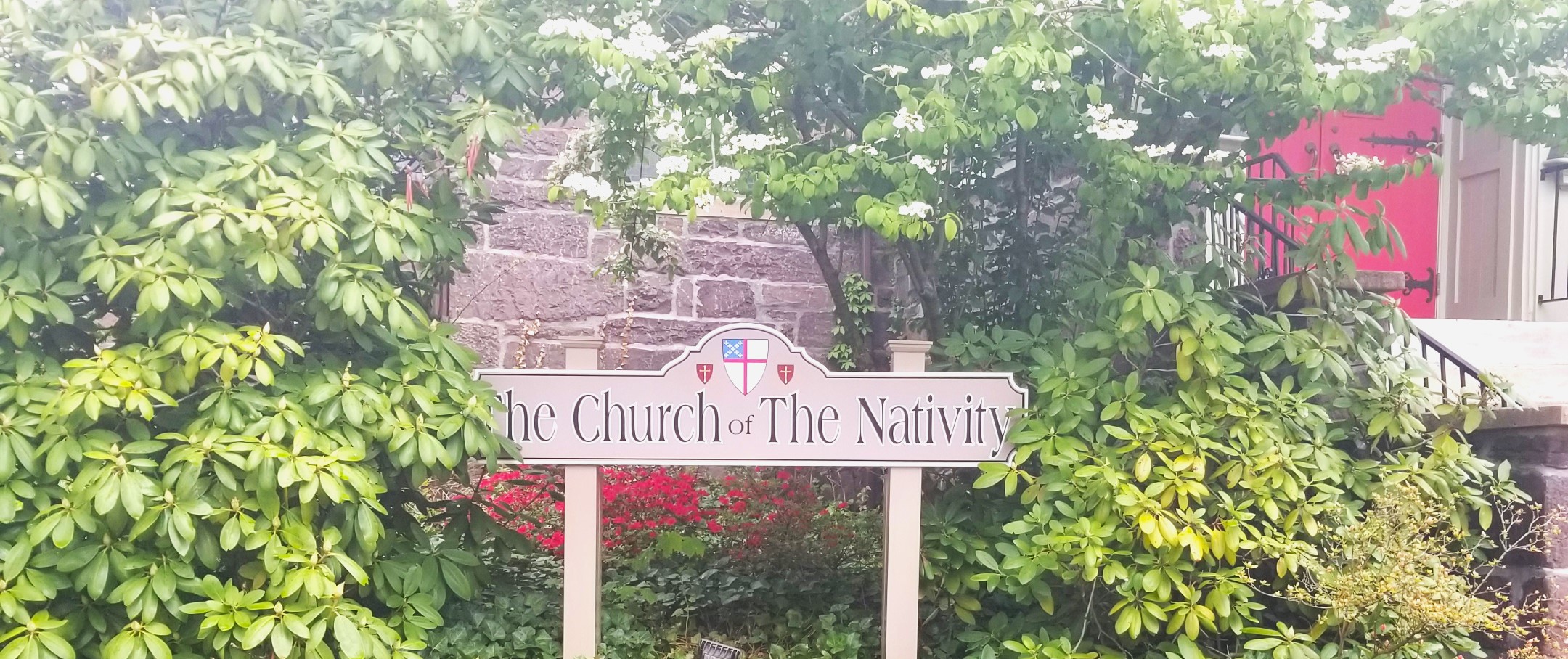
The Episcopal Church of the Nativity and St. Stephen
Newport PA
Darlene Amsler
Homily – “Are you thirsty?”
The Lord said to Moses, “Go on ahead of the people, and take some of the elders of Israel with you; take in your hand the staff with which you struck the Nile, and go. I will be standing there in front of you on the rock at Horeb. Strike the rock, and water will come out of it, so that the people may drink.”
Two of our readings this morning talk about water, specifically about being thirsty for water, so as I was washing dishes one evening and contemplating what to speak about it dawned on me – water! Having lived in Newport for almost forty years, I have come to know about water! Let me share a few facts with you.
Scientifically speaking, water is an inorganic compound, comprised of one oxygen atom and two hydrogen atoms. It can exist in three states. We think of water as a liquid, but it can also be a gas as steam and a solid as ice. I guess the snow we had this week was a solid as well. Water is vital for all known forms of life. In fact, our body is 55-78% comprised of water. Seventy one percent of the Earth is covered by water, and of that 71%, only 2.5% is freshwater – 99% of which is found in ice and groundwater. So you see, fresh water is indeed a precious commodity. In fact, humans cannot live for more than a few days without water. Normally, twenty percent of our water intake comes from the food we eat, and the remaining eighty percent comes from water and other beverages. Water is vital to our very existence. Access to safe drinking water in developing countries has improved over the last few decades, but approximately one billion people still lack access to safe drinking water. Many people thirst for water.
Have you ever been thirsty? Newport has had a history of water shortages. There were several times in my teaching career that the water in Newport was not safe to drink. We would have to take water breaks and pour water that had been brought in so our students did not get thirsty. When it got really bad, school would be closed. We are not the only local community that has had a problem with lack of potable water. It is not rare to hear on the news that a community has a boil water advisory. And of course, the west coast, especially California, has had some trying times with drought. Not being able to fill swimming pools or water lawns is very common. Fortunately, we live in a society where we can buy bottled water and not thirst as the Israelites did.
Think about how many times a day we use water without thinking about it – drinking it, cooking, washing dishes, bathing, brushing our teeth, water for our pets, watering flowers or vegetables in a garden, putting out fires, I could go on. When I am camping, and have to carry in water, I have more appreciation for my faucet! On a larger scale, water is a home for aquatic life, provides opportunity for fishing, provides for transportation, is used in industrial processing, used for power generation, for heating and cooling, for religious rituals, to name a few. If we thought about it, we could come up with many more uses.
Back to the Israelites. Moses has been leading them in the desert. They are hot, they are tired, they have been hungry and now they are thirsty. They cannot run to the grocery store and buy bottled water. I thought about the times when I have been thirsty – after mowing the lawn on a hot summer day, after a spicy meal, and one memorable time when I was hiking in the Adirondacks and didn’t bring enough water – fortunately for me, others in our group did! In all of these instances, I was able to satisfy my thirst fairly easily. I was lucky that it was not an ongoing problem.
So what did Moses do? He prayed to God for help. In the previous chapter of Exodus, Moses dealt with the people’s hunger. God answered their need by providing manna and quail. In today’s lesson, they thirst, and Got provided them with water. But they still question, “Is God in our midst?” Perhaps that is what they truly thirsted for – the confidence that God indeed is amongst them. Do you thirst? Do you sometimes wonder if God is indeed with you? Sometimes when we are feeling very low, we forget that God is in our midst. This puts me in mind of the poem, Footprints in the Sand.
Footprints in the Sand
By Mary Stevenson
One night I dreamed I was walking along the beach with the Lord.
Many scenes from my life flashed across the sky.
In each scene I noticed footprints in the sand.
Sometimes there were two sets of footprints,
Other times there were one set of footprints.
So I said to the Lord,
“You promised me Lord,
That if I followed you,
You would walk with me always.
But I have noticed that during
The most trying periods of my life
There have only been one
Set of footprints in the sand.
Why, when I needed you most,
You have not been there for me?”
The Lord replied,
“The times when you have
Seen only one set of footprints,
Is when I carried you.”
There may be times in life when you thirst for water. And there may be times in life when you thirst for the reassurance that God is with you. Perhaps you are having financial problems. Or maybe you have health concerns. Maybe you have lost a loved one or a relationship has ended. There are so many stresses in our daily lives. It is easy to forget that God is with you when you feel alone. Like the Israelites, you may be angry, and feel frustrated. You may yearn for reassurance the way that the Israelites yearned for water. How can you resolve this?
Like Moses, prayer is a good start. Moses prayed for help and then had faith that God would provide. I’m not a hydrologist, but it would be difficult for me to believe that striking a rock would cause water to appear. Moses’ faith led him to follow God’s instructions and provide water for the people.
What works for you? For some people, quiet meditation helps them feel God’s presence. For others, being in a group for communal worship helps them to feel the presence of God. Reading your Bible can help you find comfort, too. Many passages help you find solace and comfort in God’s presence. Physical activity helps some people. I have a good friend who says she takes a walk with God when she is stressed. For me, imagining the strong arms of God enveloping me in a comforting hug reminds me of God’s very real presence. And just as you seek God’s presence in times of trouble, don’t forget he is with you always, and thank him for the good times as well.
In our reading from John, Jesus asks the Samaritan woman for a drink from the well. As you may know, Samaritans and Jews were not the best of friends. Jesus promises her that, “Everyone who drinks of this water will be thirsty again, but those who drink of the water that I will give them will never be thirsty.” In other words, we can thirst for water as we know it. But if we know the comfort of God’s presence, we will not thirst.
California has had a drought for over five years. The lack of water not only caused inconvenience for the people living there, it has prevented wildflowers from blooming. This past fall and winter, California has experienced unusually heavy rains. The Anzo-Borrego Desert and Walker Canyon are two places that have been transformed into fields of orange poppies and yellow and orange flowers. It is called a Super Bloom and rangers expect there to be a rolling display of color as seeds, some dormant for decades, spring to life. Looking at pictures of it today, you could not imagine that they are deserts. Just as the desert is transformed when it receives adequate rain, our lives can be more beautiful if we have faith and feel God’s presence.
Last month, I asked you to check your foundation. Are you including faith in that foundation? Don’t be thirsty – remember that God is with you always.