


 Loading...
Sermon December 16, 2018
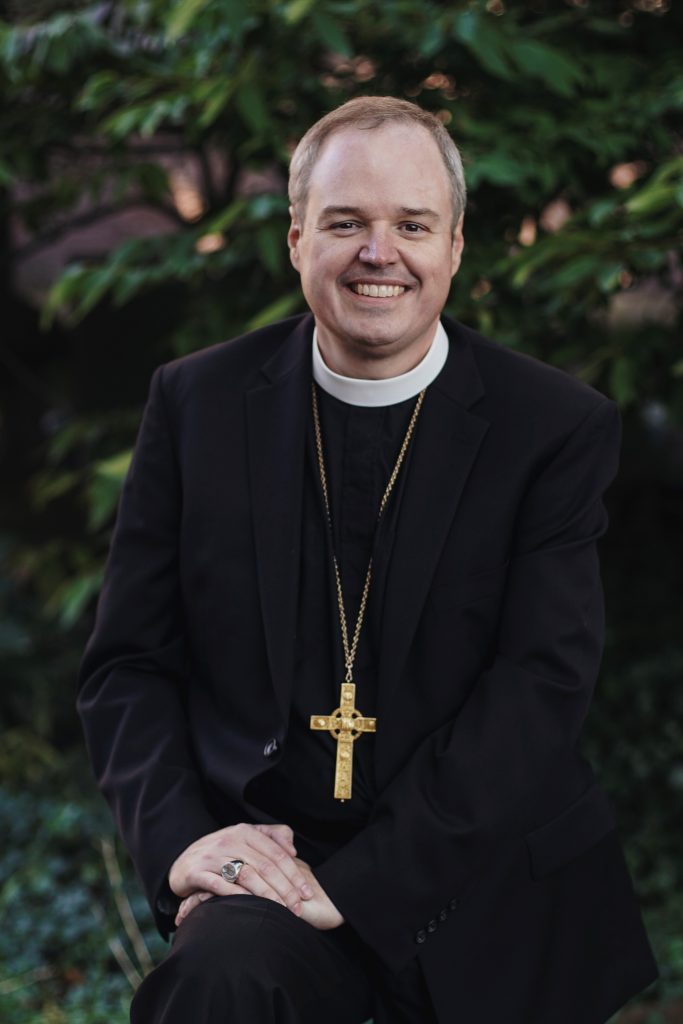
The Rev. Rebecca S. Myers,
The Church of the Nativity and St. Stephen’s
Advent III, Year C
http://lectionarypage.net/YearC_RCL/Advent/CAdv3_RCL.html
Even now the axe is lying at the root of the trees; every tree therefore that does not bear good fruit is cut down and thrown into the fire.’ Luke 3:9
Please be seated.
This week in thinking about our readings for today, I was prompted to think about justice and people who demonstrated justice to me. John the Baptist’s words we heard today… give away your second coat; don’t defraud people; don’t exploit another person. From Zephaniah we hear that God will deal with all oppressors and God will gather the outcast. Certainly, these readings speak of God’s justice.
Then I started to think about the people in my life who taught me about God’s justice. I remembered Rev. Bill Vastine, a one-time Methodist Pastor I knew as a teenager. What I recall is that he no longer was a United Methodist minister because he had been so outspoken about justice issues in his parishes. He came to our city Lutheran Church and found a home there.
But as with so many of the people who taught me about justice, I am no longer in touch with them or they have now died. I can’t ask about the facts. There is so much I do not know about the life of Pastor Vastine.
Then I thought about family lore. Now you know that these family stories can get you in trouble, because they are not always true. One of the pieces of my family lore was how my mother integrated the Y-teen float in the Ft. Smith, Arkansas Christmas parade in 1955.
Hmm, I so wish my parents were living and I could ask more questions. I heard this piece of lore many times, but it was mostly a 1 or 2 sentence narrative of the outcome, rather than how this ever happened.
But luckily, I remembered that my father had written a piece about this facet of his and my mother’s lives. My father was quite a writer and as he got older and finally learned how to operate a computer, he started writing about his life. Mostly it was things from our family lore – how he got to Cornell; how he hitchhiked across the United States. We heard one or two sentence snippets about these events, but my father finally fleshed them out.
In March of 2004, my father wrote a 42-page piece titled The Great Social Issue of the Twentieth Century and How We Interacted With It. This was the introduction:
The great social issue of the 20th Century, in America and most of the world, was prejudice—racial, ethnic, religious, gender and class. This narrative is intended to be a record of how we interacted with it, individually and together.
The piece only goes up to about 1960! I know there was so much more my parents did after that time period. The piece was never finished and am grateful to have what I have.
Here is some of what my father wrote about this incident with my mother, Mary Ann:
Mary Ann, who had never been south of the Mason-Dixon Line, was in for a culture shock, because Fort Smith was a segregated southern city. She was appalled to find separate drinking fountains in the department stores labeled “White” and “Colored”. The schools were still segregated, of course, as well as many businesses and professions. When she was hired to be Y-Teen director of the YWCA, she was astonished to learn that there was a separate facility for Negroes.
Mary Ann was so popular a director of the Y-Teens and put on such interesting programs that the United Daughters of the Confederacy (UDC) complained to Mary Ann’s boss (the Executive Director) that the girls preferred her activities to the UDC. This “yankee soldier’s wife”, as they called her, was causing trouble. The Executive Director backed up Mary Ann. She also backed her up later in 1955 when Mary Ann got the idea of putting a Y-Teen float in the Christmas parade filled with girls from both the Negro and White groups. Her integrated float won a prize and struck another blow against segregation. Page 38
This may help you understand more about my passion around racial justice…. My mother was doing this work before I was even born!
In our Gospel today, people are flocking to the desert to see, hear and be baptized by water by John. Obviously, his teaching was compelling. He drew people in. He told them there was another way to live. He even suggested that the way they were living was against God. He challenged all of their excuses about their goodness. Listen to verse 8 again:
Bear fruits worthy of repentance. Do not begin to say to yourselves, “We have Abraham as our ancestor”; for I tell you, God is able from these stones to raise up children to Abraham.
Don’t use the excuse that you are “saved” or righteous or good because you are descended from Abraham. Be careful about the excuses you use to keep living the way you’re living.
The people drawn in by John the Baptist want to know what to do. Can you imagine how powerful his speech must have been that people were so ready to change? I mean, we all know how tough it can be to really hear and see what is happening around us…how hard it is for us to move in a different direction or see that what we thought was “normal” is really against God?
Yet, people ask John, “What can we do?” John talks about things that even today we can do.
First of all, look at our stuff. Do we really need everything we have? What is truly necessary? Do we need to make some changes, maybe so others can live life differently? Remember what Jesus says in Luke 18 verse 22
When Jesus heard this, he said to him, ‘There is still one thing lacking. Sell all that you own and distribute the money to the poor, and you will have treasure in heaven; then come, follow me.’
We need to explore our relationship with our stuff and see where it may be getting in the way of justice and following Jesus Christ.
John tells tax collectors to only collect what is due. The normal practice was to collect extra for yourself. Jesus tells the soldiers to not extort money or treat people badly through false accusations.
What are the things we think are normal that may in the end be oppressive or exploitive? For instance, I’ve known people who have a terrible time renting a home because of the various practices involved – either money required for down payments or for a background check or because they didn't rent an apartment in recent years. Now, these may be justified business practices and they could be creating unnecessary homelessness.
There is also plenty of evidence over hundreds of years about the racial bias in our criminal justice system, a system that unduly over incarcerates People of Color, especially men. I encourage you to watch the Netflix documentary, “13th” or read the book, The New Jim Crow: Mass Incarceration in the age of Colorblindness by Michelle Alexander. This book is also available as a free audio book on You Tube.
The bottom line is what does God’s justice demand?
John the Baptist continues to cry out to us across the ages, proclaiming the Good News of Jesus Christ:
Bear fruits worthy of repentance. Do not begin to say to yourselves, 'We have Abraham as our ancestor'; for I tell you, God is able from these stones to raise up children to Abraham. Even now the ax is lying at the root of the trees; every tree therefore that does not bear good fruit is cut down and thrown into the fire." Luke 3:8-9
Let us do our best to bear the fruit of God’s justice.
Amen
13th Documentary: https://www.netflix.com/title/80091741
The New Jim Crow audiobook: https://www.youtube.com/results?search_query=the+new+jim+crow+audiobook+channel
The New Jim Crow: Mass Incarceration in the Age of Colorblindness https://www.amazon.com/New-Jim-Crow-Incarceration-Colorblindness/dp/1595586431/ref=sr_1_1?ie=UTF8&qid=1544741024&sr=8-1&keywords=The+New+Jim+Crow