

 Loading...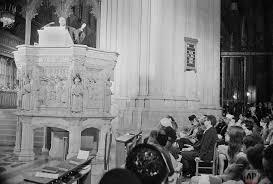
Sermon April 8, 2018
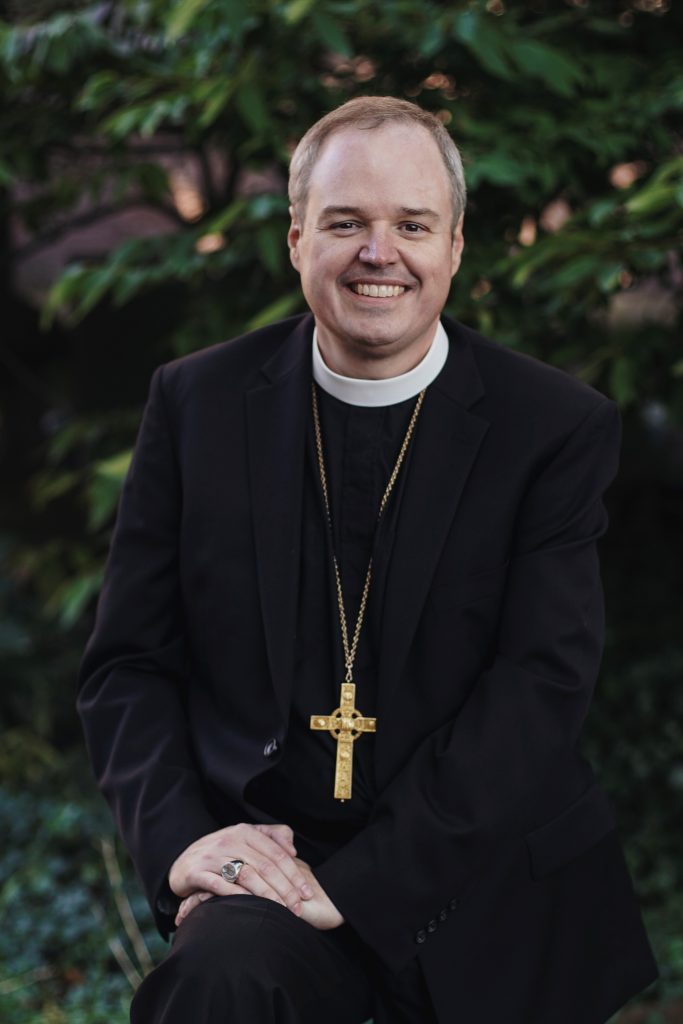
The Rev. Rebecca S. Myers, LSW
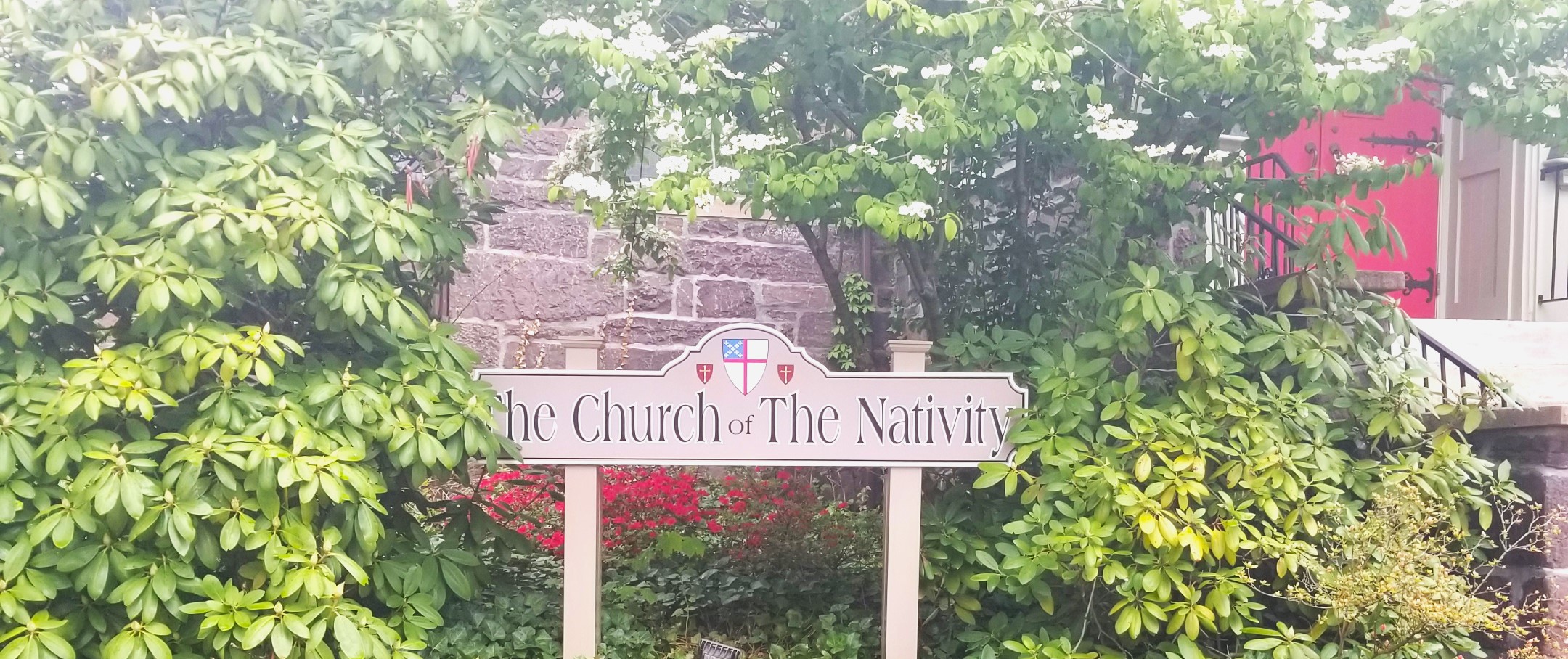
The Church of the Nativity and St. Stephen’s, Newport, PA
Second Sunday of Easter, Year B
//lectionarypage.net/YearB_RCL/Easter/BEaster2_RCL.html#nt1
If we say that we have no sin, we deceive ourselves, and the truth is not in us. If we confess our sins, he who is faithful and just will forgive us our sins and cleanse us from all unrighteousness. 1 John 1:8-9
Please be seated.
As a young child, one of the things I dreaded the most was confession. I was Roman Catholic until I was 9 years old, so I was instructed in private confession. I guess in trying to teach us, the nuns said we should list our sins and how many times we had committed them. I knew I fought with my brothers, but I didn’t keep a list, so I’d make things up. Then, of course, I felt guilty for lying to the priest. I was so relieved when we started attending the Lutheran church and we had corporate confession at the beginning of the service.
We used these words from 1 John to lead in to the Confession: If we say that we have no sin, we deceive ourselves, and the truth is not in us. If we confess our sins, he who is faithful and just will forgive us our sins and cleanse us from all unrighteousness.
These words are familiar to me to this day.
There is a great place for private confession. The Episcopal Church has two forms for the Reconciliation of a Penitent, beginning on page 447 of The Book of Common Prayer. I am happy to conduct those if you feel so inclined.
People involved in 12-step programs do a kind of confession when they write their Step 4 fearless and moral inventory. There are lots of materials available to guide you in doing this, rather than the made-up checklist I concocted as a child. In Step 5, you admit to God, yourself and another human being, the “exact nature of your wrongs.” It’s a way of private confession. Then Steps 6-10 take you through a process of repentance, as well as, an ongoing examination to take inventory and when you are wrong, to promptly admit it.
When we confess our sins, we are forgiven and cleansed. To even be able to confess, we must be willing to examine ourselves in an ongoing way and have the courage to face uncomfortable truths.
I guess that’s one of the most difficult parts of sin…to even acknowledge that it exists. Some sin is so clear to us, so it is relatively easy to confess. When we are mean to another person or cut someone off when we are driving or are angry or judgmental or stingy or greedy or unloving. We get that. What’s harder, I think, are the sins that we don’t believe we participate in.
This week, especially, I am thinking about the sin of racism. I grew up in a good family. My parents were involved in civil rights to a certain extent. They didn’t march in the marches. And they did teach me that all people are created equal…that racial prejudice was bad. I saw them working in diverse communities for justice. I had experiences in diverse communities, too. I read books and had discussions with people of backgrounds different from mine. I was on the Harrisburg School Board, President of the PTA where my children went to school, living in the city of Harrisburg. I would never say during those years that I was racist.
Yet, in the late 1980s, I became part of a group that went deeper in understanding racism. Until then, I probably would have said that I did not have the sin of racism and as I learned, I was deceiving myself. That reality was so hard to accept. Yet, I guess somehow I knew that confessing this sin would free me.
This past week, I attended events at The Washington National Cathedral to commemorate The Rev. Dr. Martin Luther King, Jr. He is remembered in The Episcopal Church as a civil rights leader and martyr and as with all commemorations, we remember him on the day he died.
Dr. King preached his last Sunday sermon at the Cathedral on March 31, 1968. The Cathedral wasn’t even fully done. The church was packed. Most people had to stand for the entire service, so everyone could get in. Dr. King’s sermon, titled “Remaining Awake Through a Great Revolution” was 47 minutes long.
This past Wednesday, 50 years after his martyrdom, the Cathedral offered a special Evensong. After it ended, they played the audio of the sermon. Once the sermon was over, they tolled the bourdon bell, a low, mournful sound, 39 times for the number of years Dr. King was alive.
That sermon from 50 years ago, stung, because so many of the words continue to ring true. Listen to this:
It is an unhappy truth that racism is a way of life for the vast majority of white Americans, spoken and unspoken, acknowledged and denied, subtle and sometimes not so subtle—the disease of racism permeates and poisons a whole body politic. And I can see nothing more urgent than for America to work passionately and unrelentingly—to get rid of the disease of racism.
Earlier in the sermon, he gave the reason why we must do this work when he said:
For some strange reason I can never be what I ought to be until you are what you ought to be. And you can never be what you ought to be until I am what I ought to be. This is the way God’s universe is made; this is the way it is structured.
How often have you and I said that we do not participate in the sin of racism? I say to you today that we deceive ourselves.
God requires us to examine ourselves deeply and when we find sin, to confess it. That also carries the responsibility to refrain from committing that sin. Things like racism, which are so embedded in our culture, can be challenging to see…challenging to confess…and challenging to stop, because it is so much easier to deceive ourselves, to say we have no sin.
On Thursday evening through much of Saturday, I will be participating in a workshop facilitated and taught by The People’s Institute for Survival and Beyond out of New Orleans. This is the Diocese of Central Pennsylvania latest attempt to confess to the sin of racism, to be forgiven, and to work to not commit the sin institutionally over and over again.
Please pray for those of us who will attend. Please pray that we can become the yeast for efforts throughout the Diocese to confess…to admit that we have sin…to stop deceiving ourselves.
Because God, who is faithful and just, will forgive all our sins and cleanse us from unrighteousness.
Amen
Alcoholics Anonymous – Big Book https://www.aa.org/pages/en_US/read-the-big-book-and-twelve-steps-and-twelve-traditions
Remaining Awake Through a Great Revolution – audio: https://www.youtube.com/watch?v=AFbt7cO30jQ
Video of commemoration service with video of Dr. King giving the speech: https://youtu.be/-XjD_sRDFHQ
Service leaflet for April 8, 2018 commemoration: https://cathedral.org/wp-content/uploads/2018/04/20180408MLKCommemoration50.pdf
People’s Institute for Survival and Beyond: https://www.pisab.org/