

 Loading...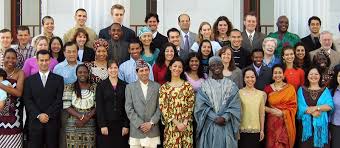
Sermon June 7, 2020
The Rev. Rebecca S. Myers,
The Church of the Nativity and St. Stephen’s
First Sunday After Pentecost, Trinity Sunday, Year A
http://lectionarypage.net/YearA_RCL/Pentecost/ATrinity_RCL.html
So God created humankind in his image,
in the image of God he created them…. Genesis 1:27
At General Theological Seminary, there is a longstanding matriculation tradition. On Michaelmas, the feast day of St. Michael, which occurs on September 29, (here it is known as Goose day), at the service of Evensong, every new student writes their name in the matriculation book. These books were the precursors to databases.
While we are writing our names in the book, the hymn attributed to St. Patrick is sung. You know the one; it’s hymn 370 in our hymnal.
The first verse is:
I bind unto myself today the strong Name of the Trinity, by invocation of the same, the Three in One, and One in Three.
A modern English translation of the original Irish has the line: I believe the Trinity in unity.
It is quite powerful to bind yourself to the Trinity by writing your name in the book at The General Theological Seminary.
Yes, today is Trinity Sunday. The day we celebrate the Three in One or diversity in total unity.
The concept of the Trinity is difficult to fully articulate. Athanasius wrote it like this in the Creed attributed to him and found on page 864 in the Book of Common Prayer:
For there is one Person of the Father, another of the Son, and another of the Holy Ghost. But the Godhead of the Father, of the Son, and of the Holy Ghost, is all one, the Glory equal, the Majesty co-eternal.
Diverse, yet unified.
Today we heard a version of creation from the Book of Genesis. There is another version of creation in Genesis 2. As the Common English Bible translates it:
God created humanity in God’s own image; in the divine image, God created them.
God, the Triune God, the unity in diversity, created humanity in God’s own image. Of course we would be diverse. We were created out of diversity to live in unity in diversity. All humanity created in God’s own image.
Contemplate that for a moment.
We know this to be true, because we see diversity right within our own family and friends. Sometimes we are bothered by it, aren’t we? We find it challenging to fully embrace the diversity around us. Sometimes our parameters for what is “right” and “wrong” are very narrow.
Last fall at Rotary I heard a wonderful presentation about the differences in the English language depending upon where you live. The presenter, a linguist, made the point that there really is no “right” or “correct” English. Depending upon what part of the country you live in, different letters are pronounced differently and certain words are dropped from sentences or phrases. There is much diversity in “correct” English.
This ancient text of Genesis, having been written over 2,000 years ago says God created humanity in God’s image. Yet, throughout the ages, humans have found ways to deny that everyone was created in God’s own image, haven’t we? Are you slave or free? Are you Jew or Greek? What gender are you? Whom do you choose to love? Are you rich or poor? What race are you?
All of these categories are created by us – this diverse group of humanity. Unfortunately, they are not just descriptors, they are associated with values. They become associated with good and bad. They become associated with human and less than human.
Where is our respect and deep understanding for diversity in unity and for all humanity being created in God’s own image?
This pandemic we are living with certainly reminds us that we were all created in God’s own image, because we are all susceptible to it. And it also reminds us of the categories we have created – of how some of God’s creation of humanity are considered less than human, because not everyone on earth has access to the things that might help them stay alive or live through Covid-19.
My daughter shared a story about the family of one of her students. The student’s uncle lived in Cameroon. He came down with the virus. The family carried him to the hospital and begged for help, but there were not any ventilators available, so the student’s uncle died.
Yes, we say, that is Cameroon, so very far away. Yet, our readings today remind us that we are all connected…all created by the diversity in Unity…all created in God’s own image. So, how do we allow these disparities to happen? How do we allow these disparities to continue, because they are evident in our own communities?
In our own country, we have an unfortunate legacy of hierarchy of people, built upon the perception of skin color. This human created system, which we know as racism, is deadly, abhorrent, and built upon denying that God created all of humanity in God’s own image. This idea of skin color determining who is truly human and who is less than human, is so baked into our daily lives, that many of us who are White, don’t see it or choose to deny it exists.
The uprisings and protests we have seen in the past weeks after the video of the murder of George Floyd, are the result of people claiming their humanity in the face of a system that has too long denied it.
For those of us who are White, we must look at the part we have played, whether we realized it or not, in supporting and creating a system that claims some people are not really human.
Archbishop Desmond Tutu has said that the worst thing anyone can do is make someone believe they are not a child of God. He also said God's dream is that you and I and all of us will realize that we are family, that we are made for togetherness, for goodness, and for compassion.
https://www.brainyquote.com/quotes/desmond_tutu_454112
What work are we willing to do to embrace and birth God’s dream? How will we show with our own lives and with the life of our parish that God created humanity in God’s own image; in the divine image, God created them? What are we willing to do?
Amen
https://en.wikipedia.org/wiki/Saint_Patrick%27s_Breastplate