

 Loading...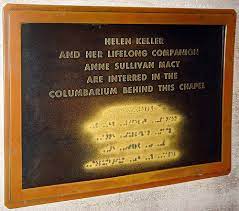
Sermon October 24, 2021
The Rev. Rebecca S. Myers, MSW
The Church of the Nativity and St. Stephen’s
Twenty-Second Sunday after Pentecost, Proper 25, Track 2
http://lectionarypage.net/YearB_RCL/Pentecost/BProp25_RCL.html
Audio: /documents/Eucharist__October_24__2021
Video: https://youtu.be/HsV0Q33ISv4
Then Jesus said to him, ‘What do you want me to do for you?’ The blind man said to him, ‘My teacher, let me see again.’ Jesus said to him, ‘Go; your faith has made you well.’ Immediately he regained his sight and followed him on the way. Mark 10:51-52
Please be seated
I started off this week with my annual eye exam. Because I wear contacts (just in my right eye), I need to have an exam each year. Thankfully, my eyes haven’t changed much over the years. I did get a little stronger prescription for my contact and at one point in the exam, with the contact in, the Dr. said my eyesight was better than perfect.
So I guess when I read our Gospel for this week, the sense of sight was on my mind. Later in the week, a friend talked about a new piece on public TV about Helen Keller.
Many of us do know her story of how at the age of 19 months, a high fever caused her to lose her sight and her hearing. When she was six, her parents wrote to the head of the Perkins School for the Blind in Boston to see it there was a teacher that could teach Helen. Helen’s parents did not want to send her away to a special school. Anne Sullivan, almost 21 years old and a graduate of the Perkins School due to an infection that affected her eyes, came to Helen’s home and was able to teach Helen to read, write and speak. Anne stayed with Helen until Anne’s death in 1936. Helen lived another 52 years until 1968, and had other companions who assisted her.
The story is fascinating, for sure. The piece made me think about the assumptions we make about communication and intelligence. We expect people to communicate by speaking, orally, or writing, literally. Most of us have a preference. Some of us need to see things in writing to remember or learn them. Some of us need to hear things to remember or learn them. Helen Keller worked most of her life to fit in to these patterns of orality and literacy.
However, her story highlights that there are other ways to communicate. There is American Sign Language. There is Braille. There is more cultural diversity than just orality and literacy.
The other aspect of Ms. Keller’s life and many who have disabilities, is the assumption that because they have a disability, they do not have intelligence.
In the times of Jesus, people who were blind often lived in poverty. Sometimes they were kept away from the community. Bartimaeus, whom we hear about in the Gospel, was a beggar along the side of the road. He was not able to work.
Helen Keller also faced this assumption that because she could not communicate in the ways the majority of people expected – through speaking or writing – she was therefore not intelligent. She went on to graduate from Radcliffe College, since Harvard was not open to women at the time and yet throughout her life, her intelligence was questioned.
Ms. Keller led an amazing life. She was an advocate for so many groups, because she knew what it was like to be slighted or stunted by others because of something you could not control. She traveled around the world and was a great ambassador for the United States. One of the last efforts she supported before she died was education for children with disabilities.
Even so, she was always battling the perceptions that came from society regarding her difference.
Is it any wonder, then, that when Jesus asks Bartimaeus, “what do you want me to do for you?” the answer is, “My teacher, let me see again.” It’s not that we need the sense of sight to have an amazing life; it’s that during that time and possibly until our lifetimes, living without the sense of sight is so challenging.
Bartimaeus quickly responds to Jesus’ question with what he needed to have a less challenging life. Bartimaeus was practical.
Yet, in our time, I believe we are called to confront our bias about people who do not have the senses of sight or hearing. We need to search our hearts for the assumptions we make about people who are blind or deaf. We need to look around our environments and be more aware of how others can navigate if they cannot speak or read or hear.
In our reading from Jeremiah today, we hear, “…I am going to bring them from the land of the north, and gather them from the farthest parts of the earth….” (Jeremiah 31:8) God brings all of us in our wonderful differences together. We can do our part to make that happen.
Amen
“Becoming Helen Keller” https://www.pbs.org/wnet/americanmasters/helen-keller-documentary/18386/