


 Loading...
Sermon April 22, 2018
Kay Cramer
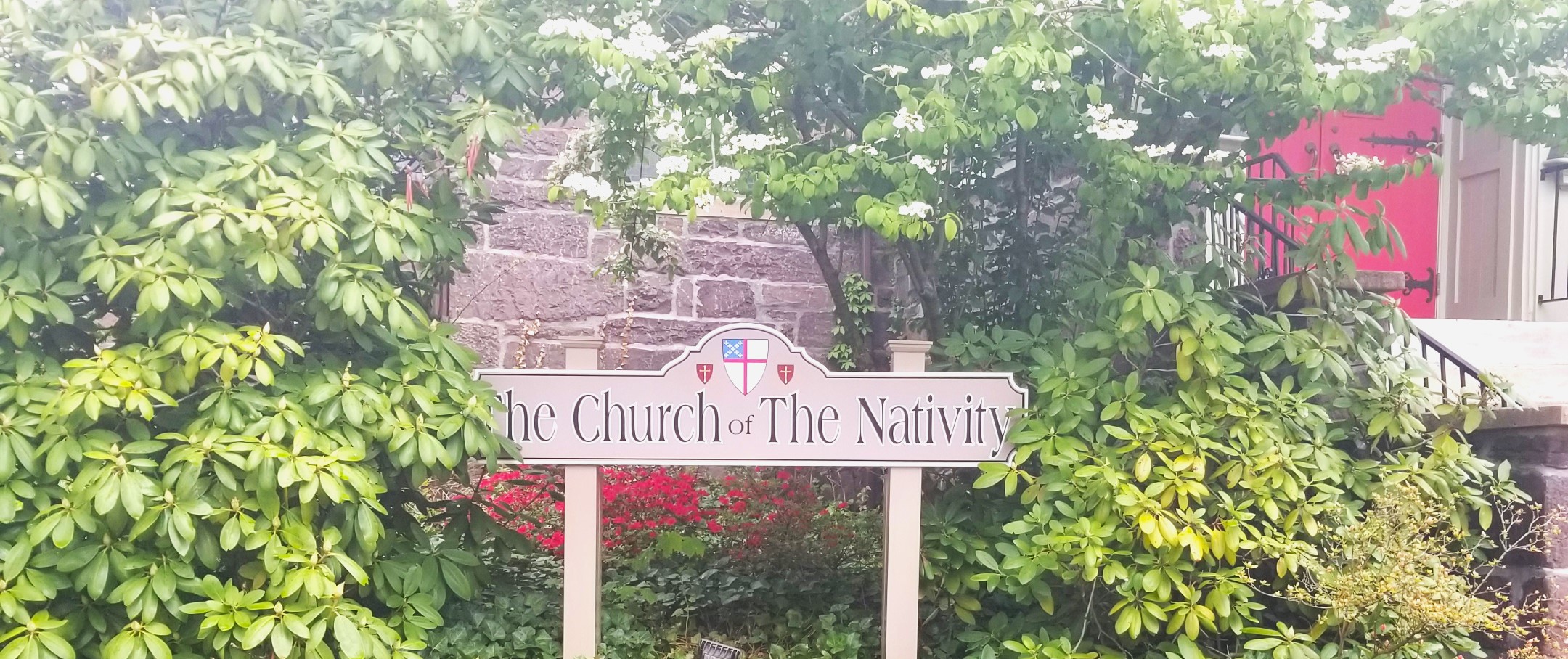
The Church of the Nativity and St. Stephen’s, Newport, PA
Fourth Sunday of Easter, Year B
//lectionarypage.net/YearB_RCL/Easter/BEaster4_RCL.html
EARTH DAY HOMILY
APRIL 22, 2018
HAPPY EARTH DAY!
I love the “environmental hymns” we are singing today throughout this service—full of wonder and awe at God’s magnificent creation, and joy that we can share in it. It is fitting that Earth Day is on a Sunday this year, allowing communities of faith to embrace care for the Earth and all life on it as a proper object of our concern.
Our psalm for today, the 23rd, models the care that we are called on to give to creation. As the Good Shepherd (an image that Jesus also took to himself), God provides us with ample pasture, clean water, oil for dry and burning skin, an overflowing abundance that God has made our portion. Although generations since Jesus’ time have practiced an exploitative model of earth use based on greed and fear of scarity, I think the model of the 23rd psalm—abundance and shepherding--is the appropriate one for Christians.
Earth Day was established almost 50 years ago, in 1970. The first fully illuminated picture of Earth (the “Blue Marble”) was beamed down from the Apollo 17 mission and filled people with awe. At the same time, there was a collective sense of fear, loss and unease prompted by the publication of Rachel Carson’s A Silent Spring in 1968. Both the Environmental Protection Agency and the Clean Air Act were established in the early 70’s under the presidency of Richard Nixon. In the years since, America’s political response to the increasingly urgent warnings of our scientists has varied; doubts sown by the fossil fuel industry have stifled action and exacerbated the real threats that we and future generations may experience.
So, on this Earth Day, I have been thinking about changes in our environmental responses, and want to talk about something I will call the “Trajectory of Environmentalism.” I see this trajectory as Joy, Grief, and Hope.
JOY. This is the impulse that leads us to praise God’s creation in awe and gratitude. We all have experienced joy. For me, a steady joy comes from my family and our farm. But sudden joy can hit like a bolt of lightning—the flash of a Northern harrier hawk across our hayfield for the first time, my first view of a moose drinking in a lake in Glacier National Park, the haunting cry of a loon in the misty mornings on Blue Mountain Lake in the Adirondacks.
I think everyone experiences these moments of blinding joy. And our magnificent country can provide a bountiful portion of that joy, as anyone who uses our state and national parks, or travels in the West can tell you. But, here’s the thing: the joy we experience in nature is increasingly imperiled by the vast extent of environmental degradation we are experiencing now. And this brings me to the second point on my trajectory of environmentalism: GRIEF.
Last fall, I became increasingly distraught by the enormous challenges facing us from the changing climate and the lack of commitment by Washington, but also by us citizens, to take the serious measures needed to cope with climate change and the loss and suffering it is already bringing. As I attended conferences, I saw climate and oceanographic scientists, as well as agricultural leaders, becoming increasingly fearful and discouraged. Even Al Gore seemed overwhelmingly saddened by the loss of the Paris Agreement. By December, near despair, I was having heart palpitations. I even went to the doctor for Prozac! I have since learned that this is a real thing—eco-anxiety or ecological grief.
We have all experienced loss. When I was a kid in TN, my sisters and I used to ride our ponies through a forest near our home that had neat plants like ground pine and even lady slippers; little by little it was taken for housing developments—now is it totally gone. And most of us remember the old elm that stood in front of our church before it succumbed to an alien fungus. Douglas Christie writes in Blue Sapphire of the Mind that “the ability to mourn for the loss of other species is…an expression of our sense of participation in and responsibility for the whole fabric of life of which we are a part.” I’m sure you have memories for places that have vanished under buildings or parking lots, or creatures that are no longer found here or are very rare.
I care deeply about the natural world. Peterson Toscano, my co-leader of Citizens Climate Lobby, who spoke to us a few months ago, says he doesn’t care about polar bears. His interest is social justice. I agree that there are overwhelming social justice issues as people are displaced by rising seas, drought and flooding (just look at last year’s hurricane season). There are also huge implications for human health, the economy and national security. But I do care about the natural world, and I think we all should. At the current rate of species extinction, we risk losing 50% of all land-based plant and animal species this century, including many birds such as migrating warblers, which are already highly threatened. In addition, the oceans are reeling from warming and acidification of climate change—they have absorbed 90% of the additional heat and CO2 until now, but they are no longer capable. To this point, 49% of marine vertebrates (that we know!) have been lost, and overfishing, coral bleaching and devastating pollution by plastic and oil spills are further degrading our oceans. Besides leaving an impoverished world for future generations, each loss tears the intricate web of life in ways we really don’t fully understand.
Ignoring the grief of this loss has become a national obsession, but it comes with a cost to us—the decline into apathy, lethargy, and even despair. What can one person do, after all? Embracing and fully experiencing our grief, however, gives us the chance to decide what is really important. It allows us to work through our feeling of loss and achieve clarity about our future direction. This is true whether it is the loss of a loved one, a job, a pet, a home or the natural world. The grieving process contains the seeds of wisdom and future action.
Which brings me to the final point on the trajectory: HOPE. I have found hope in many places, but especially in the thousands of people, faith communities, municipalities and businesses here and around the world that are working to address the challenge of our changing climate. It is truly inspiring!
Just a few examples: Renewable energy—wind and solar--have increased exponentially all around the world since 2000. Renewables are now the best option for developing countries which don’t yet have a conventional grid. Over 500 global companies have committed to 100% renewable energy in the next couple of decades. Cities like Pittsburgh have made the commitment, and at least 4 U.S. cities are already 100% renewable, including Republican-led Georgetown, TX.
With renewables come good jobs, and that, plus cost savings, drive the growth of renewables. There are now almost 5,000 solar energy jobs in PA, twice as many as in coal. Supportive jobs in construction and manufacturing are already available.
Technological advances have been made in other areas, such as Electric Vehicles (most car companies have committed to producing evs in the near future). John & I decided to walk the walk on Good Friday, when I gave up my beloved Miata for a fully-electric Chevy Bolt. When coupled with solar electric generation, this makes a serious dent in our carbon footprint.
A large majority of people in PA (a recent poll says 71% across both parties) want renewable energy and are pressuring businesses and politicians to address climate change now! In the PA legislature this week, bipartisan bills endorsing a transition to clean energy by 2050 were introduced in both chambers. And in Congress, the bipartisan Climate Solutions Caucus—up to 74 members, equally divided between Democrats and Republicans--seek to address climate challenges facing our country.
But what really gives me hope are The Kids!! Every day there’s a new story: the kids’ climate lawsuit moving ahead in Fed. Court, kids getting their borough council to install solar arrays on schools and municipal buildings and to save a park near their home from industrial development, kids planting trees and community gardens, kids working on technology to take plastic out of the ocean or construct a wind turbine that would not threaten birds. Kids are so committed and fully embrace activism. The stories just go on and on.
Now, when I think of what one person can do, I think of Rachel Carson and how one person was able to evoke concern and remembered joy in our natural world, and spur action against the chemicals that were ruining it. That is hope!
So, that brings me to the final point of my homily—What do we as a faith community do?
Years ago, I did a Parlor People presentation on the biblical sources of care for the Earth as a concern of the faith community. I thought I was going to have to convince the attendees about the reality of climate change, and I marshalled my arguments. But at the end, I didn’t get substantive questions. I got Bill Rohm asking, “So what are we going to do about all this?” I didn’t have a good answer for him then, but now, years later, I do have suggestions.
As a church, we have come a long way in becoming more sustainable. We can point to the garden, Equal Exchange, stopping our use of plastic water bottles, change to renewable electricity and replacing our oil heating with mostly electrical. We have replaced our incandescent lightbulbs with LEDs or CFLs and insulated our leaky windows with plastic sheeting. We as a church won a national prize from Interfaith Power and Light for our conservation planning. So many people at Nativity have been involved in this effort. I think now is the time for our congregation to inspire the larger community with our commitment. I ask you to join us.
There are significant ways we can decrease our consumption and help reverse global climate change if we embrace them. My top 4 picks, because of their total impact, are:
*(1) install or switch to renewable energy
*(2) increase your travel efficiency by replacing your current vehicles (when the time comes) with more efficient cars (even evs, if possible), consolidating trips to decrease mileage, decreasing your flying miles or buying carbon offsets if you must fly.
*(3) eat farther down on the food chain by decreasing meat-containing meals by one or two a week, or eating sustainably raised meat.
*(4) Plant trees, either on your property or by donating to an organization engaged in global reforestation.
Two more? Vote for climate advocates for political office and TALK about climate change to your families, friends and neighbors (and politicians). And, if you choose, join the church’s “Live Lightly on God’s Creation” challenge to reduce your impact on the Earth.
Terri Tempest Williams, renowned environmental writer, says “We are at a crossroads. We can continue on the path we have been on, in this nation that privileges profit over people and land; or we can unite as citizens with a common cause—the health and wealth of the Earth that sustains us. … The time has come for acts of reverence and restraint on behalf of the Earth.”
Al Gore always ends his talks with a quote by the poet Wallace Stephens, “After the final no, there comes a yes, and on that yes the future of the world depends.” The “Yes” is now being spoken around the world. For the love of God’s creation and our fellow beings, human and otherwise, let’s add our voices to the chorus!
AMEN