

 Loading...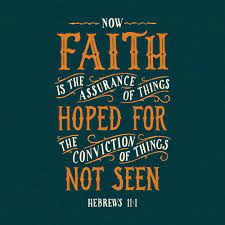
Sermon August 7, 2022
The Rev. Rebecca S. Myers, MSW
The Church of the Nativity and St. Stephen’s
9th Sunday after Pentecost, Proper 14, Track 2
https://lectionarypage.net/YearC_RCL/Pentecost/CProp14_RCL.html
Audio: /documents/Eucharist__August_7__2022
Video: https://youtu.be/cPBWmkEL2gg
Now faith is the assurance of things hoped for, the conviction of things not seen. Hebrews 11:1
Please be seated.
My favorite genre, whether it be books, movie or tv, is mysteries. One I’ve been watching lately is on PBS – Masterpiece Mystery. It is Grantchester. The series is set in the 1950s in Grantchester, England. The series is based on short mystery stories by James Runcie. The main character is the Vicar of the parish, currently Will Davenport, who works with the local police detective inspector Geordie Keating.
The Vicarage has a devoutly religious housekeeper, Mrs. Chapman, affectionately known as Mrs. C. She is probably about 50, a short woman with chin-length coiffed brown hair. She wears a hat and good coat to church. When she’s in the kitchen, she always has an apron on.
Season 7 is currently airing on PBS. It is the summer of 1959. Mrs. C is suddenly not herself. We learn that she has uterine cancer. Towards the end of episode 3, Mrs. C, in her housework/cooking clothing, marches into the big beautiful church and stands in front of the huge stained glass window behind the altar. She starts an angry conversation or plea with God.
She says
“I pray every day. I abide by your every bloody rule. So where are you? Why won’t you answer me? I’ve done everything and you take everything away.
I wanted a child. You took that away. I want to live. I wanted to be happy. You’re taking that, too.
Her face becomes more angry and she concludes, “You know what? You turn your back on me, I’ll turn my back on you, you bastard!”
Then she storms out of the church. In the next episode, we learn she is no longer coming to the church and tells people she has stopped believing.
Faith is not easy, is it?
Today we hear a very familiar portion of the letter to the Hebrews. We really do not know who wrote this letter. It is believed to have been written between 60 and 90 A.D., so fairly early in Christianity. It is written to people who expected Christ to return right away. It is to written people trying to follow Jesus Christ when it was probably considered crazy to do so.
Faith is the assurance of things hoped for, the conviction of things not seen. It is a crazy statement, isn’t it? How can we be so certain that the things we hope for will happen? How are we convinced of the things we cannot see physically?
Not everything we hope for will be fulfilled, right? This hope the letter speaks of pertains to the hopes we have as Christians…as followers of Jesus Christ. And as we know, some of our religious/Christian hopes are a little misguided at times.
Yet, when we can live in the assurance that the work we do to bring about the Kingdom of God will happen and are convinced that it will happen, even when all around us seems to say otherwise, our entire being changes. Our view of the world changes. Our view of what we must do changes.
I have always been amazed how people who were enslaved in the United States kept tremendous faith in God, even when the Christian faith was perverted and used against them. They certainly embodied our reading today.
One of the things I did during my sabbatical was attend the Union of Black Episcopalians Conference in Baltimore at the beginning of July. The theme was “Roots, Reparations, and Renewal.” I heard some wonderful and amazing stories about what is happening in The Episcopal Church regarding reparations or repairing the racial breech created during times of enslavement and Jim Crow. As I heard the New York Times journalist Nikole Hannah-Jones explain that we often change the law and think we’re done; however, we fail to address the harm that occurred while that oppressive law was in place.
So, some places in The Episcopal Church are working to atone and make right for the harm they did. This is part of the reconciliation process. First you name what was done and then you repair the harm.
One such effort is what is being done by Virginia Theological Seminary. In September of 2019, they created an endowment of $1.7 million dollars to pay reparations to “Black people who labored on-campus during slavery, Reconstruction, and segregation under Jim Crow laws.” The project has staff people and they have hired researchers to find the descendants of these workers. They have made at least 2 direct payments to the descendants. They are also building relationships with these descendants, inviting them to visit the campus any time and holding events specifically for these descendants and the Virginia Theological Seminary community.
The Seminary website explains that this is part of the “Seminary’s commitment to recognizing its participation in oppression in the past and commitment to healing and making amends in the future.”
They also note that “additional funds have been allocated to support the work of Black congregations that have historical ties to the Seminary; to create programs that promote justice and inclusion; and to elevate the work and voices of Black alumni and clergy within The Episcopal Church.”
Yes, there are at least two historically Black churches, one Episcopalian, that were founded for the many of the workers at VTS. The workers, though exploited, were faithful people. They had assurance that things would change for the better. They were convinced that things would get better. They might not have foreseen the details of the direct reparations, but their faith assured them it would happen.
Faith is definitely challenging. Living with confidence and assurance and conviction that God’s kingdom will come…that love will prevail… is not easy.
Let us pray for the strength and vision to have such a faith.
Amen
Grantchester: https://en.wikipedia.org/wiki/Grantchester_(TV_series)
Nikole Hannah-Jones https://nikolehannahjones.com/
Virginia Theological Seminary – Reparations https://vts.edu/mission/multicultural-ministries/reparations/