

 Loading...
Sermon November 26, 2017
The Rev. Rebecca S. Myers, LSW
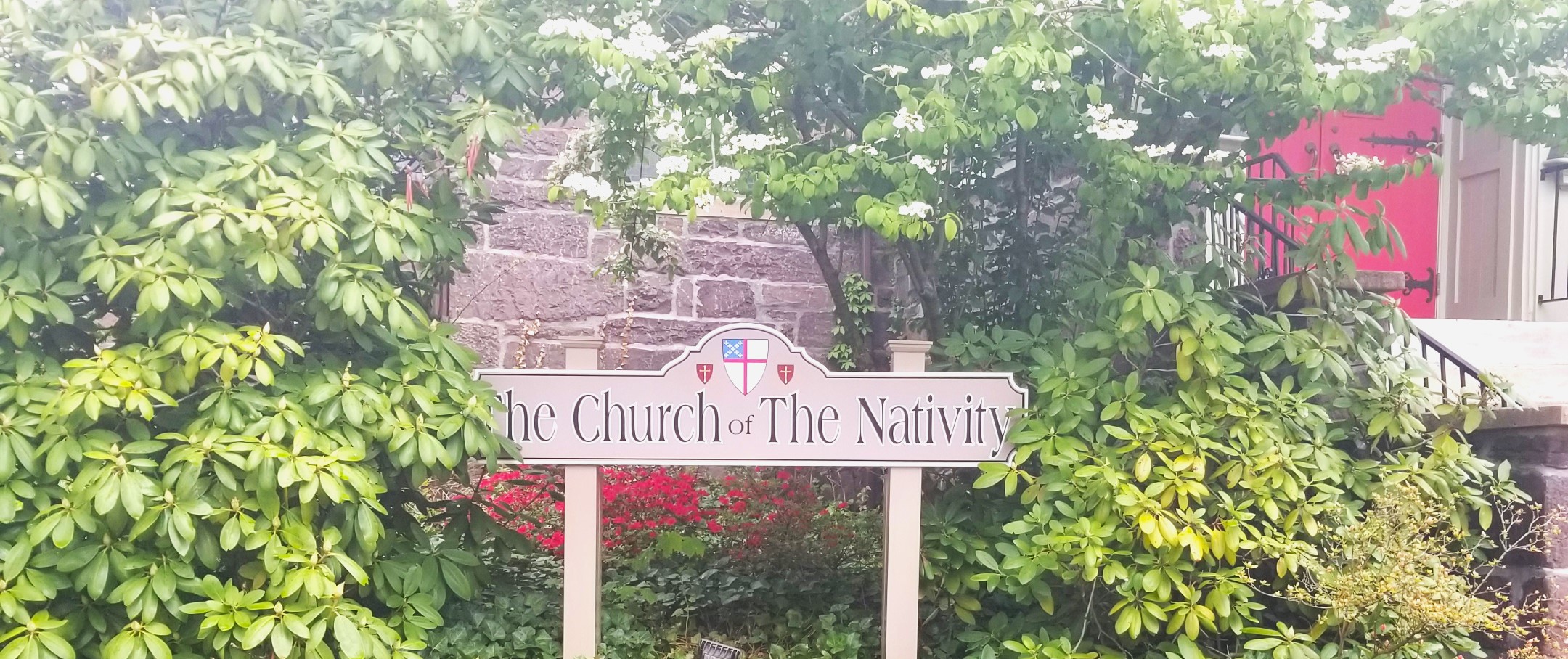
The Church of the Nativity and St. Stephen, Newport, PA
Pentecost 26, Year A, Proper 29
//lectionarypage.net/YearA_RCL/Pentecost/AProp29_RCL.html
And the king will answer them, “Truly I tell you, just as you did it to one of the least of these who are members of my family, you did it to me.” Matthew 25:40
I will seek the lost, and I will bring back the strayed, and I will bind up the injured, and I will strengthen the weak, but the fat and the strong I will destroy. I will feed them with justice. Ezekiel 34:16
Please be seated.
I still remember the first time I heard the singing group, Sweet Honey in the Rock. They are an all-woman, African-American a capella group that came together in 1973. I heard them in the early 1990s. They sing and write songs that express what’s happening in the world, as well as religious pieces. They have won numerous Grammy Awards. The singers have changed over time and the group continues on with its signature sound and performance.
Their harmonies, words and performance were captivating. The sound is so beautiful. I was able to hear them in concert a number of times since then. I bought cassette tapes and CDs of their music. There have been times when I’ve had jobs that required travel around Pennsylvania. I’d usually put in a Sweet Honey in the Rock tape or CD and sing, sing, sing the whole trip.
One song I remember was written in 1985 and called “Are My Hands Clean?” The lyrics talk about the circuitous route of making a ladies’ blouse. While the countries involved and the route has changed somewhat since then, the point is still the same. The song starts off:
“I wear garments touched by hands from all over the world, 35% cotton, 65% polyester.” The cotton grows in one place, with workers toiling for low wages. A ship then takes the cotton to another country to be woven together with the polyester filament. We all like that, because the clothing doesn’t wrinkle as much. The polyester filament requires oil from another country and a petro-chemical mill to make the strands of filament. Another mill creates the fabric. Then to another country to cut and sew that fabric into a garment. In all of these places, people are working for very low and subsistence wages. Finally, the finished garment makes it back to our favorite store. The song ends with:
“…where I buy my blouse on sale for 20% discount. Are my hands clean?”
The point is that when we buy clothes, we are often unaware of the labor chain that goes into making them or the lives of people who do the work. We are usually so happy to find a bargain, at least I know I am.
In our readings today, we hear about the God we follow. Ezekiel reminds us that God is a great shepherd. God will seek us out and find us. At the same time, God will destroy the fat and strong. God will feed them with justice. That line fascinated me. I guess it means they will be punished and yet, that feeding with justice, also sounds like the so-called fat and strong, will see what justice looks like.
And Jesus in our Matthew passage today, also lets us know what justice looks like and how it will be at the final judgment day. Justice is doing what are called, the works of mercy: Feed the hungry; give drink to the thirsty; clothe the naked; give shelter and hospitality to the stranger; visit the sick; visit the imprisoned. Jesus says when we do those things, we do them to him. Our fellow human beings who need these services from us are as if Jesus is in front of us.
And while we do these things through giving to the food bank – over 325 pounds of produce and probably thousands of pounds of food were donated by us this year; providing clothing and helping people through Join Hands; sending cards and visits to those who are sick – I think we also need to ask why are people hungry and why are people thirsty and why do people not have the clothing they need; and why are strangers turned away; and why are people sick; and why are people in prison? Those are the questions that are about justice…that feed us with justice.
They are also the difficult questions, aren’t they? What does a just food system look like? You can find many articles about how wars will be fought because there will not be enough water or water will be too expensive for people to buy. There is certainly injustice involved with who makes our clothing and what goes into it. The immigration and refugee crises bring up questions about how we welcome and provide hospitality and shelter to strangers. There is much research into what causes many sicknesses and diseases and then there is the issue of who can afford the treatments or what is paid by insurance or who gets to have access to insurance. And our prison-industrial complex is definitely in need of reform. There are plenty of books and articles and documentaries about that.
We feel overwhelmed by it all and so often, we just give up. For awhile I had money invested in a particular social responsibility stock fund. They tried to check out companies to be sure that the workers, environment, and communities were cared for. Sometimes they’d buy stock in a company that didn’t meet their guidelines, so they could engage in shareholder advocacy to have the company change their policies. That’s one of many ways we can begin.
Maybe if we remember that in all we do, there is another person making it possible. There is someone weaving our clothes, making the material, growing the cotton. There is someone who is hungry. There is someone who cannot afford water. There is the face of Jesus staring back at us. Our wonderful Lord and Savior…the one we worship and adore.
Amen
//collegeofsanmateo.edu/integrativelearning/learningcommunities/commons/James/AreMyHandsClean.pdf