

 Loading...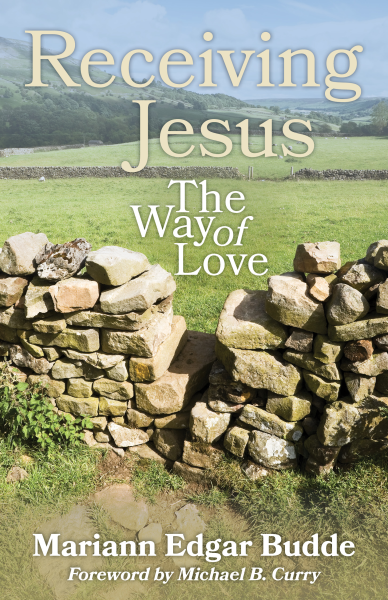
Sermon October 6, 2019
The Rev. Rebecca S. Myers,
The Church of the Nativity and St. Stephen’s
Seventeenth Sunday After Pentecost Track 1, Proper 22
http://www.lectionarypage.net/YearC_RCL/Pentecost/CProp22_RCL.html
The apostles said to the Lord, "Increase our faith!" Luke 17:5
Please be seated.
It’s been over 20 years since I worked in hospice, but the things I learned there have stayed with me. One of the big lessons was that God is definitely in charge and I am not.
I learned that lesson over and over again during my short six months as a social worker in hospice. I was living in Charlotte, North Carolina and worked for Presbyterian Home Care and Hospice.
One example of the many I could tell:
We had a new patient to enroll. The nurse asked me to go to the home first. She had to go to our office to get some things and would come a little later. I get to the home and am completing the intake papers. I was speaking to the wife. Her husband was the patient.
I was getting annoyed that the nurse was taking so long to get there. But at some point, the wife said that her husband really needed to talk to a chaplain. So, I called the nurse to see if our chaplain could come visit. The nurse was still at the office and in a Godincidence (as Darlene calls them), the Chaplain was also there. The nurse said she’d bring the chaplain with her.
The nurse and chaplain eventually arrived. I told the chaplain that the husband had been hard to understand. The chaplain went to see the husband had a great conversation with the him. He was perfectly able to speak to her clearly. I left. This man died just a few days later. His wife said that the conversation with the chaplain was what made the difference.
I had been so annoyed that the nurse was taking so long to get to the home. God knew better than me. It all worked out to the best for the people our hospice served.
This week, I read the introduction to a book called Receiving Jesus: The Way of Love by Mariann Edgar Budde. She is the Bishop of Washington and is the Bishop who ordained me both to the Diaconate and to the priesthood. When I saw announcements about this book from Church Publishing, I was very interested.
This section in the introduction struck me as I meditated upon our Gospel for this week. Bishop Budde was at a meeting with other Bishops and Michael Curry, the Presiding Bishop.
I found myself thinking back to something I had recently read of how Christians experience the Holy Spirit in a book on the essentials of the Christian faith by Methodist pastor Adam Hamilton:
When we speak about the Holy Spirit, or the Spirit of God, we are speaking of God’s active work in our lives; of God’s way of leading us, guiding us, forming and shaping us; of God’s power and presence to comfort and encourage us and to make us the people God wants us to be. The Spirit is the voice of God whispering, wooing and beckoning us. And in listening to this voice and being shaped by this power, we find that we become most fully and authentically human.
Hamilton goes on: I think that many Christians live Spirit-deficient lives, a bit like someone who is sleep-deprived, nutrient-deprived, or oxygen-deprived. Many Christians haven’t been taught about the Spirit, nor encouraged to seek the Spirit’s work in their lives. As a result, our spiritual lives are a bit anemic as we try living the Christian life by our own power and wisdom.
(Adam Hamilton, Creed: What Christians Believe and Why (Nashville: Abingdon Press, 2016), Kindle Edition, 965.)
Bishop Budde then writes: As I heard the presiding bishop speak and recalled Adam Hamilton’s words, it was as if God were holding a mirror to my face. I had to acknowledge to myself and before God that on most days, I try to live and lead from my own power and wisdom. In over thirty years of ordained leadership, my daily default position is to assume that everything depends on me. Intellectually, I know that’s not the gospel. Never once does Jesus say, “It’s all up to you.” Rather he says things like, “I am the vine; you are the branches.” He is the source of our strength. We are the branches, only able to share what we receive from him. Yet knowledge isn’t enough: as a Christian—and most certainly as a leader of other Christians—I need daily reminders, and lived experience, of the fundamental truth that apart from Jesus, I can do nothing.
(Receiving Jesus, Introduction, xi-xii, https://www.churchpublishing.org/receivingjesus )
Never once does Jesus say, “It’s all up to you.” And “I need daily reminders, and lived experience, of the fundamental truth that apart from Jesus, I can do nothing.”
It is not all up to us on our own power. It is how we listen and are guided by the Holy Spirit and our faith in God and Jesus Christ that allows us to do anything.
“Increase our faith!” the apostles plead to Jesus. Jesus tells them it is not their lack of faith that’s the issue. They and we need only the faith of a tiny mustard seed to do great things. I would say it is our insistence that it is all up to us, which either makes us do more than we really can or do be paralyzed that we won’t be enough.
So many days in Hospice, I’d plan my day and my visits. I was a good employee, following the rules. Yet, on so many days, God was in charge. Most times I got annoyed, even though time after time I was shown that God’s agenda and plan for the day was so much better than my own.
Rather than “Increase our faith,” we need to ask for the lived understanding that “apart from Jesus, I can do nothing.”
Amen