


 Loading...
Sermon May 29, 2022
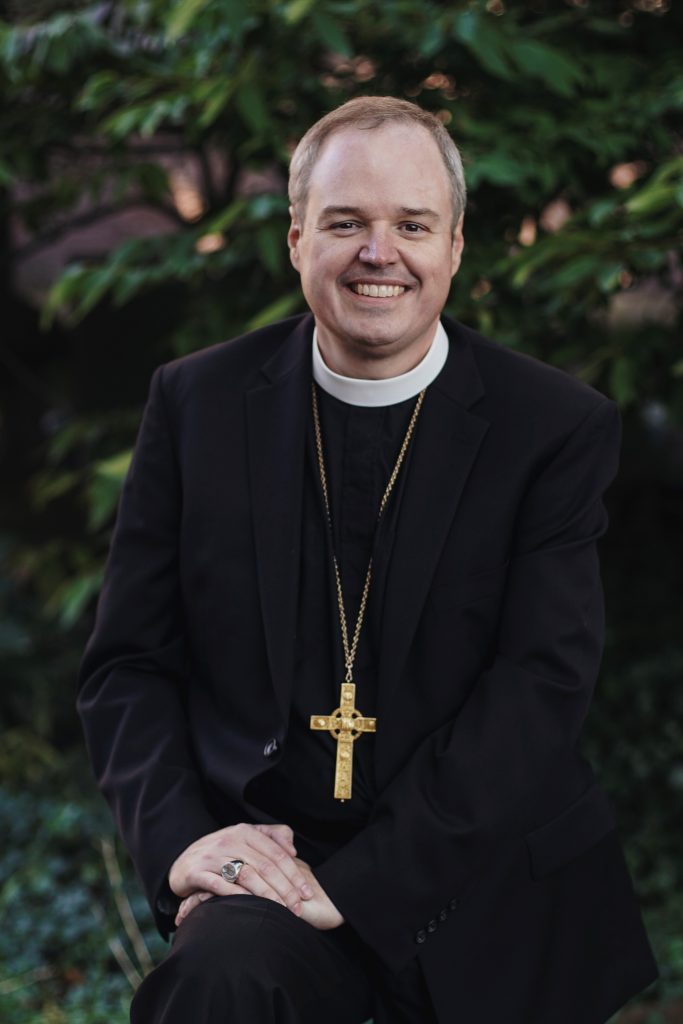
The Rev. Canon Robert Schiesler
The Church of the Nativity and St. Stephen’s
Seventh Sunday of Easter, Year C
http://www.lectionarypage.net/YearC_RCL/Easter/CEaster7_RCL.html
Audio: /documents/Eucharist__May_29__2022
Video: https://youtu.be/H8RGg4CkuAE
EASTER 7C, NATIVITY & ST STEPHENS, 5/29/22
A little girl was enjoying a walk in the park with her grandmother. The woman pointed to a clump of trees in the distance: "Do you see those two trees over there, my little one?" "Yes," says the girl. "See the distance between them? See how their branches never quite touch...almost but not quite?" "Yes."
"The tree on the left adores the tree on the right. And I'm pretty sure that the tree on the right feels the same way about the tree on the left. They can't stop looking at each other, swaying gently together, each bending towards the other as if in prayerful homage. Do you understand what I am saying?" The girl was a little startled with the question but replied, "Yes". Her wise grandmother sighed and continued her discourse: "No matter how much they yearn to be closer to each other, they can never touch. They cannot touch each other in the joy of a bright sun shining upon them nor can they touch in the suffering of a cold, winter day with the wind whipping their branches about. If one gets a blight, the other can only watch but cannot eradicate that sickness. They are forever locked apart from each other." But the little girl, with a serious face and clear voice, spoke up "Unless lightening knocks one of them over onto the other."
"Yes, that's true." says the grandmother. And they stood together silently listening to the wind among the branches, watching those trees stretching towards each other. Suddenly the girl broke the silence: "This makes me sad and angry." And Grandmother looked lovingly at the girl and said, "Don't be sad. Yes, the branches of the trees can never touch; they can never hug. But if you could see below the surface, these two trees that seem forever apart, have roots that are entwined and entangled. What they yearn for above, they experience intimately deep below. We can't see it but they share one life; what happens to one, happens to the other."
The Gospel of this day is always a portion of the "high Priestly Prayer" of Jesus as a discourse before his impending death. It is a farewell address bound in a unifying prayer for God's people. This prayer is for those who will be tested that night and it is for us as a matter of faith — that we be united to God in the way that Jesus himself is united to the Father in the Holy Spirit...as we believe, as we act, as we seek unity and not division, as we
give and receive care, as we receive and offer acceptance, solace, love. We are intertwined as the Trinity is intertwined and is known in the glory that we reflect in our deepest yearnings and hopes. According to Jesus' eloquent prayer, it is the union of believers with God, with the Savior Christ, and with one another that renders us capable to "bloom where we are planted" and do God's mission in the world. Churches often get this wrong; it's not our mission....it is God's mission for us and with us. It is our work to create a community that recognizes and honors that mission in a particular fashion, in particular circumstances. Our culture does not glorify what we do and who we are in community; rather it glorifies independence and self sufficiency, not an intricate and intimate unity. Only this week did we witness the horrible deaths of 19 children and 2 adults in Uvalde, Texas and for many, also witness the despair of a community that seeks answers in the wake of such violence, not just thoughts and prayers. Many continue to hold absolute allegience to the individualism of the second amendment as noted in LeMonde, the leading news outlet of France, which wrote of this disheartening cycle of violence in that "if there is any American exceptualism, it is tolerating the fact that schools in the United States are regularly turned into bloody shooting ranges."
The hope for inner peace and genuine unity, one with another, is universal but sabotage occurs daily; we cluster for identity in smaller and smaller, sometimes ugly, circles of race, class, gender, life-style or idealogy in the name of ideals that we believe under gird our culture, our country. Yet, communal peace and unity are characteristics lacking all too often, even within the Church. Jesus invites us into just the opposite, a manner of living among all peoples, using all gifts to nurture all. The life that Christ is describing is one based on generous love, mutual forgiveness, respectful communication and the willingness to make the needs of others our own agenda in seeking the common good and the dedication to awaken each day with the desire to reshape, reform, re-energize this world and to do so for all, especially the marginalized, the disenfranchised, the lost, the least. When we realize the depth and the width of Jesus' earnest prayer for unity, it remains a constant challenge to us all who profess to love and follow him.