



 Loading...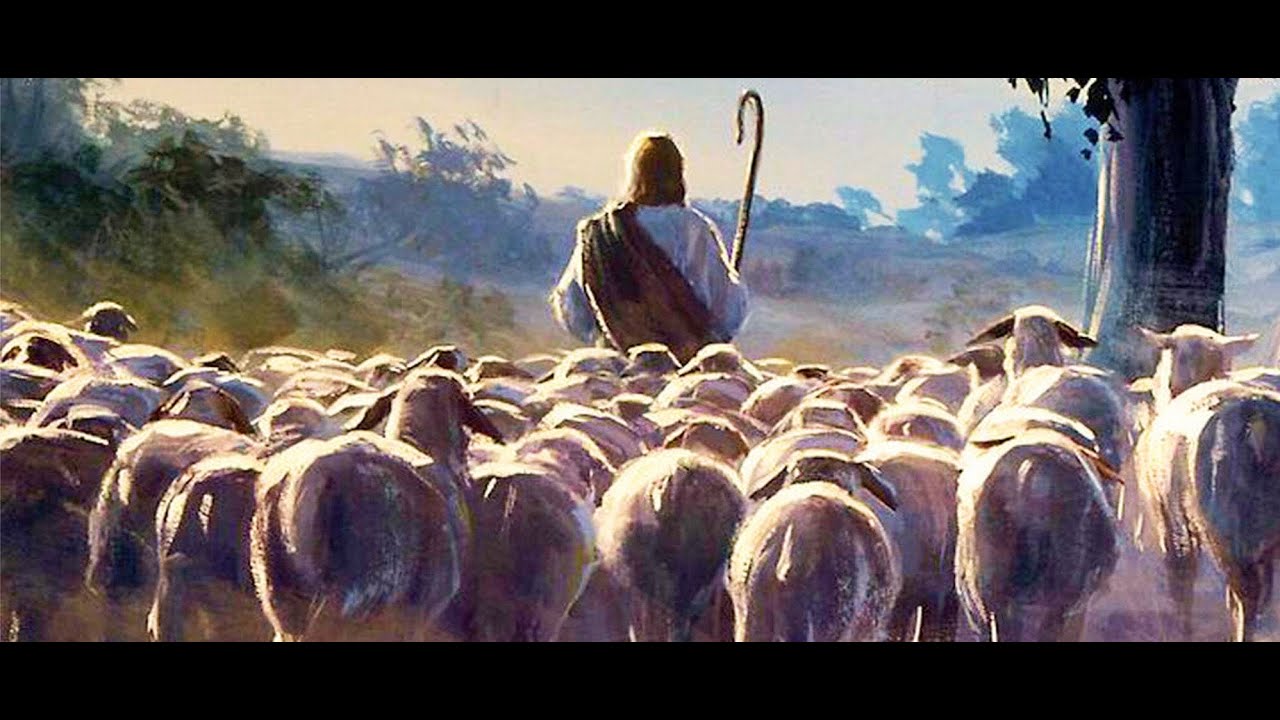
Sermon May 8, 2022
The Rev. Canon Robert Schiesler
The Church of the Nativity and St. Stephen’s
Fourth Sunday of Easter, Year C
http://www.lectionarypage.net/YearC_RCL/Easter/CEaster4_RCL.html
Audio: /documents/Eucharist__May_8__2022
Video: https://youtu.be/u0mU-EKuylI
For the majority of us, Albert Einstein's theory of relativity is as dense as any black hole that we may have heard about. We do know that this theory has certainly changed the direction of Issac Newton's theories on physics. And more so, this has had a serious effect on the individualism that has characterized modern philosophy. We understand that our presence and actions do create ripple effects upon each other if not our culture, environment and future. Thus, Rene Descartes' "truth", "I think, therefore I am" is seriously flawed and brings us to that old joke of Descartes walking into a bar and the bartender asks him if he wants a beer; "I think not", he innocently replies...and disappears. Descartes believed in in an individualism that is poorly grounded in its very conception. As a new born, every child learns immediately that she is dependent on her mother for food, security and care. She learns to speak and formulate thoughts and make connections by those who surround her. She begins to realize she is not the sum total of her thoughts but the sum of her relationships, healthy, nurturing, faith based at best; destructive, wounding, nihilist based at worse.
This preface sets the stage for us to explore more closely the Gospel this morning, on a day typically named, "Good Shepherd Sunday". However, the readings point more to the sheep of the flock than to the shepherd. Jesus' discourse comes in reply to a direct question put to him by the crowd: "If you are the Messiah, tell us plainly." Refusing to satisfy their curiosity or to allow himself to be defined by them and their messianic perception and need, he replies that they cannot understand him because they are not yet among his sheep. In the following verses, he goes on to describe his own and speaks of the love that he bears for his own and the effect that that has upon them. In a few short sentences, he turns the discussion from individualism to a mysticism that is grounded in community and care.
In the Gospel, as in the Revelation written by John as well, the faithful are referred to as a people rather than individuals; it's not about "Jesus and me". In fact, when we use the word, religion, we refer to a binding together, that word coming from the Latin...a bond that is linear, a faith passed forward from generation to generation; a faith exercised in and with community, bound together in prayerful practice. According to Jesus, the sheep hear the commanding Word and follow, not blindly nor stupidly but in a meaningful, enriching manner that lifts up relationship. As one theologian has said: "a committed relationship with God commits us equally to serving others...learning to find Jesus in the face of others, in their voices, in their pleas. It becomes our joy to acknowledge another's presence, listen to their voice and be generous in response.
Think of being at the check out line at Giant; the person wears a name tag or may even introduce himself; do we greet him...do we use his name...do we show we care for the one who serves us at that moment? Do we think of' ourselves as serving him as we recognize his presence, voice and attention to us? There is the face of Christ; there is the voice of Christ.
Think about growing up with family, friends, classmates. As we listen our accent changes; our voice matures; our vision is widened. Little by little, our identity begins to change as we enter more and more into the mainstream of life and humanity. We are aware of our individuality but more so, we are aware of being part of something bigger, being part of the grand journey that all of us are on, should we choose. We are not mindless followers only; we are purposeful, intentional followers, followers of those who lead with integrity and boldness; followers of the Lord Christ who calls us into a deeper relationship of possibility and compassion.
In this Easter season, we are invited to reconsider our identity, to abandon our sense of self sufficiency in favor of solidarity. We open our eyes wider to the brightness of the Son eternal, the Holy One who is risen, not for any one, but for all. I had a parishioner some years ago that informed me of her requirements för marriage: he must not smoke or drink, must be a professional whose earnings would support her lifestyle, and be both a staunch Republican and a devout Episcopalian. I was rather amused by her combining of the last two categories but kept my amusement to myselfl Needless to say, relationship for her was about her alone and sadly, lived that lonely life until her death as a rather dour and joyless person.
Jose Anotinio Pagalo in his book, Following in the Footsteps of Jesus, sums up this eternal triangle of Jesus, our self and the great multitude from every nation, tribe, people and language, as he writes: "It is to believe what Jesus believed, to love what Jesus loved, to defend the dignity of the human person as Jesus defended it; to be with the powerless and vulnerable as Jesus was; to be free to do good as Jesus did; to trust the Father as Jesus trusted him; and to face death with the great message of Easter: HOPE! VICTORY!"