

 Loading...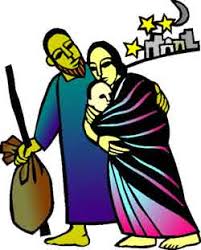
Sermon January 5, 2020
The Rev. Rebecca S. Myers,
The Church of the Nativity and St. Stephen’s
Second Sunday After Christmas, Year A
http://lectionarypage.net/YearABC/Christmas/Christmas2.html#Gsp1
After the wise men had left, an angel of the Lord appeared to Joseph in a dream and said, "Get up, take the child and his mother, and flee to Egypt, and remain there until I tell you; for Herod is about to search for the child, to destroy him." Then Joseph got up, took the child and his mother by night, and went to Egypt, and remained there until the death of Herod. Matthew 2:13-15
Please be seated
What is your migration story?
About 10 years ago, I learned of the National Geographic Genographic project. A friend bought me a kit to submit my DNA for the project. Here is a portion of how the organization explains the what they are trying to do:
“The fossil record places human origins in Africa some 150,000 years ago, but science continues to search for details about the incredible journey that took Homo sapiens from Africa to the far reaches of the Earth. How did each of us end up where we are? Why do we have such a wide variety of colors and features?” https://genographic.nationalgeographic.com/about/
A few weeks after I submitted my DNA sample, I received a report showing how my DNA was traced from sub-saharan Africa to Europe. Thanks to my father, I did know something about my migration story from Germany to the United States and a little about the various migrations that took place in the nearly 300 years that that part of my family has been here. I also knew a little about my mother’s side. A few years ago, I took the DNA test with Ancestry, which added a little to the migration story.
I know some of you are also doing similar research, discovering your migration stories.
Some of us migrated for better opportunities. Some migrated to escape service in the military. Some migrated to escape criminal prosecution. Some were forced to migrate, enslaved to build the economic wealth of the nation or to be moved off of land they’d lived on for thousands of years, because it was wanted by more powerful interests.
And some migrated for the very same reasons that Jesus’ family fled to Egypt – there was slim to no chance of survival if they stayed where they were. There are plenty of those stories where famine or war or persecution forced migration to a different part of the world.
Some reports say that what is happening with changes in our earth’s climate is forcing and will continue to force people to migrate for their very lives.
From the Bible, we know that most families have migration stories. From God telling Abraham to uproot and move; to the Israelites initially migrating to Egypt to be saved from starvation and then migrating once again when they were oppressed by those people of Egypt. There was the forced migration of some of the Israelites to Babylon when they were defeated in war.
The history of Mary and Joseph, as faithful Jewish people, was one of migration.
In our Gospel today, migration sounds easy, doesn’t it? Joseph has a dream to flee to Egypt to save his newborn child. He gets up and flees. Supposedly, he finds work and the family is able to meet the necessities of life. They were not thrown out of the country. There were no raids and no papers to be filed. They were not separated as a family, nor denied entry. They did not have to wait for years in a refugee camp nor go through multiple interviews before they could relocate. As far as we know, they did not experience difficulties where they settled. It seems like it was fairly easy to cross borders and to support yourself.
And when the political conditions changed, they could go back to their country, albeit, because of the politics in Judea, they elected to settle in Nazareth instead.
So much is similar to today. And I would suggest that most of our migration stories are similar and the challenges are similar. Even though in today’s story we don’t hear about the difficulties in crossing borders, we all know it’s challenging to leave the place you have known. Yes, some of us are excited by a new adventure, it’s true. And we know it takes energy and a kind of fearlessness to uproot ourselves from what we know.
In some cases, people who migrate deeply miss their previous homes. They work to preserve the best of their culture and pass it down to their loved ones. In Israel, some people who are Palestinian still have the keys to their homes, which they no longer can live in. The grounding of our ancestral homes is strong and there is grief for many in the migrations that have occurred over time. There is grieving that occurs in moving from place to place.
In so many instances, people migrate just so they can even live…just for the basics of food, clothing, shelter and maybe, just maybe, a chance to develop and use their God-given talents. They cannot stay where they are, because it is certain death. While existence may be meager if they relocate, there is no chance of existence if they stay.
We can find it difficult to remember and connect with our own ancestral migration stories. Most of us now migrate because we want to. We like a job that takes us somewhere else. We like the climate or the beauty of a place. We have the resources and the choice to migrate. I don’t think that was always the case, though. I think we all know deep within us the grief, fear and worry of fleeing for survival.
Jesus’ own life testified to the necessity and challenges of migration for survival. May we, too, remember not only our own stories of migration for survival, but also those that are similar and occurring right here and right now. Pray that those fleeing their homes, like the family of Jesus, may find refuge and a welcome place. Pray that we may be part of that refuge and welcome place. Amen