


 Loading...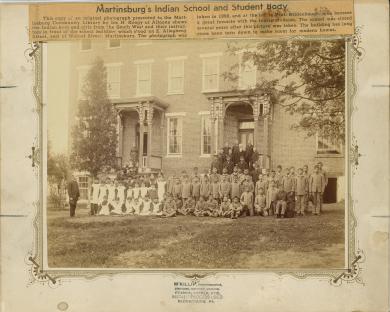
Sermon February 20, 2022
The Rev. Rebecca S. Myers, MSW
The Church of the Nativity and St. Stephen’s
The Seventh Sunday After the Epiphany Year C
http://www.lectionarypage.net/YearC_RCL/Epiphany/CEpi7_RCL.html
And he kissed all his brothers and wept upon them; and after that his brothers talked with him. Genesis 45:15
Please be seated.
You may have heard me talk about the first time I went to Sicily. It was 1978. I was so excited to go to the town where my grandfather was born. He was the only one of his family to come to the United States. There were 17 other children in the family and they had all stayed in Sicily.
Two of my grandfather’s sisters and a brother were still living, as were many nieces and nephews. My first big meal there, which was during the early afternoon, included many of these relatives. My grandfather’s sister Giuseppine hosted the gathering in her home. When my grandfather’s brother, Giovanni, walked through the door, I almost started sobbing. Physically he so resembled my grandfather that there was no denying that they were brothers. I couldn’t speak the language and yet I knew deeply within me that we were all related.
When next I saw my grandfather, I told him I didn’t know how he did it. That is, how he left his family and resettled in the United States. I told him I couldn’t have done it. Between 1925 and his death in 1992, he only went back to see his family about 3 times. I admired that he had made that choice, because it certainly affected my life and I just didn’t think I could ever do that. I would miss my family so much.
So it is that as I saw that the reading from Genesis this week involved the story of Joseph and his brothers, I was immediately drawn to it. I do think it is one of my favorite stories in the Bible. But what drew me in this time, was something that is missing from the narrative, I believe, and that is the deep sadness of Joseph because he was separated from his family.
The story of Joseph begins in Chapter 37 of Genesis and continues through this Chapter 45, except for 1 Chapter. You may recall that Joseph was the favored son of his father Israel. He was the youngest son. He was spoiled, a tattler and maybe a little puffed up. You remember his father had a fantastic coat made for Joseph and Joseph lorded this over his brothers. He also had these dreams where he would rule over his brothers and family. Not necessarily the best way to endear yourself to your brothers.
So, the brothers plot to be rid of him. At first they want to kill him, but the eventually decide to sell him to some traders passing by. Joseph is only 17. He ends up in a foreign land – Egypt. He is forcibly taken away from all that he knew and the life that he had. He is taken against his will.
And in this forcible removal, we hear the cries of children down through the ages who have been separated from their families against their will. The children stolen from their homes on the African continent, loaded onto boats and under horrific conditions making the voyage to the United States. In most cases, they were never able to return. And we all know how different the landscape, food, and life is between the United States and the African continent.
On Thursday, I was plenty busy with church work when I received a call from a woman I know who is a member of St. Luke’s in Altoona. Jane called because she remembered I knew something about the forced removal of Native American children from their tribes to government or church run boarding schools. The first one was in Carlisle.
Jane was meeting with two women from Martinsburg, Pennsylvania. For about three years, it turns out, there was one of these boarding schools in Martinsburg. The children were from the Oneida nation peoples residing in Wisconsin and from the Osage nation in Oklahoma. When the school was closed, the remaining children and young adults were transferred to Carlisle.
A number of the children from the Oneida were baptized at the Episcopal Church of the Holy Apostles on the Oneida land. So when it came time for their confirmation, the ceremony was held at St. Luke’s Episcopal Church in Altoona. It was all there in the registers of the church.
Children and young adults who were forcibly removed from their homes and sent to places that were foreign to them. They were punished for speaking their native language, could not wear the clothes their families made for them, not eat any of the foods their families might have prepared. They were rarely allowed to return home to see their families. They suffered greatly.
And there is a legacy to these forced removals and family separations. For instance, you will easily find the accounts of the children whose parents were at those boarding schools.
In this story from Genesis, there is a somewhat happy ending, right? While Joseph certainly goes through some ups and downs during his time in Egypt, he stays connected to the God he knew from his youth.
God guides Joseph to be an excellent administrator to the leaders of Egypt. Joseph helps Egypt prepare for famine and Joseph’s family end up in Egypt trying to obtain food. In today’s reading, the family is reunited. Joseph has survived all of the trials and tribulations of being forcibly separated from his family at the hands of his brothers. Joseph can see how God used him to now save his family. Joseph forgives his brothers. Joseph is overjoyed that he can be reunited with his family after all of these years.
And people forcibly removed from their families and homes like Joseph, have survived and in some cases thrived despite this horrifying circumstance.
Yet, let us never forget that deep grief and sadness that pervades their spirit and affects people for generations. Let us make sure this does not continue to happen.
Amen
Martinsburg Indian School: https://carlisleindian.dickinson.edu/images/students-and-teachers-martinsburg-indian-school-1886
Carlisle Indian School Digital Resource: https://carlisleindian.dickinson.edu/
African-American Slavery: https://www.nps.gov/articles/african-american-children.htm