




 Loading...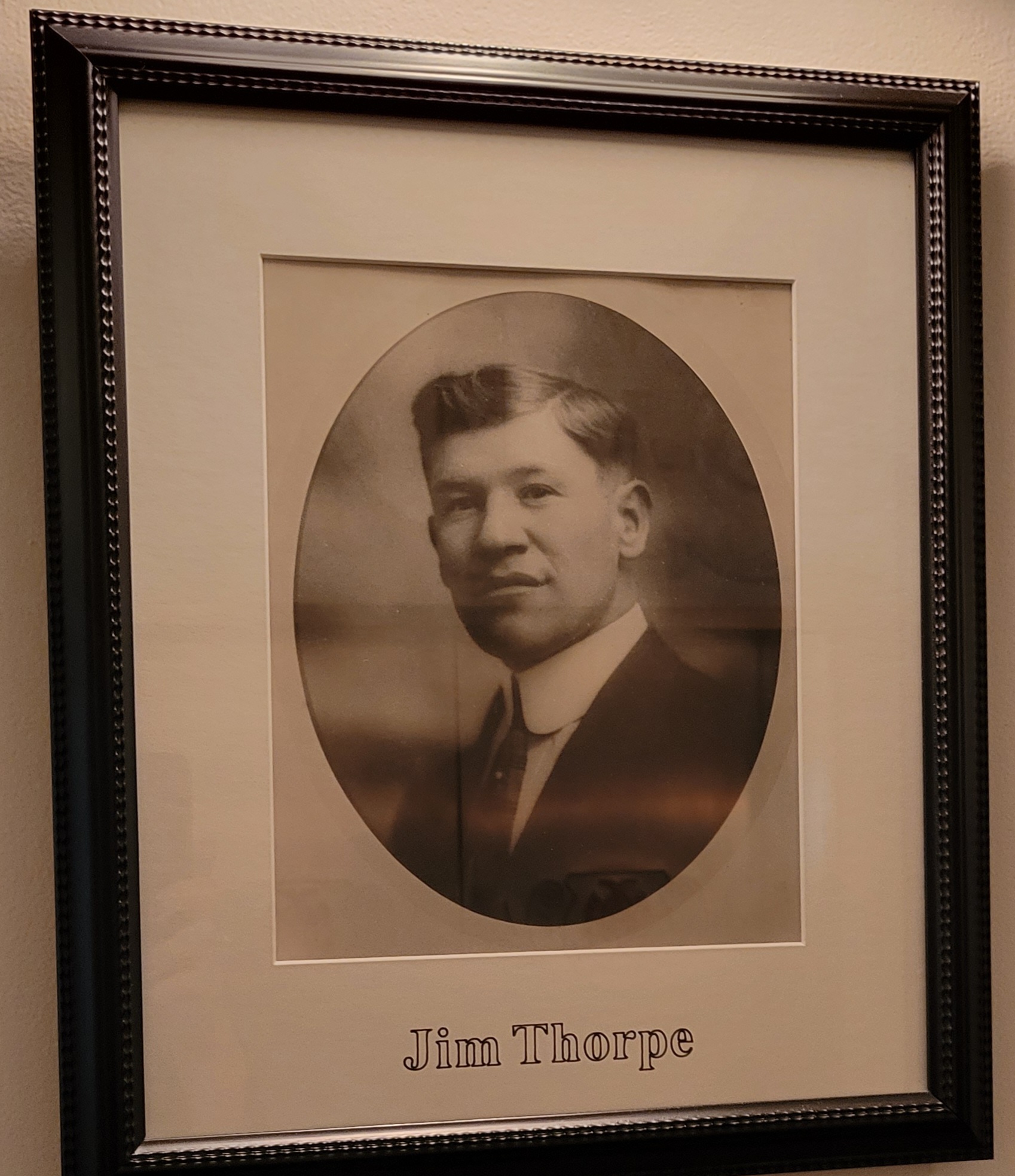
Sermon November 13, 2022
The Rev. Rebecca S. Myers, MSW
The Church of the Nativity and St. Stephen’s
23rd Sunday after Pentecost, Proper 28, Track 2
https://lectionarypage.net/YearC_RCL/Pentecost/CProp28_RCL.html
Audio: /documents/Eucharist__November_13__2022
Video: https://youtu.be/Uu8Nsn-wNfE
See, the day is coming, burning like an oven, when all the arrogant and all evildoers will be stubble; the day that comes shall burn them up, says the Lord of hosts, so that it will leave them neither root nor branch. Malachi 4:1
Please be seated
I don’t know about you, but when I was growing up, I definitely learned about Jim Thorpe. Maybe it was because my family lived in Carlisle for just a little while when I was a young child. I also knew that he attended the Carlisle Indian School that was on the grounds of what is now the Army War College. I knew he was an amazing athlete and that he had his Olympic Gold medals and records taken from him because he played sports for money.
At some point, I learned he was not buried at Carlisle, but was buried in Pennsylvania in a town that was once called Mauch Chunk, which means Bear Place in the native Munsee-Lenape Native American language. The town changed its name to Jim Thorpe in the 1950s and to this day Jim Thorpe is buried there, although his sons have been trying to repatriate his remains back to tribal land in Oklahoma.
Jim Thorpe has been in the news and on my mind lately. In July of this year, 110 years after he won the Olympic events, The International Olympic Committee finally reinstated and restored his medals. In 1982, the Committee had made him co-winner of the decathlon and pentathlon. But just this year, they fully restored his records and wins.
It turns out many college players played summer baseball for pay in the early 1900s, but they used fake names. In addition, they received very little money. But Jim Thorpe used his real name, so while others got away with earning some summer money playing sports, Jim Thorpe was penalized. He was even encouraged to play summer baseball by his football coach, Pop Warner. Yet, when the Olympic Committee moved nearly 6 months after he’d won the medals, to remove them, Pop Warner and some others who knew Thorpe, refused to defend him.
On my October trip to Oklahoma, the birthday party I attended in Tulsa was at the Mayo Hotel. The Mayo was built in 1925 and exudes the luxury, possibly oil money, in Tulsa during that time. There were various photos of people hanging on the walls in the public spaces of the hotel. Getting off the elevator on the floor for the party, there was a photo of Jim Thorpe.
And recently a new biography has come out about Mr. Thorpe called The Path Lit by Lightening: The Life of Jim Thorpe by David Maraniss. I heard about it and saw it at the bookstore last week. I remarked to my granddaughter that I should probably buy it for this Sunday’s sermon, but since it was over 500 pages, I couldn’t read it all by this week. But as the week wore on, I kept thinking about Jim Thorpe, so I listened to a podcast and got the book on Kindle and read portions of it.
Truly, Jim Thorpe was one of the greatest, most talented athletes of all time. He played football at Carlisle, a team that was coached by Glenn “Pop” Warner. At the time, football was an elite sport, played by the Ivy Leagues and West Point. But the all-Indian team from Carlisle soundly defeated the 1912 West Point team 27-6 at the West Point campus. Interestingly enough, General George Custer was buried at West Point.
He played baseball. He won both the pentathlon and decathlon at the 1912 Olympics in Stockholm with world record numbers that stood for 20 years. He loved to hunt and fish and watch the animals.
He was born in May, 1887, near what is now Shawnee, Oklahoma. At the time it was known as an Indian allotment. Jim’s father was part Sac and Fox and part White. His mother was part Potawatomi and part White. While he was a baptized Roman Catholic, he followed the cultural and spiritual ways of the Sac and Fox nation. He had a twin brother, Charlie, who died of smallpox when he was young.
The indigenous people of the United States were being forced to give up their tribal land, move from their ancestral lands, stop their religious practices and cultural way of life. Children and young people were being forcibly taken away and sent to Indian Boarding schools. Jim went to a number of boarding schools, including Carlisle.
As Mr. Maraniss writes:
“What happened at the Carlisle Indian Industrial School was in many ways illustrative of the larger treatment of the American Indians by white society. Under the guise of knowing what was best, with intentions considered pure and enlightened, the federal government forced thousands of Indian children to assimilate and acculturate to white norms and expectations. Kill the Indian, save the man. Some resisted, many suffered, some thrived, most learned the nuances of how to survive while maintaining their identity as Native Americans. Jim Thorpe became a symbol for almost all of that. At times he resisted. At times he suffered. At times he thrived. And he survived.” P. 566
Jim Thorpe had such a tough time once his athletic skills diminished with age. For a time, he worked in Hollywood and advocated for Native Americans to play the part of Native Americans in movies, rather than for White people to use makeup to play the Native American parts.
Yet, he never gave up. He thrived and survived. Jim Thorpe’s children and grandchildren and great-grandchildren were all very successful in their careers and lives. He left an amazing legacy.
In our readings today, we hear that those who are evil and treat others poorly will become merely stubble, the dross that is left after a fire. They will no longer exist; they will completely disappear. Our reading from Paul’s letter to the Thessalonians encourages hard work, rather than idleness. Our Gospel speaks of the persecution and hard times followers of Jesus Christ will face. Even so, those hardships will also give the followers an opportunity to share the good news of Jesus Christ. No matter what, we are told to persevere.
And that’s what Jim Thorpe’s life demonstrates to us. Regardless of the persecution and oppression; regardless of his human frailties; regardless of the tragedies that befell him, he kept going. He persevered. His life testified that the status quo, stereotypes and persecution of Native Americans was all wrong.
May we learn from him. May we acknowledge the history and tragedy of what happened, often at the hands of those who were White. May we do better by the native peoples of this land in our time.
Amen
Olympic Medals Restored https://www.smithsonianmag.com/smart-news/jim-thorpe-olympic-gold-medals-reinstated-180980444/
Path Lit by Lightning: The Life of Jim Thorpe https://a.co/d/33MUQCP