

 Loading...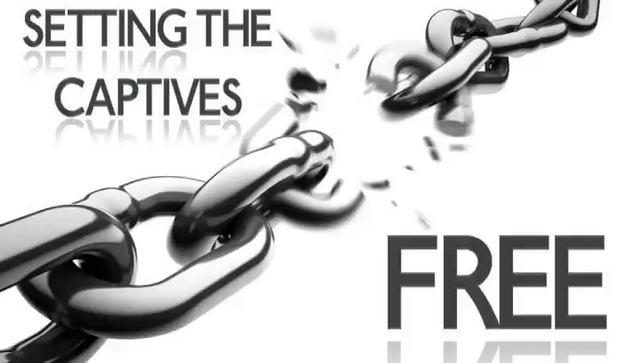
Sermon January 23, 2022
The Rev. Rebecca S. Myers, MSW
The Church of the Nativity and St. Stephen’s
The Third Sunday After the Epiphany Year C
http://lectionarypage.net/YearC_RCL/Epiphany/CEpi3_RCL.html
Audio: /documents/Eucharist__January_23__2022
Video: https://youtu.be/39rtLaX3Gj0
Terry Stanton shares about his time in Afghanistan.
Audio: /documents/Terry_Stanton_on_Afghanistan
Video: https://youtu.be/WpRndWIQs1I
"The Spirit of the Lord is upon me,
because he has anointed me
to bring good news to the poor.
He has sent me to proclaim release to the captives
and recovery of sight to the blind,
to let the oppressed go free,
to proclaim the year of the Lord's favor." Luke 4:18-19 from Isaiah 61:1-2
Doris was a mentor, teacher and great friend. She was nearly 11 years older than me. She was African-American. She did not have a college degree and often said she had a PhD from the streets. Her advice and input was sought by many, because she brought an important viewpoint to any group she participated in. She was a woman of strong faith. We worked together for a time in the late 1990s and often at the beginning of a work day, you could find her reading from her Bible.
Doris often called the prison industrial complex or justice system, the new plantation, especially for Black men. So many were being imprisoned and there were so many disparities in sentencing. For instance, powder cocaine often used by people who are White had a lower prison sentence than the cheaper crack cocaine, which was more often used by People of Color.
So more Black men were being incarcerated and forced into virtual slave labor. She taught that slavery had not really ended, only changed.
Well, a few years before Doris died in 2014, Michelle Alexander wrote the book, The New Jim Crow: Mass Incarceration in the Age of Colorblindness. Ms. Alexander was a civil rights attorney and worked for many years for the American Civil Liberties Union or ACLU. She says in the beginning of her book that while she knew there was racism in the prison industrial complex, she thought it mostly related to economic injustice and lack of educational opportunities. She thought claims that the prison industrial complex in and of itself was systemically flawed and systemically carried out a continuation of slavery were radical ideas.
However, after her work with the ACLU, she became convinced that what she thought was a radical idea, was the truth. In other words, she agreed with my teacher and mentor Doris that the prison industrial complex was just the new form of slavery.
You probably know the figures that the United States incarcerates more people than any other country in the world and that most are men who are Black and Brown. The statistics serve to highlight that something is terribly wrong…that possibly the slave system that existed at the founding of the country has continued…has just morphed and looks a little different, but with the same lasting effects of inequality and disparity.
At the beginning of the year, I attended a virtual webinar with Angela Davis and Gina Dent regarding their new book, Abolition. Feminism. Now. Erica Meiners and Beth Richie are also authors. The book is about an idea that I think is really hard for us to comprehend, although I first heard Dr. Davis speak about it 25 years ago – the abolition of the prison industrial complex...the abolition of prisons, of our court system…of what we call our justice system. The total abolition. They say it is not about reforming the system; it is about abolishing it altogether.
Again, hard for us to imagine how to recalibrate our life together. There are some things that might show us the way. For instance, there are efforts at restorative justice. Our system is built on retributive justice, an “eye for an eye and a tooth for a tooth.”
On Monday at the service in remembrance of The Rev. Dr. Martin Luther King, Jr. sponsored by the Race and Unity Action Coalition or RUAC, we heard from the nonprofit Dauphin County Bail Fund. Right now the fund provides cash bail for people being detained and awaiting trial. Can you imagine that 60% of the people in jail have not been convicted of any crime? They are awaiting trial and do not have the resources to be released until their trial.
Ultimately, the Bail Fund seeks to abolish cash bail altogether. While our service was virtual, we did encourage offerings to go to this important work of the Bail Fund.
In our Gospel today, Jesus is in the synagogue in his hometown. It says he stood up to read and went to this scripture in Isaiah 61. In the synagogue, Jesus proclaimed his calling to fulfill this scripture from so long ago.
The scripture talks about the year of the Lord’s favor. This was often understood to be a Jubilee year, which occurred every 50 years. It involved a releasing of people from their debts. All slaves were released and even the land was returned to those who originally owned it. Can you imagine that?
I’ve read that this never really happened, but was more of a vision of what should happen. And yet, it is significant that Jesus sees this work as his calling…as what was required to restore us to our relationship with God.
So it seems in the year 2022, we, too, can work to release the captives. We can begin by educating ourselves about the realities of the prison industrial complex and reading about people’s ideas for how we release the captives. We can make donations to the groups doing the work like the Dauphin County Bail Fund.
Isaiah first wrote the vision and Jesus affirmed the vision as his calling. May we do our best to make it a reality.
Amen
Dauphin County Bail Fund: https://dauphincountybailfund.org/donate/