

 Loading...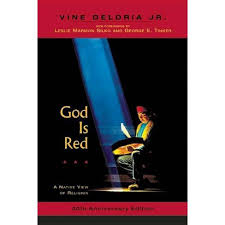
Sermon November 10, 2019
The Rev. Rebecca S. Myers,
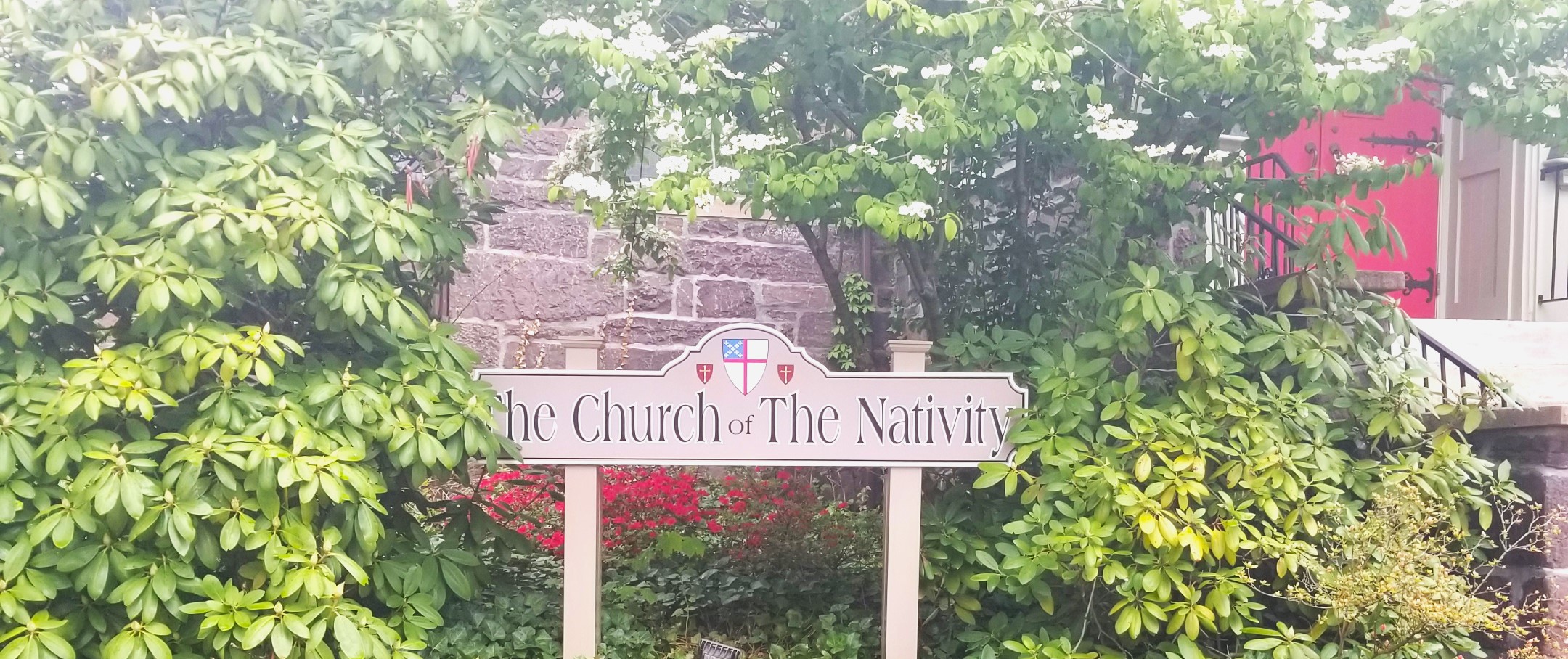
The Church of the Nativity and St. Stephen’s
22nd Sunday after Pentecost, Year C, Track 1, Proper 27
Observance of Native American Heritage Month
http://lectionarypage.net/YearC_RCL/Pentecost/CProp27_RCL.html
…take courage, all you people of the land, says the Lord; work, for I am with you, says the Lord of hosts, according to the promise that I made you when you came out of Egypt. My spirit abides among you; do not fear. Haggai 2:4-5
Please be seated.
Recently I was asked whether I’d read God is Red by Vine Deloria, Jr. I have had this book for many years. Originally written in 1973, I have a 30th anniversary edition printed in 2003. Yet, I’ve heard about the book much longer ago than that.
Vine Deloria, Jr. was a member of the Standing Rock Sioux nation. His grandfather was an Episcopal priest. His father was an Archdeacon and missionary in The Episcopal Church. Mr. Deloria was planning to follow in their footsteps as an ordained minister, but instead went to law school. He was a college professor and prolific writer and thinker. He died in 2005.
I have read only portions of God is Red: A Native View of Religion. I confess I’ve found some of it difficult to understand, and I think Mr. Deloria acknowledges the difficulties for those of us raised in our western culture to understand the tribal view of religion. It’s rooted in an entirely different understanding.
The section I read speaks about the importance of God and place – God in geographical context or even lived context. Mr. Deloria speaks of the importance of being in community with other people and connected deeply with the land and all creatures surrounding us. Our lived experience of God must include the totality of God’s creation.
In today’s reading from Haggai, the Israelites have returned from exile in Babylon. They have focused on rebuilding their own homes. They have procrastinated in rebuilding the Temple or sacred space and place of worship to God.
We can understand why they haven’t been enthusiastic about this rebuilding. Some remember the glory of the old temple. There is still grief over the loss of that temple. Maybe even fear that another temple will just be destroyed again. A new temple will not be exactly like the old one. There will be change, which is always difficult. Can they build something new, different and maybe even better than the old one?
Haggai announces that God is with them and the new temple will be more glorious than the one that only a few remember. Most who knew that temple had died.
Haggai also emphasizes something that we must consider and that Vine Deloria, Jr. speaks about: sacred space…sacred places for sacred rites of the community.
The community of Jerusalem needs that sacred space and needs to return to their sacred rites…those practices and gatherings that praise God and acknowledge their relationship to God.
Mr. Deloria writes:
“The problem of relating to a place’s spirit or alternatively bringing a spiritual reality to a particular place is yet to be understood in the sphere of religious thought. That a fundamental element of religion is an intimate relationship with the land on which the religion is practiced should be a major premise of future theological concern.” P. 292-293
Each Sunday we worship in sacred spaces where people have prayed for over 130 years. These spaces are along the Juniata River and bounded by creeks and forests and towns and mountains. These lands provide a living not only for us, but also for numerous animals – rabbits, squirrels, deer, coyote, fox, rats, mice, chipmunks, and bears to name a few. These lands provide a living place for many birds, many plants, many insects.
How is our Episcopal faith lived out in this very earthly place where we find ourselves?
That is what God is calling us to – specific work in this specific place.
Mr. Deloria says this:
“The lands of the planet call to humankind for redemption. But it is a redemption of sanity, not a supernatural reclamation project at the end of history. The planet itself calls to the other living species for relief. Religion cannot be kept within the bounds of sermons and scriptures. It is a force in and of itself and it calls for the integration of lands and peoples in harmonious unity. The lands wait for those who can discern their rhythms. The peculiar genius of each continent – each river valley, the rugged mountains, the placid lakes – all call for relief from the constant burden of exploitation.” P. 296
We must root our lived faith in this land and in this time. Mr. Deloria says it is an important fact “that lands can apparently be consecrated by a particular religious group wising to place its roots in the land. The persistence of some religious on originally foreign lands would appear to testify to the fact that peoples and lands can related to each other in a very powerful manner to develop a spiritual unity. It may be this possibility that will prove the salvation of Christianity in the modern world.” (p. 292)
Our sacred spaces of Nativity church and St. Stephen’s church consecrate the land and establish our roots on this land. May we continue to worship and honor these spaces and this land. May we remember always to “take courage, all you people of the land, says the Lord; work, for I am with you, says the Lord of hosts, according to the promise that I made you when you came out of Egypt. My spirit abides among you; do not fear.”
Amen
Vine Deloria, Jr. https://en.wikipedia.org/wiki/Vine_Deloria_Jr.
God is Red: A Native View of Religion https://www.amazon.com/God-Red-Native-Religion-Anniversary/dp/1555914985