


 Loading...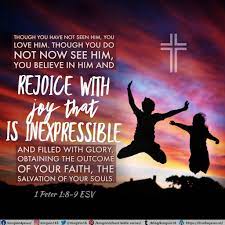
Sermon April 16, 2023
The Rev. Rebecca S. Myers, MSW
The Church of the Nativity and St. Stephen’s
Second Sunday of Easter, Year A
https://lectionarypage.net/YearA_RCL/Easter/AEaster2_RCL.html
Audio: /documents/Eucharist__April_16__2023
Video: https://youtu.be/1_zZqZ0o1H0
Although you have not seen him, you love him; and even though you do not see him now, you believe in him and rejoice with an indescribable and glorious joy, for you are receiving the outcome of your faith, the salvation of your souls. 1 Peter 1:8-9
Please be seated.
Seeing is believing is an often-heard saying. We say we want to see something for ourselves. However, with technology, it’s getting harder and harder to know if what you’re seeing is the truth.
Even early photographs could be doctored. One of my fond memories of high school physics was a black and white photography project where we “burned and dodged” a photo. That means we exposed part of the photo a little longer so it would be darker and improve the contrast. It was all hand work at that time. You had to cut a piece of paper or cardboard that matched the photo exactly in order for the final product to look right.
Now, of course, there are so many ways to easily doctor a photograph. And as I mentioned briefly last week. Artificial intelligence or AI is making it even harder. An article in this past week’s New York Times provided examples of photos that were altered using AI. A popular one recently was Pope Francis in a designed puffy coat. There was another article that showed fake news reports with reporters who definitely looked real.
And there is plenty of research showing how wrong eyewitness accounts can be. And article from 2002 regarding a plane crash in late 2001 was fascinating in this regard. Investigators interviewed 349 people about what they saw. They all got it wrong. The voice and flight recorders were more accurate. Dr. Charles R. Honts, a professor of psychology at Boise State University and the editor of the Journal of Credibility Assessment and Witness Psychology explained that we instinctively try to match our account with our experience or what we think we know. Sometimes our information comes from movies and TV or the internet.
Our eyewitness accounts are not all that reliable it turns out.
Yet, each year on the second Sunday of Easter season, we hear the familiar account of Thomas, one of Jesus’ followers. In this account in the Gospel of John, the followers of Jesus were afraid after the crucifixion. They were in hidden away. Mary Magdalene had already told them she had seen Jesus in the garden by the tomb. But they were still afraid.
For some reason, Thomas was brave enough to go out. While he was gone, Jesus appeared in the room. He showed them his hands and his side, which had been pierced with nails and a sword. He prayed peace upon them and also breathed the holy spirit upon them. He told the followers that they had the power to forgive people’s sins or not.
When Thomas returned to the room, the others told him what had happened, but he did not believe them. He wanted to see it for himself. It took a week, but Jesus did return and show Thomas his hands and side and let Thomas touch them.
Jesus says, “Blessed are those who have not seen and yet have come to believe.” John 20:29
And likewise in the letter of 1 Peter we heard today, the writer of this letter to the churches of Asia Minor, most of whose members were Gentiles, acknowledges that none of the members have actually seen Christ.
We heard, “Although you have not seen him, you love him; and even though you do not see him now, you believe in him and rejoice with an indescribable and glorious joy, for you are receiving the outcome of your faith, the salvation of your souls.”
Neither do we see Jesus in the flesh. Why do we love Jesus? Why do we believe in Jesus? Why do we “rejoice with an indescribable and glorious joy,” receiving the outcome of our faith and the salvation of our souls?
It’s not easy, is it?
It’s something we cannot totally explain in a logical, rational way. It is more of a feeling or a deep knowing.
One of the facets of the Episcopal Church is Lex Orandi, Lex Credendi – praying shapes believing. We believe that praying together and worshipping together leads to belief…leads to faith. I’ve often told people to not totally worry about trying to figure everything out about faith. Come join us as we worship and pray together and you will be changed.
And I believe that belonging to a parish with others and to a large, longtime denomination has its benefits. As I mentioned at the beginning, it is hard to know what to believe at times, especially when it comes to Jesus who we do not physically see. We have each other to share our experiences with. We are part of a hundreds year old denomination, that, while not perfect, has some tradition and wrestling with these issues.
Faith is a trusting process and the outcome is the salvation of our souls.
Amen
Can we no longer believe anything we see? https://www.nytimes.com/2023/04/08/business/media/ai-generated-images.html?searchResultPosition=1
The People onscreen are fake. The Disinformation is real. https://www.nytimes.com/2023/02/07/technology/artificial-intelligence-training-deepfake.html
Ideas & Trends; For Air Crash Detectives, Seeing Isn't Believing https://www.nytimes.com/2002/06/23/weekinreview/ideas-trends-for-air-crash-detectives-seeing-isn-t-believing.html?searchResultPosition=3