



 Loading...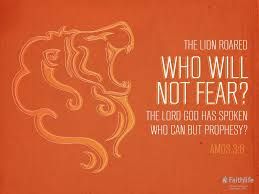
Sermon July 21, 2019
Slightly revised and shortened sermon read by The Rev. Rebecca S. Myers
Original sermon preached by The Rev. R. Ray Evelan at
Messiah Lutheran Church, Harrisburg, PA
October 10, 1971
The Church of the Nativity and St. Stephen’s
Sixth Sunday After Pentecost Track 1
http://lectionarypage.net/YearC_RCL/Pentecost/CProp11_RCL.html
The time is surely coming, says the Lord God,
when I will send a famine on the land;
not a famine of bread, or a thirst for water,
but of hearing the words of the Lord.
They shall wander from sea to sea,
and from north to east;
they shall run to and fro, seeking the word of the Lord,
but they shall not find it. Amos 8:11-12
Today I am going to read a large portion of a slightly updated sermon I heard preached nearly 48 years ago, just before my 15th birthday. I have spoken before about this series of sermons on the topic of speaking truth to power. It was 1971 and there was civil unrest regarding the war in Vietnam, caring for the poor and prisoners, and addressing racism. While I have the whole series of sermons available, I felt this one spoke to our responsibility as Christians today. If you would like the whole series, please let me know.
The series was preached by The Rev. R. Ray Evelan in Messiah Lutheran Church in Harrisburg. This particular sermon was preached on October 10. Most of the series was rooted in the Book of Amos. This sermon was titled, Should a Christian Ever “Rock the Boat?”
“It is now necessary,” said the great William Pitt, addressing the House of Lords concerning the rebellion of the American colonies, “it is now necessary to instruct the throne in the language of truth.”
Shades of the prophets! It is Amos preaching in the royal chapel of Jeroboam II seven and one-half centuries before Christ; the great Isaiah confronting his king at the outer defenses of Jerusalem a century later. William Pitt stood that day as the Expendable Person stands whenever they speak the truth which all have steadfastly feared and avoided – in the goodly fellowship of the prophets, a sublime succession of men and women who, led by the Spirit of God to know truth, are convinced by the same Spirit that they have a responsibility to speak it. Magnificent in their courage, awesome in their foolhardy disregard for the power of their enemies, shameless in their commitment to truth and the God of truth, the prophets of Israel developed that life-style by which a person becomes the conscience of their nation. They knew that if the conscience of the prophet is silent, the body politic will die and the nation will perish. The prophet protects the nation against the inevitable consequences of self-service and misdirected love. That life-style is still a viable option for the person who wishes to serve God and people in the 21st century.
William Pitt was exercising an imperishable privilege. An inviolable responsibility of free people in a free society: to speak truth to power. So that power may be instructed and chastened; that power may be corrected; that power may be convicted of falsehood and unrighteousness; that power may be humbled; that power may perchance be redirected; that power may be made the servant of mercy and truth; that power may be made to serve the purposes of God and the holy aspirations of people. And, indeed the one indispensable hallmark of a free society is its will to afford its citizens the right and the protection of the law while they exercise the right to speak truth to power. There can be no free society except there be people in that society who will speak truth to power.
…however, we live in a generation when for a variety of reasons that heritage is in question, at best, and in jeopardy, at worst. Opinion is deeply divided over the likes of the Berrigans and Martin Luther King, Jr., for example, and the right of people to protest. Preachers are widely enjoined to “preach the gospel.” Good and honorable people in Protestant and Roman churches and in Jewish Synagogues are caught up in an increasingly bitter struggle concerning the role of religion in American life: the role of the church in a free society. According to one segment of opinion, religion is the servant of the state; for another, it is the servant of protest and appeal. Is the chief business of religion to engage the world or to offer people an escape from it; to nurture private morality or to promote justice for all; to bless and sanction the powers that be – confining its political involvement to prayers at the 4th of July celebration, to strengthen and support the American Establishment and enshrine the American Dream – or to cry out against the injustices and inequalities which dehumanize and despoil life even in the United States of America? Is the Church of Jesus Christ the champion of societal law and order or does it stand under divine mandate to “instruct the throne in the language of truth?”
That is the question raised … by the very spirit of the times. Regardless of what we as individuals may think of the Berrigans or Martin Luther King, the church will never be the same again. By virtue of the lives and witness of people like them, we are increasingly convicted to speak against war, injustice and racism. And so we do what we have come to believe is our peculiar responsibility not only to ourselves, but also to our God and this free society – to hear the Word of the Lord: to seek out the truth from scripture….
We begin with the most obvious question – “Should the Christian Ever Rock the Boat?” Depending upon your point of view, perhaps it expresses the exasperated query of the person who has found their quest for peace to be confounded everywhere they look, and especially inside the church which they feel heckles and hassles, and often enough seems to equate contentment and peace with corruption.
Why can’t the church be content to persuade people to live by The Ten Commandments and the Sermon on the Mount? How about you, Amos? Now he is solid “Bible” Truth. What about Amos? He hears his own drum beat: “What do you see, Amos? ‘A plumb line”, I answered, and the Lord said, ‘I am setting a plumb line to the heart of my people Israel, never again will I pass them by’.” (Amos 7:8)
All right, we protest, but that’s Old Testament. What about Jesus Christ – the one who said, “Come unto me, all ye that labor and are heavy laden and I will give you rest?” What about it Jesus? He has his Amaziah, too, his prime minister, his deputy to the king, his adviser to the president – (Why do these people always get into politics?) His name is Pilate – Pontius Pilate. Jesus to Pilate: “For this cause I came into the world, that I should bear witness to the truth,” and how sobering, that Pilate – power – the establishment – did not understand the innocuous, harmless quality and character of the truth of God in Jesus Christ, “What is truth?” Pilate asked, and they crucified Jesus.
Should the Christian ever rock the boat? “The lion hath roared, who will not fear; the Lord God hath spoken, who can but prophesy?” (Amos 3:8) In a word, the Christian does not ask the question. The task simply presents itself with the duties of the common life. The question is simply irrelevant. The Person of God – the prophet – simply speaks truth and serves God and people. That is the incontrovertible witness of the Book – the Bible – Holy Writ – the inspired Scriptures of the Old and New Testaments. One seeks to enhance life, and if that crowds power and rocks the boat, so be it.
One basic observation, simple irreducible, a truism and the place we must begin: according to the biblical witness, people of God are almost always at odds with power. Whatever your personal opinions here, whatever our political orientation, let us, friend, have the courage to read the documents which have shaped the life-style of the Christian religion – the documents - and this conclusion is inescapable: biblical religion – the “pure” religion most valued by the “Back to the Bible” people – is frequently, one is tempted to say, almost always, at odds with power. Let’s say that again. However you or I may feel about it, it appears that the prophets of Israel were often at odds with power – the power of the state, of the established church, the power of wealth and irresponsible privilege. John the Baptist, Jesus and Paul, all of whom in one way or another lost their heads to power, were at odds with power. …they were all of them rocking the boat and turning their world upside down.
…Power must be chastened and corrected!
…The prophet collided with those who were well able to take care of themselves. Of course, speaking truth to power is a horrendous responsibility and puts a person under terrifying discipline and danger, exposing them full to the pious distortions of their enemies. I suspect that that truth is often enough the crux of the matter, and not the intellectually held doubt at all, when the question comes: Should I, or ought I not? For the defensive posture of kings and their people has not materially changed: Amaziah’s only defense was to label Amos a subversive and enemy against the state!
The prophets were frequently at odds with power.
That is basic to our understanding of our Christian responsibility as free people in a free society. In every place and age, the prophets of God and their spiritual descendants have found themselves inevitably and on the most basic grounds in conflict with power, counting themselves called and responsible to chasten power, to subject power to truth, to humanize power with mercy and compassion.
…We recognize that there is a basic conflict between prophetic religion and the power of the establishment insofar as any government or power structure seeks to count itself autonomous and as possessing final authority. The prophets of Israel stand as guardians of freedom wherever people can read. For as long as their words stand, people will ever know that there is an alternative to tyranny, an alternative to the unexamined life, an alternative to any system which robs people of their basic humanity, an alternative to any policy which tolerates racism, poverty, and war as an instrument of policy. Perhaps most precious of all to the prophets, there is an alternative to the craven and cowardly accommodation to any power that can hurt only a person’s body
The Lord Jesus Christ knew well the blandishments of power and warned the disciples to fear only that enemy which can hurt the soul. A person must live with their God. A person must live with themselves. And the only safeguard finally is an authentic word from the Lord:
“Brace yourself, Jeremiah (you supply the name!);
stand up and speak to them.
Tell them everything I bid you,
do not let your spirit break at sight of them,
or I will break you before their eyes….
This is the very word of the Lord.” (Jeremiah 1:17 N.E.B.)