

 Loading...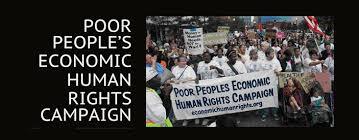
Sermon February 17, 2021
The Rev. Rebecca S. Myers,
The Church of the Nativity and St. Stephen’s
Ash Wednesday, Year B
http://lectionarypage.net/YearABC/Lent/AshWed.html
Audio: /documents/Ash_Wednesday_2021_Service_Audio
Video: https://youtu.be/g-tEMGPKmhU
Is not this the fast that I choose:
to loose the bonds of injustice,
to undo the thongs of the yoke,
to let the oppressed go free,
and to break every yoke?
Is it not to share your bread with the hungry,
and bring the homeless poor into your house;
when you see the naked, to cover them,
and not to hide yourself from your own kin? Isaiah 58:6-7
Being raised in a religious community that emphasized social justice, it wasn’t really surprising that I became a social worker. Ethical Standard 6 of the National Association of Social Worker’s Code of Ethics says:
“Social workers should promote the general welfare of society, from local to global levels, and the development of people, their communities, and their environments. Social workers should advocate for living conditions conducive to the fulfillment of basic human needs and should promote social, economic, political, and cultural values and institutions that are compatible with the realization of social justice.” https://www.socialworkers.org/About/Ethics/Code-of-Ethics/Code-of-Ethics-English
The following paragraphs provide more detail about this standard. Social workers who fail to live up to this ethical standard can lose their license to practice social work and can also be removed from membership in the professional association.
This standard became embodied when I was the Executive Director of the Pennsylvania Chapter of the National Association of Social Workers. We took on a multi-year project to strengthen economic human rights. The effort was led by a group of people living in poverty in Philadelphia. They had realized that they needed to reframe their advocacy efforts in terms of human rights. They utilized the International Covenant on Economic, Social and Cultural Rights developed by the United Nations in 1966 and put into force in 1976. The United States has signed this covenant, but the United States Senate has never ratified it.
The Covenant lays out rights that all should be entitled to.Nations are to work to ensure these rights as much as possible. Each nation is to move towards the ideal fulfillment of these rights. The rights include all of the basics for a good life, including housing, food, clothing, healthcare, education, and meaningful employment that also provides enough for a good life.
The PA Chapter of NASW joined The Poor People’s Economic Human Rights Coalition. We participated in their efforts to bring these rights to light. We helped the PA legislature to hold hearings to examine how the Commonwealth was doing regarding protection and provision of these rights. There were definitely interesting conversations and lots of education about the true nature of living in poverty and ways to eradicate poverty.
There are efforts in recent years to once again address the same issues through The Poor People’s Campaign organized by The Rev. William Barber.
Often during this time of Lent, we talk about what we will give up or fast from. Lots of times it is candy or sugar or cigarettes or alcohol. Some people fast from food for a time. Yet, our Lesson this evening from Isaiah details a different kind of fast. The writer of Isaiah implies that this “fasting from” food is way too easy. It is a task or item on a list to be checked off. It is a rule to be followed.
The writer of Isaiah says that the real fast desired by God is one of social justice. It is creating a community where the justice system is truly just. It is creating a community where no one is oppressed. It is working for a community where everyone has the food, clothing, shelter and meaningful and well-compensated work they need. It is creating a community where the dignity and worth of every creature created by God is respected and cared for.
That is the fast that is truly worthy before God, so says the writer of Isaiah. I suggest that one of the reasons this fast of doing justice is so desirable is because we are working for the Kingdom of God here on earth. In the work we see glimpses of the truly beautiful, amazing, liberating and wonderful world that is. When we do this work, our community is life giving and loving in every way.
This Lent is a time to discover the fast that God is calling us to. I look forward to hearing what you are learning about the “fast” work for justice we need to be doing.
Amen
International Covenant on Economic, Sociall, and Cultural Rights: https://www.ohchr.org/EN/ProfessionalInterest/Pages/CESCR.aspx