

 Loading...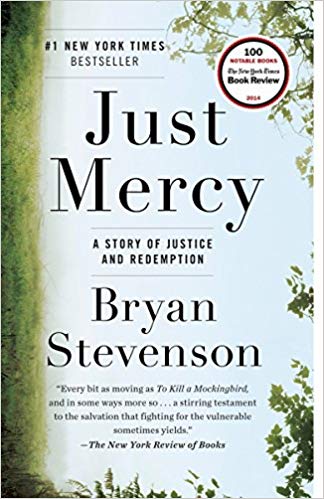
Sermon July 14, 2019
The Rev. Rebecca S. Myers,
The Church of the Nativity and St. Stephen’s
Fifth Sunday After Pentecost Track 1
http://lectionarypage.net/YearC_RCL/Pentecost/CProp10_RCL.html
Which of these three, do you think, was a neighbor to the man who fell into the hands of the robbers?’ He said, ‘The one who showed him mercy.’ Jesus said to him, ‘Go and do likewise.’ Luke 25:36-37
Please be seated.
Before I went on the Ambassadors of Healing pilgrimage to Alabama, I decided I needed to read the book Just Mercy: A Story of Justice and Redemption by Bryan Stevenson. The book is Mr. Stevenson’s story about how he came to found the Equal Justice Initiative, based in Montgomery, Alabama.
Mr. Stevenson landed at Harvard Law School, unsure why he was there and what he would do. An internship at the Southern Prisoners Defense Committee in Georgia changed all of that. During that internship, Mr. Stevenson met people who were on death row. He met people on death row who were innocent. He started to see the injustices in our court system, not only embodied by who received death sentences, but also in sentencing for crimes in general.
Eventually, he started working with prisoners in Alabama, and that led to other cases around the country, including a number before the United States Supreme Court. All of his work also helped him understand how the enslavement of Africans in the United States led to lynching, led to Jim Crow laws and to the current mass incarceration of people who are African-American in our time. The Equal Justice Initiative currently operates a museum in Montgomery to educate about this trajectory and the Initiative also developed the memorial to at least 4,400 people who were lynched in the United states between 1877 and 1950. Yes, from 12 years after the end of the Civil War until 1950. There are smaller memorials for people lynched since that time, like Emmet Till on August 28, 1955.
When I read this week’s very familiar parable of The Good Samaritan, I was drawn to the lawyer, or one who studied the Torah laws, answer to Jesus question, “Which of these three, do you think, was a neighbor to the man who fell into the hands of the robbers?”
The lawyer answered, “The one who showed him mercy.”
According to the online dictionary, the first definition of mercy is “compassion or forgiveness shown toward someone whom it is within one’s power to punish or harm.” Compassion and forgiveness toward someone who you could punish or harm. The Good Samaritan could have harmed the man or even just passed him by, allowing him to die.
I mean, what was the man doing along the Jericho road? Coming from Jerusalem, suggests the man had gone to the Temple. The man had gone to worship God. Yet, the man needed to walk back home and the road home could be a dangerous road. But, of course, we can criticize this man. He shouldn’t have been walking along that road. He shouldn’t have taken the chance. He shouldn’t have been alone. We think of all the ways he did something wrong and got himself into a dangerous situation, especially since, even though there were others that went along that road, they weren’t the kind of people who would stop and help. It seems like they should be the kind of people who should stop and help, but they did not.
We could surmise that the man did not deserve compassion or forgiveness…that the man did not deserve mercy.
Yet, the teacher of the law knew that the true neighbor was the one who showed mercy. The one who had compassion…the one who did not criticize the man for walking down the dangerous road.
I believe it’s difficult to hear this story today without thinking about what is happening for people fleeing their homes due to war, drugs, or climate change, especially those seeking asylum at our southern border. Honestly, I feel like we are the priests and Levites, walking past and trying to shield ourselves from the suffering of others. We don’t seem able to show much mercy…much compassion and forgiveness.
Bryan Stevenson talks about an epiphany he had after he worked diligently to stop the execution of a man. That didn’t happen and Mr. Stevenson was there for the execution at the request of the man. Mr. Stevenson was heartbroken and says:
“The power of just mercy is that it belongs to the undeserving. It’s when mercy is least expected that it’s most potent – strong enough to break the cycle of victimization and victimhood, retribution and suffering. It has the power to heal the psychic harm and injuries that lead to aggression and violence, abuse of power, mass incarceration.” (pg. 294)
Mercy belongs to the undeserving. Mercy has the power to heal.
This past spring PBS ran a 6-part adaptation of the book Les Miserables. I know this book has been around for years as a musical, but I never saw the musical and never read the book. I was captivated by it. I imagine so many of you know the story.
Jean Valjean was imprisoned for many years for stealing bread to feed his sister’s starving family and for various attempts to escape prison. When he’s released, as is true today, he has a difficult time even finding lodging for a night. The Bishop of Digne allows Jean Valjean to stay at the Bishop’s residence. During the night Valjean steals the Bishop’s silverware. When Valjean is captured by the police; however, the Bishop shows Valjean mercy. Instead of corroborating the truth that Valjean had stolen the silverware, the Bishop says he gave the silverware to Valjean and at that moment says Valjean also forgot to take the silver candlesticks.
The Bishop’s mercy keeps Valjean out of jail, as well as, gives him something of great value in the silverware and candlesticks. The Bishop tells Valjean that he has been spared for God and must make himself an honest man. This act of mercy greatly changes the life of Valjean and many others in the process. This act of mercy was healing.
Ultimately, God shows us great mercy. Our services and our prayers often include the words, Lord, have mercy. God who is all powerful, is also most merciful.
We, too, are called to be compassionate, forgiving and full of mercy to our brother and sister human beings. May we be good neighbors.
Amen