


 Loading...
Sermon September 11, 2016
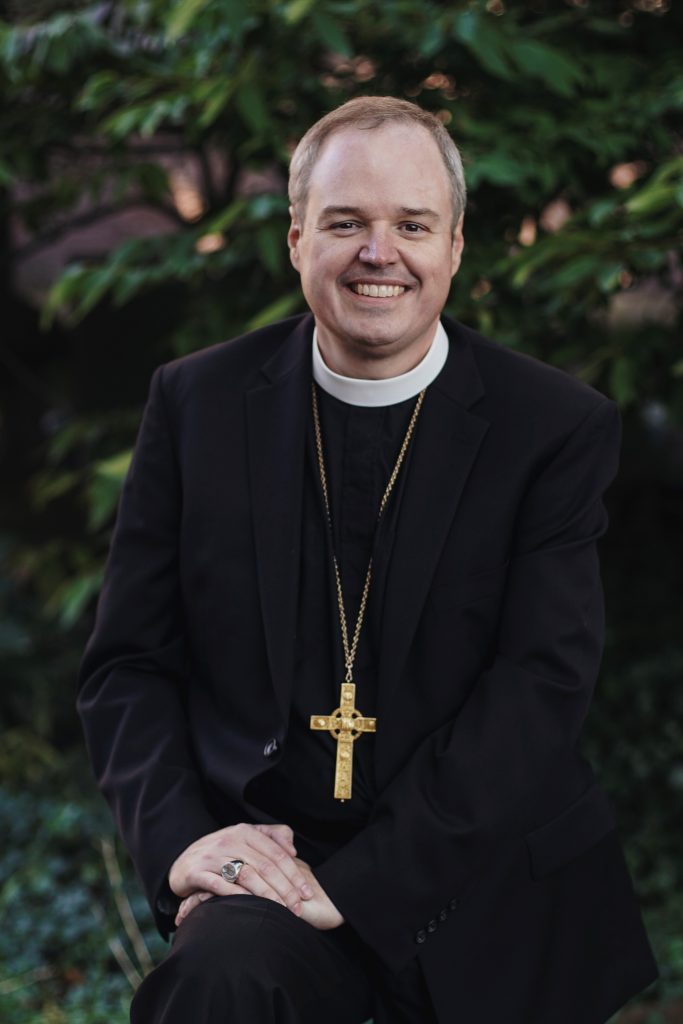
The Rev. Rebecca S. Myers, LSW
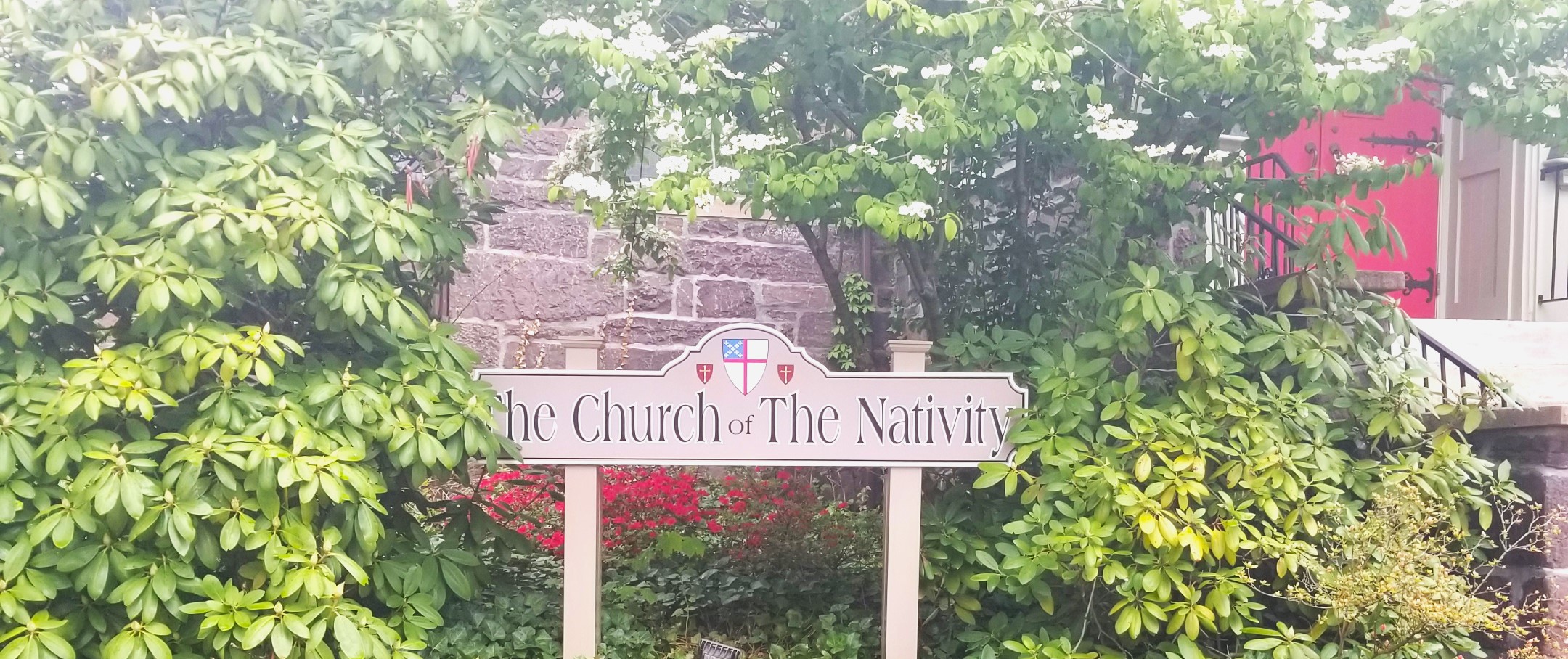
The Church of the Nativity and St. Stephen, Newport, PA
Seventeenth Sunday after Pentecost Track 2 Proper 19 – Latinx Heritage Month
Just so, I tell you, there is joy in the presence of the angels of God over one sinner who repents. Luke 15:10
Please be seated.
One year when I was on the Harrisburg School Board, I decided to attend the Hispanic School Board Association conference, rather than attending the very large conference of the National School Board Association. I thought it would be good to hear about education issues from a different viewpoint. Harrisburg had a sizeable number of students and families from Spanish-speaking cultures, especially US citizens from Puerto Rico. I wanted to learn more about their needs and what was happening around the country to serve them.
In addition, one of the newest school board members, whom I supported in his election, was Robert Torres. He was the first person who was Latino to serve on the board.
Off we went to this conference. The keynote speaker was a man named Jaime Escalante. I was not familiar with Mr. Escalante.
Mr. Escalante was a math teacher in Bolivia. When he was in his 30s in 1963, he immigrated to the United States. He worked at many jobs, until he could learn English and get another degree so he could return to teaching. Finally, in 1974, he began teaching math at Garfield High School in East Los Angeles.
At the time, the high school had very low expectations for its students, who were mostly Latino and Latina. It was estimated that 80% of the students lived in poverty. The curriculum at the high school was not the most challenging. After a few years, Mr. Escalante decided to teach an Advanced Placement calculus class. He recruited another teacher and together they taught five students. He held sessions before and after school. He involved and got support from the parents. His students couldn’t enter his classroom unless they answered a homework question. He experienced criticism for these methods and practices. He kept telling the students they could do this hard work and that they’d have great futures in wonderful careers if they only stuck by him.
One year eighteen of his students passed the Advanced Placement exam, which only 2% of students in the United States even attempted, because it was so difficult. The Educational Testing Service who administered the test accused fourteen students of cheating. They’d all gotten the same problem wrong and used an unusual name for the variables. Mr. Escalante also believed the testing service couldn’t believe that students who were Latino and Latina and living in poverty could pass the test. Twelve said they’d re-take the exam and passed it once again. This story was turned into a movie, Stand and Deliver.
Eventually nearly 600 or 13% of the students were taking advanced placement classes at the high school and Garfield High School had the most students from any high school in East Los Angeles at the University of Southern California.
That night of the conference, I felt so inspired by this teacher. Throughout his talk that night at the conference, he kept saying, “I am the coach.” The way he said, “I am the coach” inspired confidence and reassurance. After the dinner, there was a dance with traditional ranchera music and I still can see Mr. Escalante joyfully dancing with the group.
I hadn’t thought much about this experience until I went to the post office this past week to buy some stamps. There I discovered a new stamp with Mr. Escalante on it.
In our gospel today, Jesus is on his way to Jerusalem. He’s teaching his diverse group of followers about what God is like and how God wants us to live. We’ve been hearing these teachings the past couple of weeks. In today’s Gospel, Jesus is with his followers. Those who were Pharisees and scribes start to criticize Jesus because he is eating and being with people who are the outcasts of the religious establishment – tax collectors and other people considered sinners. Jesus starts telling a number of parables to teach more about what God is like.
Now one thing about parables, is that they need to be stories that are familiar to the culture. In our Gospel today, one story is about a shepherd. Shepherds were considered of a low status in the culture. They were outcasts or on the outer edge of the community. Yet, people would have been familiar with the work of the shepherd. In addition, to use the shepherd’s work to teach about how God relates to us must have been jarring for those who believed they were important or within the center of the society. At the same time, hearing that must have felt liberating to those who were considered outcasts or not as worthy in the eyes of the society.
So too, with the parable about the widow. While people were exhorted to care for the widows, living life as a single woman without a husband was challenging at the time. Yet Jesus tells a story about a widow, a woman, to illustrate what God is like.
While it may seem like God is calling the tax collectors and those in the room judged by the Scribes and Pharisees as the sinners who repent and return to God, Jesus is also calling those doing the judging as sinners and asking them to repent and return to God. God is asking those who keep people on the margins or view people as outcasts and outsiders to repent or turn around from their actions and live in a new way.
Jesus is asking us to enlarge our world view. Jesus is telling us to look at who we’ve judged to be unworthy. Jesus is telling us to be careful about our judgmental ways that label people as worthy of our presence or unworthy of our presence and time and treasure. Jesus is telling us to widen our circle of fellowship.
Mr. Escalante taught those that most of society had labeled as unteachable. He taught those who were outside the circles of power and influence in the culture. He is an example for us of widening our circle and of being aware of the judgments we make about people.
Let us examine ourselves. Let us examine the judgments we make about people, both individuals and groups. Let us be aware of who may feel left out by our judgments. Let us be aware of those at the edge of our outside the circle of our community.
Then let us take steps to “turn around” …to repent so we build a stronger community where all of us are in the circle together. As Jesus said, there’ll be a party and rejoicing in heaven.
Amen