



 Loading...
Sermon November 5, 2023
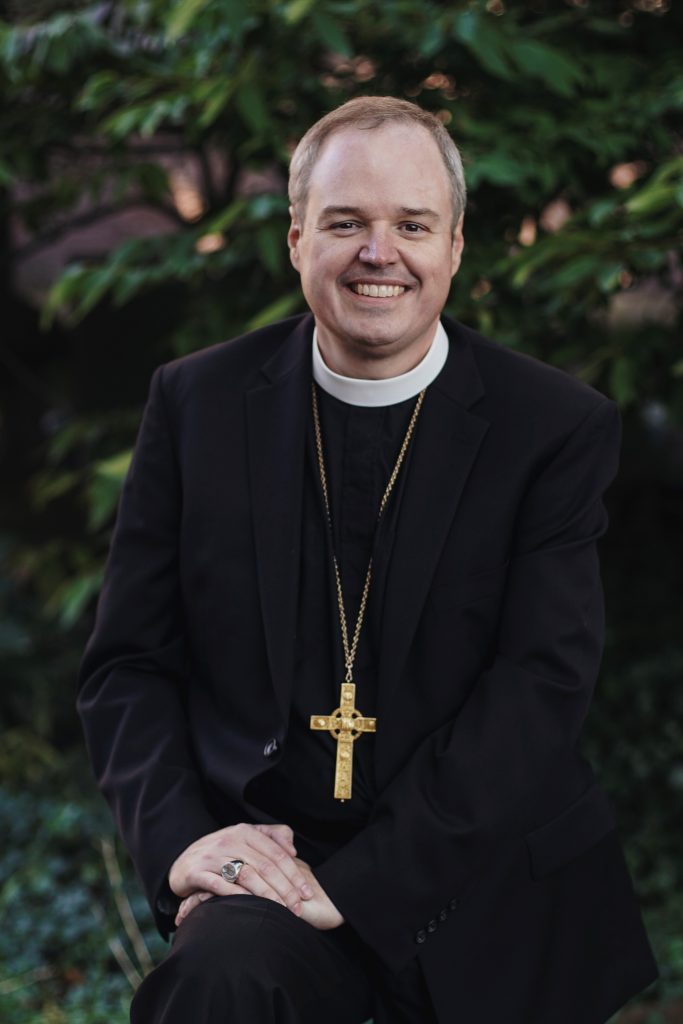
The Rev. John Sivley
The Church of the Nativity and St. Stephen’s
Twenty-third Sunday after Pentecost, Year A, Track 1, Proper 26
http://www.lectionarypage.net/YearA_RCL/Pentecost/AProp26_RCL.html
Today we celebrate All Saints Day. In the Episcopal Church, we believe that this is an important date. If November 1st does not fall on a Sunday, we celebrate All Saints Day on the first Sunday in November.
It's a day that when we take time to remember those who have gone before us in the Christian faith, some who have suffered persecution and even died for professing their faith in Jesus Christ. We remember the saints who by the grace of God served the Church and the world with lasting contributions. We can turn to the pages in the Book of Common Prayer to find a list of them we remember throughout the church year. And it's also a day that we remember ordinary saints, if you will. There are saints in our lives who have pointed us towards God and manifested the love of God in our journeys of faith. You and I know who these persons are for us, this morning.
I would like to tell you about an ordinary saint in the movie, The Bucket List. The film tells the story of two men, Edmund Cole and Carter Chambers, who meet by chance as hospital roommates. As the story develops, we soon discover that one of the men is terminally ill and the other incredibly wealthy. With hours to spend in their hospital room, they have plenty of time to talk about how they are feeling and all that they are facing. Staring mortality in the face they began to each rehearse some of the "if onlys" and "I wish I hads" of their lives. Finally, the wealthy man, Edmund, says to the dying man, Carter, "so what's stopping us?" And after a considerable amount of effort, he finally persuades the dying man to spend his final days fulfilling many of the things that he had always dreamed of doing. So together they develop a bucket list of all the things they wanted to accomplish before they "kicked the bucket."
Now I don't want to ruin it for you by telling you the whole story, but we eventually discover it was the dying man, Carter Chambers, who was truly rich, because of his faith in God and his loving family. And it was the wealthy man, Edmund Cole, who though he had great riches, was initially emotionally and spiritually impoverished. So let me ask you, "What's on your bucket list?" What are some of the things that you'd like to do, or places you'd like to visit, or things you'd like to have?
Perhaps your list would be something like the one found in the Book of History, from an ancient Chinese religion. It has a list of The Five Happinesses, which include "long life, riches, soundness of body and serenity of mind, love of virtue, and at end crowning the life". That's not a bad list.
I'm sure that the crowds that followed Jesus had wish lists as well. These first century seekers were looking for happiness as much as anyone. Unfortunately, happiness for them seemed further out from reach. They were living in an occupied territory, a military state. They were forever being taxed and trampled by an oppressive foreign government.
They were also living in a two- class society where the rich were getting richer and the poor were getting poorer. The vast majority of peoples were being pushed aside and ignored by the wealthy upper class.
Perhaps worst of all, they were being shut out by their religious leaders. For rather than offering hope or contentment, the Temple legalists were continuously raising the bar of expectation, by adding another bar that needed to be jumped through before one was deemed good enough for God. As far as they could tell the only blessed or happy people were the ones with all of the wealth, potential power, or religious authority. All that was left for them was to grit their teeth and bear it.
So, when Jesus came onto the scene and began preaching, teaching and healing, these people began to take notice. What's more, Jesus began to tell them about a new way of life. He began telling them about a new kingdom that he was preparing to establish. He called it the Kingdom of God. And the more people who followed him and the more that they listened, the more curious they became. They wondered wh"at this kingdom would be like. Would it be a kingdom of the powerful and the oppressed? Would it be a kingdom of the haves and have nots? And more importantly, who would be allowed to enter? Was this kingdom only for the powerful and influential? Only the rich and famous? Only the pure and pious? What were the requirements for admission? Could they possibly measure up? They were like anxious athletes waiting to see if they made the cut, they listened for their name to be called, wondering if they had made the team.
Imagine their amazement when Jesus began teaching them saying, "Blessed are you who are poor, for yours is the Kingdom of God." In his inaugural sermon, Jesus announced that God had anointed him "to bring good news to the poor." Those who suffer from economic deprivation have no illusions about their own self-sufficiency and are thus more likely to tum to God.
In contrast, Jesus proclaimed, "Woe to you who are rich, who put their trust in material possessions, instead of the Lord". The promise to the poor is the Kingdom of God, which is everlasting. The wealthy and power of the rich are transitory.
"Blessed are the poor in spirit for theirs is the kingdom of heaven."
"Blessed are you who mourn now, for you will be comforted", reflects the joy of being in the kingdom of God. However, for those who trust only in themselves, their earthly success will ultimately turn to failure, resulting in mourning and weeping.
"Blessed are you when people revile or hate you". Those who are hated, excluded, reviled, and defamed for their allegiance to Jesus should rejoice, for they will be rewarded in heaven. Just as the former prophets were persecuted, so Jesus and his followers would also suffer. But Jesus warned of the woe to come to those who revel in the world's acclaim. They are false prophets who tell people what they want to hear instead of the truth.
The lists found in Beatitudes is such a contrast to our lists, even our bucket lists. We have a list of things to accomplish, a list of goals to achieve and a list of things that we are sure will make us happy. At times, these things are not God-centered. And Jesus steps into our world and turns all of these lists upside down. For Jesus tells us that true joy, true blessedness come through being accepted by God. True joy comes through finding and experiencing God's presence and love.
In the movie, The Bucket List, I believe that Carter Chambers was a Jesus person, an ordinary saint for Edmund Cole. He pointed his friend, Edmund, to his blessings: his granddaughter, family and faith in God.
At the end of the movie, Edmund has an awareness of his many blessings from God. How do we live a blessed life, striving to be ordinary saints? Isn't this what everyone wants deep down? How do we find blessedness? Do we find it in a job we love? Living in places we adore, in a house that feels like a home? Being in a committed relationship with someone we love? Having children who are bright and well adjusted? Having a high yield portfolio or retirement plan that brings a sense of financial security?
Possessing plenty of leisure time to pursue hobbies or travel to far-away places?
Some of these — if not all — comprise the list of things in the blessed life to which many of us aspire. However, the biblical notion of blessedness as a beatitude had less to do with a lifestyle highlighted by power, possessions or brains than it signaled a fortunate state of being, because of a gift received. A gift received from God.
In his book, Under New Management - The Adventure of Living, the late Sam Shoemaker, an Episcopal priest, listed five steps by which people might enter the stream of God's grace and blessing and strive to be ordinary saints living the lists of the Beatitudes.
Shoemaker wrote, we see the Presence in others. This sounds mystical and probably is. But that doesn't mean it is less real. For those living in the stream we can behold a certain stability and peace in their personality. We detect a power from the other side that goes beyond the ordinary. It does not necessarily look as though these people have swallowed a light bulb, but there is an aura of love about them — a kind of patience and gentleness — that seems to have come to them, but not of their own making. Seeing this Presence in others who are filled with God's love and grace creates in the beholder a longing for it. I believe we see this presence in Carter when he pointed Edmund to the light of faith in his relationships with family — his daughter and granddaughter and with Carter. A desire for us to step into the stream is awakened in us too.
Secondly, we must be open. Shoemaker said that this world is full of buttoned up people in and out of the Church. They are people imprisoned in a variety of dungeons — conformity maintaining the status quo, being more worried about what others think and buying into worldly standards rather than Gospel standards. And the more buttoned up one is, the harder it is to enter the stream. The Gospel, Shoemaker says, comes alive to us in direct proportion to our openness to it. The poor are the ones Jesus pronounced blessed not because of their poverty, but because of their hunger for what was real and important.
Thirdly, we increasingly believe that this experience of the Presence can happen to us. We come to believe that this experience of God that Jesus manifests can indeed infuse and change our own lives. We come to believe that we can share in the abundant life of God by committing to the stream. We do not allow the attitude of "this might happen to so and so, but not to me" stand in the way of a spiritual awakening. If we believe that if we wait until we are better, we will never enter the Stream at all. Here the accepting and welcoming faith community offers a tremendous help to getting people over this false pride. Folks can see themselves as children of God and loved by God and others.
Fourthly, step into the stream. Just do it, even though it will be awkward at first.
Open your heart to God as a child, Shoemaker says. Pray honestly from the heart. Ask. And keep on asking. And then let go. Don't fret about the answer. The Presence will come. Jesus says that we cannot ask in vain.