



 Loading...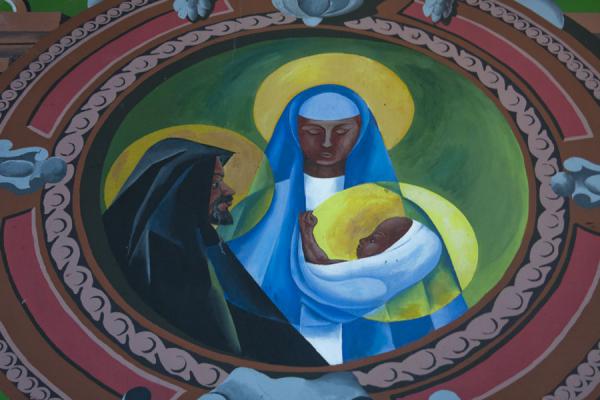
Sermon June 16, 2019
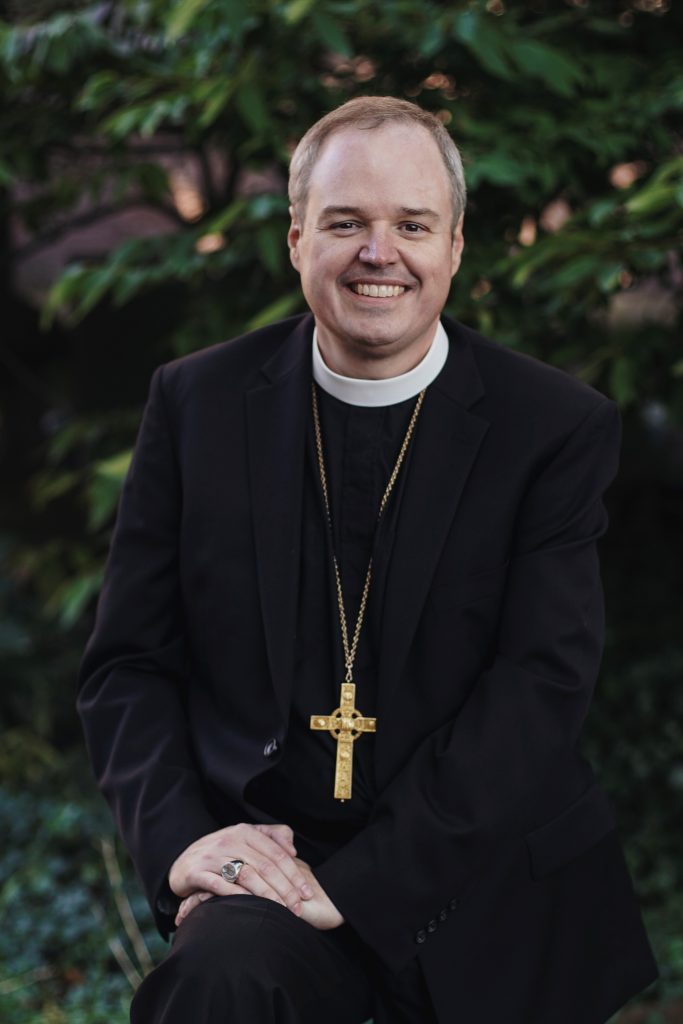
The Rev. Rebecca S. Myers,
The Church of the Nativity and St. Stephen’s
First Sunday After Pentecost, Trinity Sunday, Year C
http://www.lectionarypage.net/YearC_RCL/Pentecost/CTrinity_RCL.html
Jesus said to the disciples, "I still have many things to say to you, but you cannot bear them now….” John 16:12
Please be seated.
Today we remember fathers. My father was wonderful in my estimation. No, he was not perfect and he did grow and change over time. He was a human being, after all. And I would say he was a great father.
We know that there are many ways to be a father. Of course, there are our biological fathers. Sometimes they are great and sometimes they are not. Some of us had our fathers with us for a very long time and some of us had fathers who died when we were young. Some of us had others, either relatives or neighbors, who were the best fathers we could ever have. Some of us had fathers who were not there at our birth, yet nonetheless birthed us into adulthood. Some of us now are great fathers either to our own children or to others.
Especially here at Nativity, I think about a well-known father – Joseph. Joseph the carpenter, betrothed to Mary and many years older than her. Here’s what we read about Joseph in the first chapter of Matthew:
Now the birth of Jesus the Messiah took place in this way. When his mother Mary had been engaged to Joseph, but before they lived together, she was found to be with child from the Holy Spirit. 19Her husband Joseph, being a righteous man and unwilling to expose her to public disgrace, planned to dismiss her quietly. 20But just when he had resolved to do this, an angel of the Lord appeared to him in a dream and said, ‘Joseph, son of David, do not be afraid to take Mary as your wife, for the child conceived in her is from the Holy Spirit. 21She will bear a son, and you are to name him Jesus, for he will save his people from their sins.’ Matthew 1:18-21
Yes, Joseph heard something he could not bear. I imagine Mary must have told him what the angel said to her. Joseph didn’t really believe it though. It seemed so preposterous. He could have made a big fuss and made things very difficult for Mary. He decided he would be quiet about this. We can imagine he must have felt some embarrassment about the whole thing.
Because Joseph could not bear to hear about the work of the Holy Spirit in Mary’s life, God sent an angel to him in a dream to confirm what Mary had probably tried to tell him. Joseph heard the angel and believed the angel and Mary became Joseph’s wife. Joseph became Jesus’ earthly father and a model for fathers in our Christian faith tradition.
What are the things you cannot bear to hear? What are the things God, Jesus and the Holy Spirit are trying to teach you? What are the things God, Jesus and the Holy Spirit are encouraging you to hear?
It’s very hard to hear new things, by the way. In a 2017 article in The New Yorker Magazine, the author reported on numerous studies that showed that even when people were confronted with facts that contradicted their beliefs, they still held onto the falsehood. I mean, that’s nuts, isn’t it? Weren’t you told not to lie? Weren’t you taught that we as human beings are capable of reason and that’s what separates us from animals, for instance? Yet, we all too easily believe lies even when the facts prove otherwise.
Scientists have puzzled over this. Why would believing lies be a trait that would preserve the human race? As the New Yorker article pointed out, if a mouse believed the lie that there were no cats around or no cats that would eat it, it would not survive. How can we as humans survive believing and even holding on to lies?
Two scientists researching this phenomenon see it this way:
“Humans’ biggest advantage over other species is our ability to cooperate. Cooperation is difficult to establish and almost as difficult to sustain. For any individual, freeloading is always the best course of action. Reason developed not to enable us to solve abstract, logical problems or even to help us draw conclusions from unfamiliar data; rather, it developed to resolve the problems posed by living in collaborative groups.”
There is also something well documented called “confirmation bias,” which is the tendency we have to believe information that supports our beliefs and reject information that contradicts our beliefs.
Can you begin to understand what a difficult task Jesus had while on earth? Human beings are not reasonable and believe lies. I mean, that’s why God came to earth, isn’t it? We’d gotten into so much trouble trying to live together that God finally came down to us in the form of Jesus to help us out.
But overcoming the rules of the time, which were unreasonable, yet confirmed by those who believed them to be the right way to live, was quite an undertaking. Overcoming our confirmation bias was certainly not an easy task.
Jesus said God would send the advocate to us. Jesus said there was so much more to learn, but we just couldn’t bear it. Our faulty reasoning allowed us to go only so far.
I imagine there are so many things we just cannot bear to hear in our world today. Think of any major problem facing us and you know this is true.
So, what to do?
Well, we can listen for the Holy Spirit’s leading, for sure. Prayer, meditation, hopefully being in our church community can help.
Experimenters did discover something that could help. When people were asked how they felt about an issue, they could state a strong opinion. However, when people were asked to explain the implications of their strong opinions, they seemed to moderate how they felt, allowing for more dialogue amongst people with differing strong opinions.
We need to remember we know less than we think we do. We need to carefully consider the implications of our positions. We can measure those implications against Jesus’ teachings to love God and love our neighbors.
May God open us to hear the things we think we cannot bear to hear.
Amen.
https://www.newyorker.com/magazine/2017/02/27/why-facts-dont-change-our-minds