

 Loading...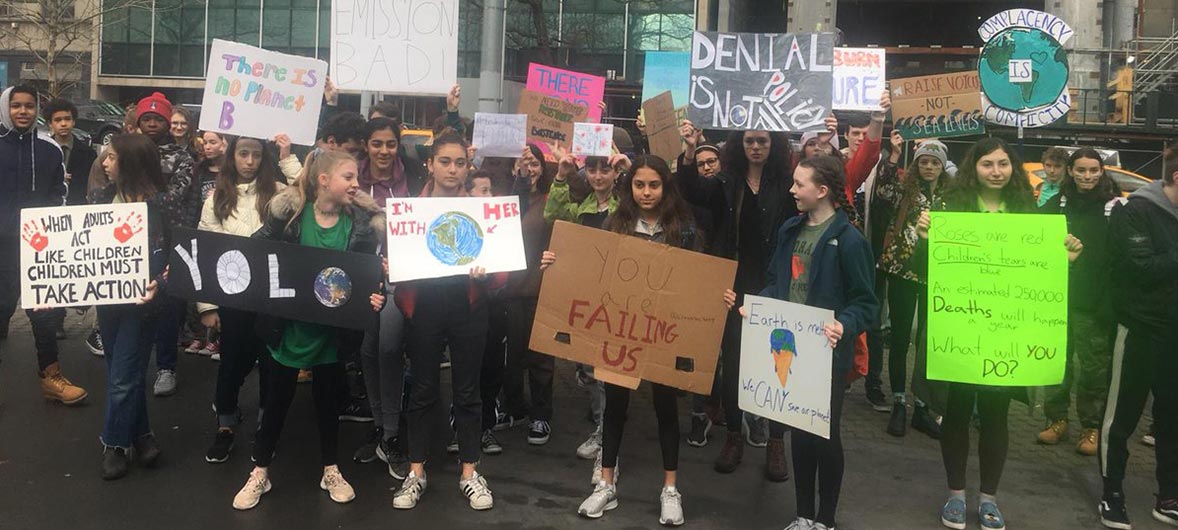
Sermon September 15, 2019
The Rev. Rebecca S. Myers,
The Church of the Nativity and St. Stephen’s
Fourteenth Sunday After Pentecost Track 1, Proper 19
http://lectionarypage.net/YearC_RCL/Pentecost/CProp19_RCL.html
For my people are foolish,
they do not know me;
they are stupid children,
they have no understanding.
Jeremiah 4:22
Please be seated.
Back in early 1981, when I was just 23, a divorced single mother of 2 young children, I spent a weekend in Washington DC. One of the exhibits at The Smithsonian was about clocks and time. I’d never really considered what life was like without time-keeping devices. The exhibit helped me understand how somewhat random timekeeping was and how much it took for people to agree on time-keeping standards. I was fascinated by the various means innovators used to build these clocks to measure time. There were springs and weights, ways to harness energy to keep a clock going in these early machines.
That fall, my children and I moved from Wormleysburg to Ithaca, New York. I had been taking college classes parttime, but with this move, I would begin fulltime college study towards my bachelor’s degree. I was attending Cornell University, the place where my parents met and from where they both graduated.
While I was enrolled in family studies and public policy in the College of Human Ecology, and ultimately became a social work major, I still had to take some core courses, including a science. Because of the clock exhibit, I wanted to learn more about the science behind the clocks…the science of the springs and pendulums and weights. My high school physics teacher was also fantastic, but I had taken the lower level of the course – the one for a person who would never take another science course again. We studied light and how light was used in art and photography. We did art projects and photography projects. He also taught us about nuclear power.
But I was not prepared for the more academic study of physics. Not only because I had been out of high school for 7 years, but also because I had not taken calculus at all. During my time taking college classes parttime, I had only taken business math.
But Cornell had a self-paced physics course. The number of units you completed determined your grade, and you only needed algebra rather than calculus. Even with those concessions, I needed to get a tutor to help me through the course. Luckily there were a lot of graduate students available to help me and I did enough work to get a C.
Now, those of you who know and love science, know that each science teaches you about life and even gives you some lessons to live life by. One of the life lessons I took from physics that aligned with my social work study and career, regarded calculating the speed of an object. Now don’t ask me to explain in any kind of detail the formula for doing this. I tried to look it up on You Tube and it’s just been too many years. But suffice to say that how fast an object is moving, greatly depends upon all of the forces acting upon that object. For instance, on earth, there is gravity and then there’s friction. The position of the object also affects things. For instance is the object on a flat surface or on a hill and if on a hill, how steep is the hill?
What I mostly remembered through my own errors is that when I completely forgot about one of the forces acting upon the object, I came up with the wrong answer. This is true for our lives. It’s important to look at all of the factors in the contexts of our lives…at all of the forces acting upon us in order to come up with help and solutions for how we live. When we fail to account for any of the forces or situations in our context, we come up with poor solutions.
Earlier this week, when I began to read the readings for today, I stopped cold after the Jeremiah reading. I felt like Jeremiah’s words were so true for us today, especially regarding the environment. I felt like God through Jeremiah was warning us about what our lives will look like if we do not wake up to how we walk upon this earth.
For instance, I didn’t research about how coal was discovered and came to be extensively used to heat homes and run industry. That must have been an amazing discovery. Yet, it’s like we didn’t quite get all of the parts to the equation. We came up with a faulty answer when we decided to burn so much coal. We left too many factors out of the equation.
We didn’t consider what it meant to mine coal. I worked for a short time in the early 80s in the state environmental protection department and there was an entire bureaucracy designed to regulate mining, mostly mining coal. There were subsidence dangers and there was a fund if your home foundation was weakened through coal mining. There was black lung disease. There was damage to the physical environment. Some of us even remember the Centralia fire where a whole town was relocated because a seam of coal caught fire and couldn’t be put out.
I even worked for a lobbyist who was working within the industry to find “clean coal” or a way to burn this fuel with little to no effect on the environment, but it’s never come to pass.
According to a Sourcewatch article, “a 2011 report by the American Lung Association found that coal-fired power plants produce more hazardous air pollution in the United States than any other industrial pollution sources. A 2004 report by the Clean Air Task Force estimated that soot pollution from power plants contributes to 24,000 premature deaths, 38,200 non-fatal heart attacks, and tens of thousands of hospital visits and asthma attacks each year.”
God says through Jeremiah, “I looked on the earth and, lo, it was waste and void.”
Why do we continue to insist on using fossil fuel sources when there is clear scientific documentation that extracting, transporting, and burning these sources is not good for us or for life upon the planet? Why do we insist on being foolish when there are alternatives? Why do we refuse to face the reality of the irreparable damage done by relying upon these fuels for so many years?
Yes, I did say irreparable. We keep trying to find ways to keep burning these fuels. It’s like we are addicted and cannot stop using them. We want to find ways to keep using them, hoping we can find better ways to extract them or transport them or burn them cleaner. We keep hoping technology will save us from the damage to us and all creatures and our earth.
Earlier this week, Joanne Pinaire posted an article on Facebook from the September 8 issue of The New Yorker magazine, titled What if we Stopped Pretending? The article was written by author Jonathan Franzen. Franzen suggests that the “climate apocalypse is coming. To prepare for it, we need to admit that we can’t prevent it.”
That’s a stark statement. We’ve already lost the battle to keep the life on earth that so many of us know. There’s no going back. Instead, we must prepare for the world we have created by our actions. We must prepare for the world we created when we did not include all of the forces in our equation. We came up with the wrong answer and there are consequences for us and for our life together.
Does this mean we do nothing?
Franzen says this:
In fact, it would be worth pursuing [reductions in our emissions] even if it had no effect at all. To fail to conserve a finite resource when conservation measures are available, to needlessly add carbon to the atmosphere when we know very well what carbon is doing to it, is simply wrong. Although the actions of one individual have zero effect on the climate, this doesn’t mean that they’re meaningless. Each of us has an ethical choice to make. During the Protestant Reformation, when “end times” was merely an idea, not the horribly concrete thing it is today, a key doctrinal question was whether you should perform good works because it will get you into Heaven, or whether you should perform them simply because they’re good—because, while Heaven is a question mark, you know that this world would be better if everyone performed them. I can respect the planet, and care about the people with whom I share it, without believing that it will save me.
This Friday, September 20, starts a week of actions and events happening all over the world to coincide with the United Nations 2019 Climate Summit. There are rallies and marches in Harrisburg on September 20, Lewisburg on the Bucknell Campus at 11am on September 20, Lancaster on Friday, September 27, and at Susquehanna University on September 27. For the Bucknell and Susquehanna University events, see Kay Cramer. I can put you in touch with a person organizing an Episcopalian contingent for the Lancaster event.
Also, this Friday students in many schools around the world will walk out of their schools.
God through Jeremiah paints a picture of the desolation of the earth, because we humans are foolish and have no understanding. Jonathan Franzen reminds us that we each have an ethical choice to make. That even our small actions have some consequences and can slow down the inevitable.
What will we choose?
Amen
Information about coal burning plants: https://www.sourcewatch.org/index.php/Air_pollution_from_coal-fired_power_plants
Union of Concerned Scientists Article on Fossil Fuels:
https://www.ucsusa.org/clean-energy/coal-and-other-fossil-fuels/hidden-cost-of-fossils
Franzen Article:
https://www.newyorker.com/culture/cultural-comment/what-if-we-stopped-pretending